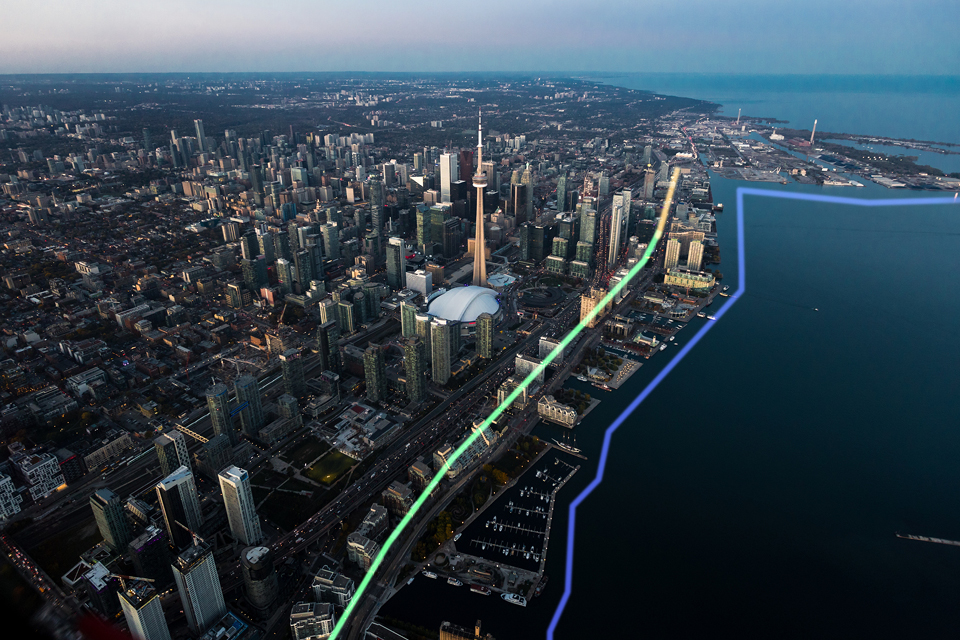
Millions choose Toronto each year, but to truly serve the demands of the future we must create a seamless traveller experience.

A history of connection
For more than a century, the Toronto Region Board of Trade has championed the core idea, that prosperity depends on connection. From early advocacy to build out ports and rail to today’s focus on integrated, multimodal transportation, the Board has consistently pushed to link our region to the world by air, land, and water.
Today, that mission is more urgent than ever.
Toronto is at an inflection point. As global competition intensifies, the regions that succeed will be those that move people, goods, and ideas seamlessly. We have the scale, talent, and economic strength to lead globally. Now is the time to connect the systems that power our growth.
Where growth takes flight
Air travel is central to that vision. The Board has long supported both Toronto Pearson International Airport and Billy Bishop Toronto City Airport, recognizing their role as economic engines and global gateways.
Our advocacy has been consistent, from hosting events that elevate the airport’s long-term needs, to championing Billy Bishop’s expansion as a driver of downtown economic activity. Today, we continue to highlight the importance of air travel to our region’s competitiveness.
Billy Bishop is a clear example of what’s possible when infrastructure is integrated into the fabric of the city. It is a critical connector for business travel, a gateway to key North American markets, and a major contributor to Toronto’s economy, generating billions in economic activity and supporting tens of thousands of jobs.
But unlocking the full value of our airports requires better connectivity on the ground. We need stronger transit links to help alleviate the road congestion that slows the movement of people and goods across the region. Airports cannot function as global gateways if they are not seamlessly connected to the cities they serve.
Getting on the right track
Rail is another critical priority. The Board has been a leading voice in support of the Alto high-speed rail project, calling it a nation-building opportunity that will connect Canada’s most economically significant corridor with fast, frequent, and reliable service. Alto will better connect major business centres, strengthen regional integration, and position Toronto at the heart of a globally competitive corridor.
Anchoring competitiveness
And we must better leverage our marine assets. The Board has long recognized the importance of our ports, and today we see new opportunities to expand their role in supporting trade and tourism. A proposed cruise ship terminal at the foot of Yonge Street would bring visitors directly into Toronto’s central waterfront, steps from transit and within walking distance of Union Station. It is a powerful opportunity to strengthen our visitor economy while reinforcing Toronto’s position as a global destination.
Our Power of Connection report underscores this approach. It highlights the economic and social benefits of a fully integrated transportation system on Toronto’s waterfront, where transit, rail, roads, airports, and ports work together to move people and goods efficiently. The report reflects years of Board advocacy focused on breaking down silos and building a more connected region.
A system for the next era
That vision will be tested on the world stage. As Toronto prepares to host the FIFA World Cup, we have an opportunity to showcase not just our city, but our connectivity. Millions of visitors will experience Toronto firsthand. Their journey, from arrival to departure, will define how the world sees us.
Millions choose Toronto each year, but to truly serve the demands of the future we must create a seamless traveller experience. Ontario is investing more than $100 billion in transportation infrastructure, the largest build in our history. It only works if transit, rail, roads, airports and ports move as one. This is about speed, scale and building a region which moves freely.
The Board has spent more than 180 years advocating for connection. While many of the pieces are now in place, we need to bring them together into one seamless network.