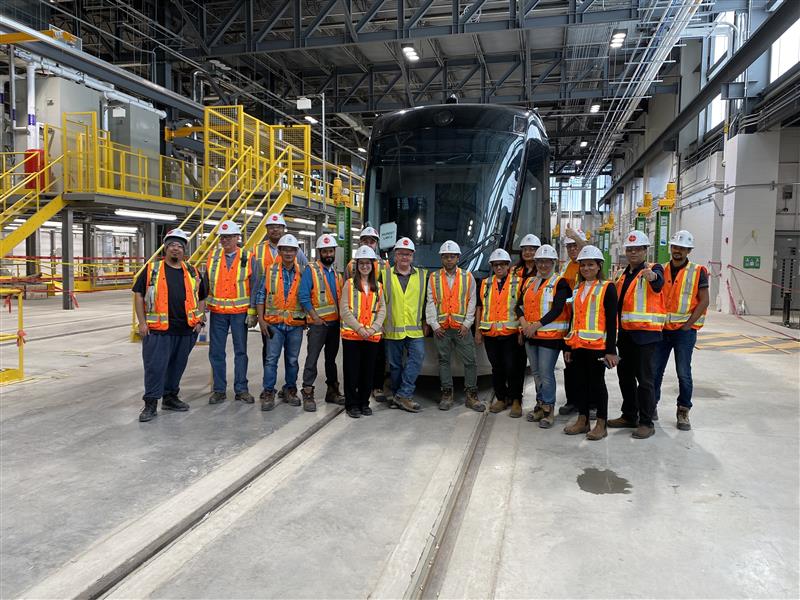
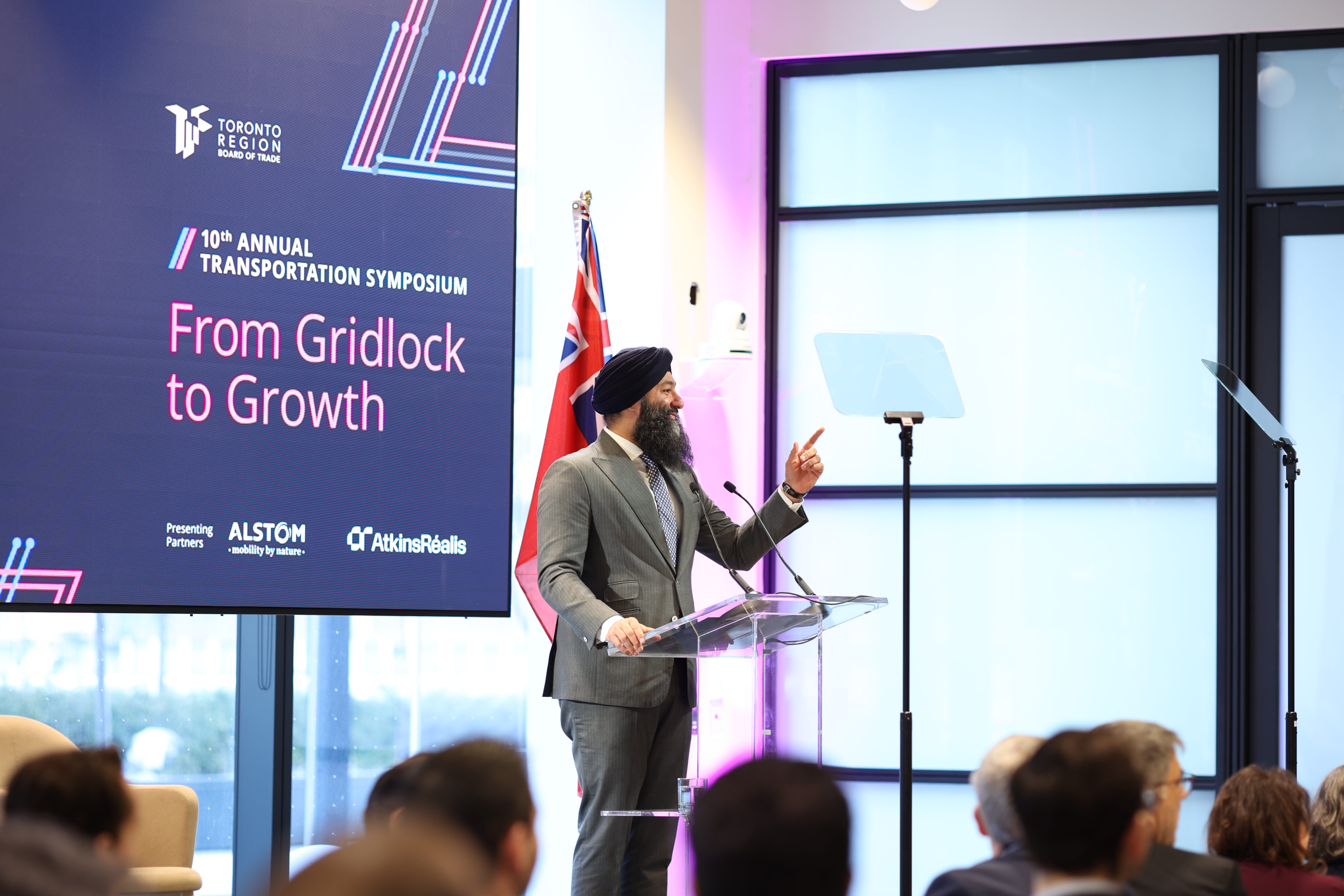
The official opening of Line 5 Eglinton in midtown Toronto establishes a critical component of Toronto’s transit future. On February 8, the 19-kilometre line welcomed riders for the first time, delivering 25 new stations and stops that integrate with Toronto’s existing subway lines, GO Transit services, UP Express, and bus routes.
As a part of the Crosslinx Transit Solutions Design consortium, AtkinsRéalis and Arcadis led the project’s design and engineering.
At the time of its announcement, Line 5 represented Canada’s most ambitious, complex transit infrastructure project. Its scale and unique composition, including a 10-kilometre stretch underground that transitions to street level with a dedicated right-of-way lane, necessitated complex engineering solutions, coordinated collaboration, and a strong architectural vision.
Mount Dennis Station represents one of several stations that required significant engineering expertise to relocate a four-storey, 3,500-tonne heritage building, while ensuring existing transit operations could continue without disruption. To build the foundation for the station, steel rails were constructed beneath the former Kodak Building to facilitate its movement. Today, visitors to Mount Dennis Station encounter a heritage building so seamlessly integrated into Line 5 that few realize the site underwent one of the largest structural moves ever undertaken in Canadian history.
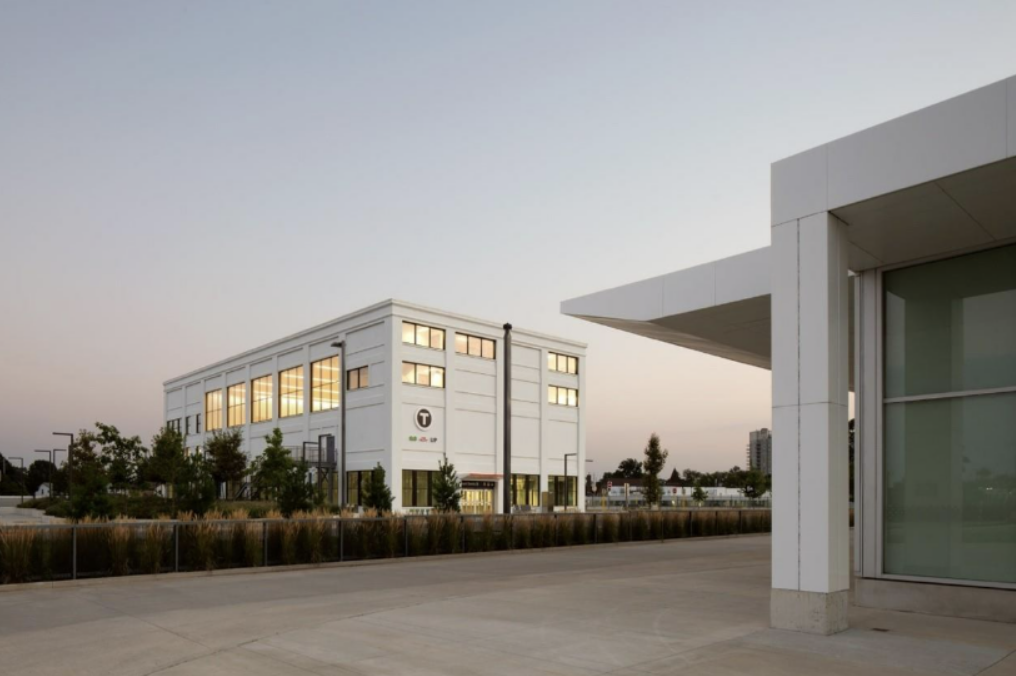
Mount Dennis Station incorporates the former Kodak Building, which was relocated to build the station’s foundation. Credit A-Frame.
Beyond the challenge of moving infrastructure, the urban setting of Line 5 meant that Arcadis and AtkinsRéalis were often designing the stations in constrained spaces that needed to accommodate necessary mechanical and electrical elements while leaving adequate space for walkways or fare zones, for example. When it came to station excavation, the team deployed the sequential excavation method (SEM), as opposed to the traditional cut-and-cover method. The use of the SEM meant that work could occur with limited disruption to existing infrastructure and reduced noise and dust pollution.
“At its peak, Arcadis and AtkinsRéalis were responsible for managing over 700 project staff. It’s one of the components that I’m most proud of, and its success was a result of a collaborative culture we established from the start. Until the COVID-19 pandemic, we worked from a co-located office and approached challenges as one team, with the project’s long-term vision at the forefront of our decision-making,” said Fouad Mustafa, Senior Business Development Director, Canada, Arcadis.
Line 5 presented a unique opportunity to design a complete transit line with a unified vision across the system and the city. As the design lead, AtkinsRéalis and Arcadis built on the project vision and requirements established by Metrolinx. The project team, in collaboration with design excellence lead Daoust Lestage Stecker Lestage, established consistent design elements, from the distinctive canopies and warm colour palettes to the station branding at the platform level, that were applied throughout the line, simplifying passenger navigation and establishing a unique identity for Line 5 that’s recognizable no matter where you are along Eglinton Avenue.
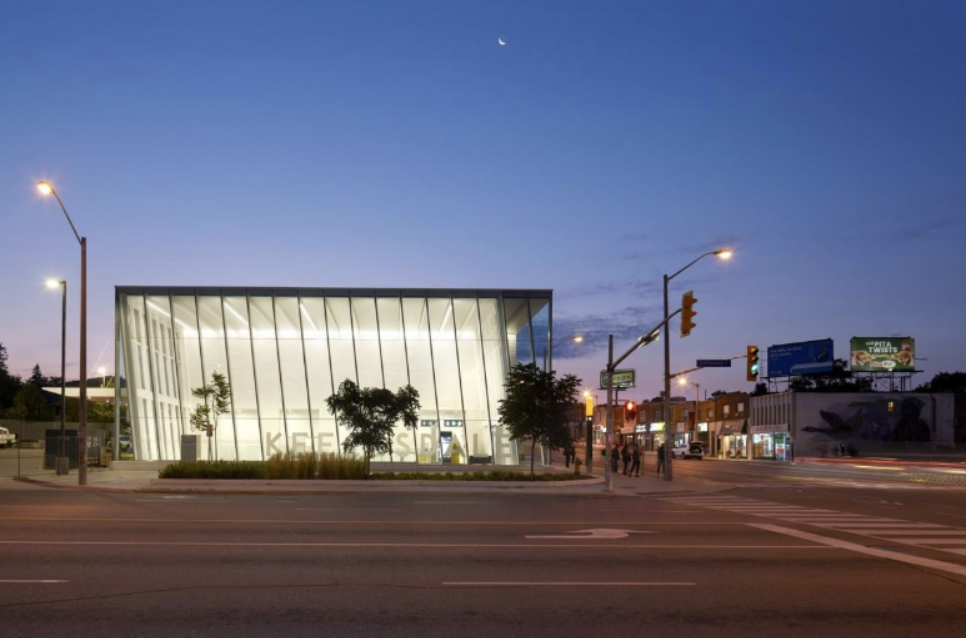
The transparent station facades maximize daylight, improve visibility, and create inviting public spaces. Credit A-Frame.
The role of light in transit design and how it impacts a passengers’ experience was at the forefront of the station design process. With 15 stations located underground, the design team sought to maximize daylight penetration by creating as many clear and open connections between the street and platform. This guiding principle translated into the elegant glass station buildings that draw daylight down to the platform level and emit a warm glow at night, serving as a beacon to travelers navigating to the station entrances.
“Line 5 was conceived as a landmark transit project in Toronto that would transcend generations over 100 years or more. Beyond the achievements needed to reach opening day, we believe the line will act as a catalyst for change in the neighbourhoods it travels through, spurring transit-oriented development and economic growth,” said Chris McCarthy, Vice President, Technical and Engineering Management, Engineering Services Canada, AtkinsRéalis.
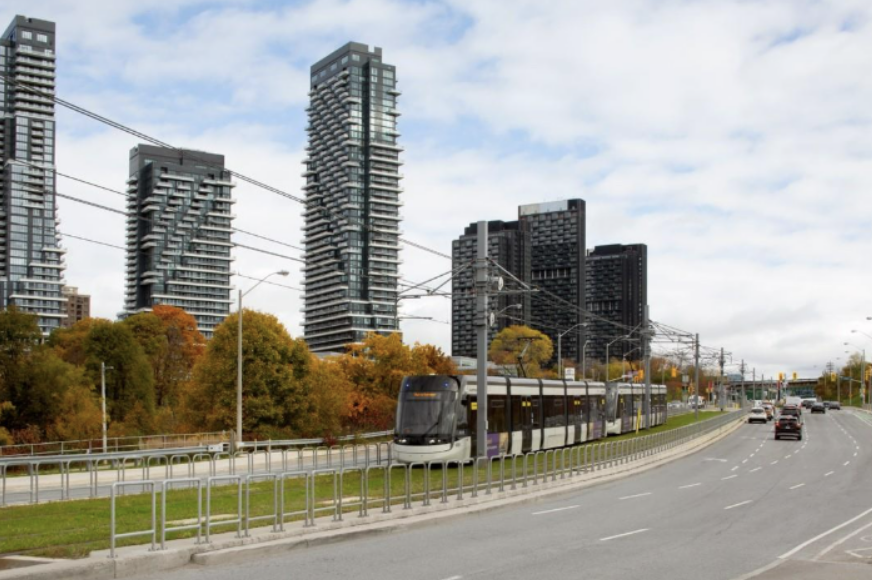
Canada’s first green track absorbs stormwater and reduces the urban heat island effect. Credit Arcadis and AtkinsRéalis.
The implementation of bioswales and Canada’s first green track highlights the need to consider the long-term impact of climate change on a city's transit infrastructure. In both instances, stormwater is absorbed, lowering the probability of flooding. These elements highlight a few of the many thoughtful design and engineering considerations applied throughout the line to ensure it delivers lasting value.
Now that the project work is complete, the true excitement lies in the public’s ability to use the line and watch as the neighbourhoods along it evolve and continue to develop. Line 5 delivers a major project in Metrolinx’s 25-year transportation plan, and Arcadis and AtkinsRéalis are proud to have been a part of the team to design and engineer such a transformative project that connects Toronto’s east and west ends.