Public transit is increasingly central to the Toronto region’s economic future. As the population grows and housing development expands outward, the ability for workers, businesses and communities to move efficiently across the region has become a critical factor in economic competitiveness.
Last year, we heard from Arthur Nicolet, Chief Executive Officer of Transdev Canada, on the future of sustainable mobility and emerging transportation technologies. Ahead of this year’s Transportation Symposium focused on multi-modal momentum, Nicolet reflects on the operational realities behind delivering and running the large-scale transit systems that form the backbone of a connected regional network.

From Global Operator to Canadian Transit Partner
Transdev Canada is part of the global Transdev Group, one of the largest private mobility operators in the world, active in 19 countries and serving millions of passengers every day.
In Canada, the company operates multimodal transportation systems across six provinces and one territory, including public transit, paratransit, student transportation, medical transport and rail services. Its presence has expanded significantly in recent years as governments increasingly partner with experienced operators to manage complex transportation networks.
Since 2020, Transdev Canada’s revenue has grown by roughly 500 percent through acquisitions and partnerships across the mobility sector.
For Nicolet, the company’s role extends beyond running transit vehicles.
“Our role goes far beyond operating vehicles,” says Nicolet. “We are long term partners to public authorities. We participate early in the design of projects to ensure they are operable, maintainable and financially sustainable for decades to come.”
Operating the Next Generation of Transit
That operational perspective is shaping several major transit projects across the Greater Toronto Area.
Under the authority of Metrolinx, Transdev Canada will operate the Hazel McCallion LRT, an 18-kilometre light rail corridor connecting Mississauga and Brampton. The line is expected to improve north south connectivity along one of the region’s busiest transportation corridors while supporting continued growth across Peel Region.
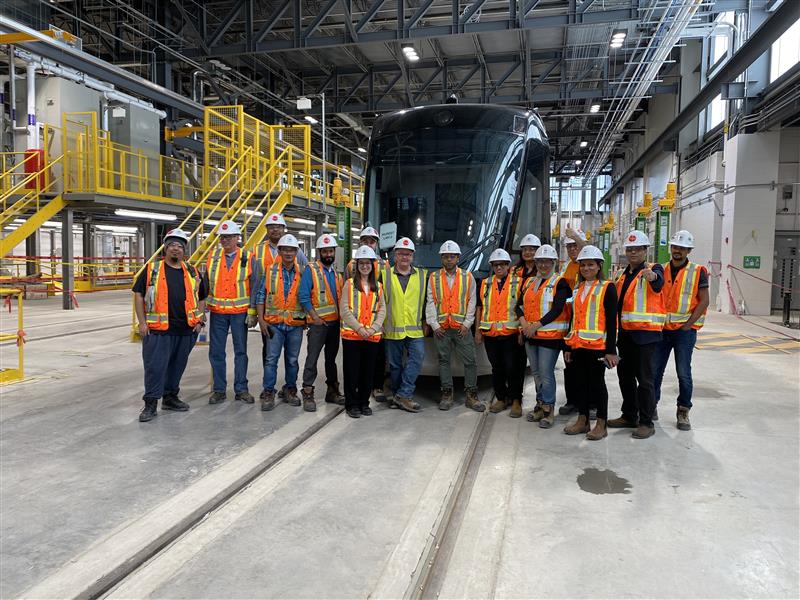
The company is also part of the consortium selected to operate and maintain the future Ontario Line, a major rapid transit project led by Metrolinx that will introduce automated light metro service across Toronto.
Working alongside Hitachi Rail, Transdev is involved in the design and integration phases of the project to ensure operational considerations are incorporated early.
“The Ontario Line represents the next generation of rapid and automated transit in Canada,” Nicolet says. “By integrating operations expertise during the design and construction phases, we help ensure reliability from day one and strong performance throughout the lifecycle of the asset.”
Construction continues across multiple sites as elevated guideways and stations take shape. Once complete, the line will provide faster connections across the city while supporting thousands of construction and long term transit jobs.

Managing Supply Chains in a Changing Global Environment
Transit agencies worldwide continue to face supply chain disruptions stemming from post-pandemic recovery, geopolitical tensions and shifting trade frameworks.
Manufacturing timelines for vehicles and specialized components remain longer than historical norms, while the cost of key materials such as steel, aluminum and advanced rail systems continues to fluctuate. Trade tariffs affecting rolling stock and critical components have also introduced additional cost pressures across transit projects in North America and Europe.
According to Nicolet, maintaining a diversified supplier base and competitive market environment is key to managing those pressures.
“We welcome more competition in the passenger transportation space,” he says. “A diversified private partner base reduces price pressures, stimulates innovation and ultimately protects taxpayers. Competition and collaboration together create stronger outcomes for public transit.”

Transit as Economic Infrastructure
Transit investment is increasingly tied to broader economic priorities, including housing growth and workforce mobility.
Private operators, Nicolet says, can help governments manage these challenges by bringing operational expertise and long term accountability to infrastructure projects.
“In a period of global uncertainty, stability comes from strong partnerships and operational discipline,” he says. “Our commitment is simple. Deliver world class transit that Canadians can rely on today and for generations to come.”
As the Toronto region continues to expand, the success of its transit network will depend not only on building new infrastructure but on ensuring those systems operate effectively long after construction ends.