Toronto is a great city to visit. It's just not done yet.
A record 28.2 million visitors came in 2025, generating $9.1 billion in spending. But for Destination Toronto, those numbers are a starting point, not a finish line. The newly released Toronto Destination Master Plan — developed with more than 400 partner organizations and community stakeholders — is the most ambitious blueprint for the city's visitor economy ever produced.
For Andrew Weir, President and CEO of Destination Toronto, the current geopolitical climate plays to Toronto's competitive advantage and represents an opportunity.
"At a time when much of the world is looking inward and closing doors," he says, "Canada and Toronto, as the largest and most globally connected city within it, are decidedly opening those doors and making a choice to be welcoming and inclusive."
The plan is organized around five strategic tracks: making the city welcoming and safe; connecting people to and within Toronto; increasing competitiveness for major events; developing new attractors; and uniting partners around a shared destination vision. Weir is clear that executing on all of it will require more than the tourism industry working alone — and more than a single year's budget cycle.
"It can't be done on a year-to-year basis," he says. "It can't be done just by people in the tourism industry. It has to be taken on by a broader coalition over a longer period of time."
That coalition is already reflected in the plan itself — it is as much a civic document as a tourism one.
The waterfront opportunity
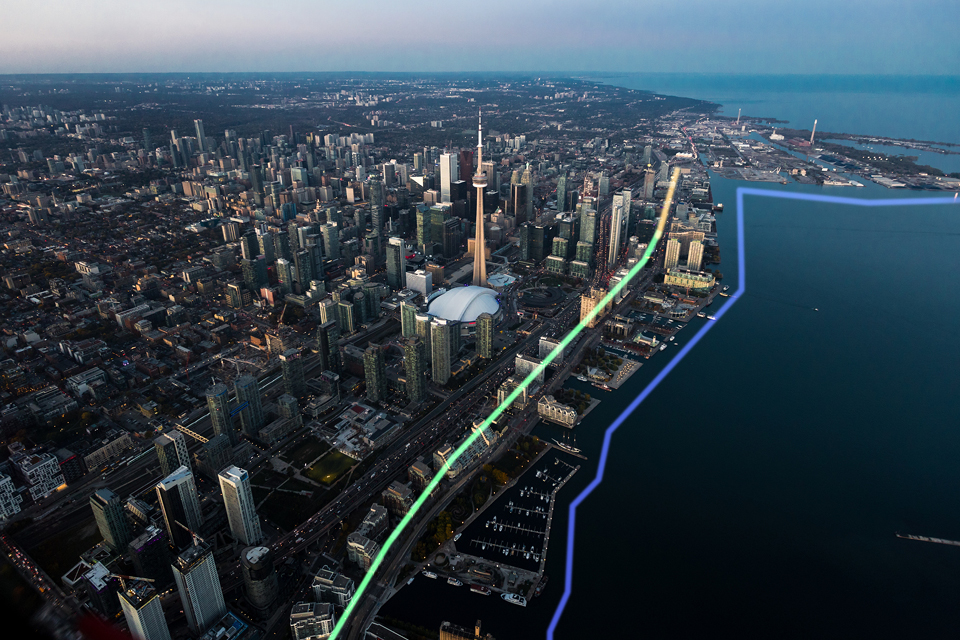
One of the plan's most urgent priorities is the waterfront. Toronto's lakefront — a ten-kilometre stretch from Ontario Place in the west to the Port Lands in the east — already generates $13 billion in GDP annually, supports more than 100,000 jobs, and welcomes 18 million visitors a year. By 2040, the eastern waterfront alone is projected to add 130,000 new residents and 50,000 new jobs. The opportunity is enormous — and so is the work ahead.
The waterfront remains fragmented and poorly connected, isolated behind the Gardiner Expressway and underserved by transit. The Waterfront East LRT — backed by a landmark $3 billion funding commitment from all three levels of government — addresses a critical piece of this. The project is moving forward, with an expected opening in the early 2030s.
Decisions being made today about Ontario Place, Exhibition Place, and the Port Lands will define the city's waterfront for generations. Weir is clear about what's at stake — and about the opportunity embedded in the moment.
"When an enormous precinct of signature land is being redeveloped," he says, "that is exactly the time to be thinking about iconic architecture, iconic images. We have that opportunity in front of us right now and we can't lose sight of it."

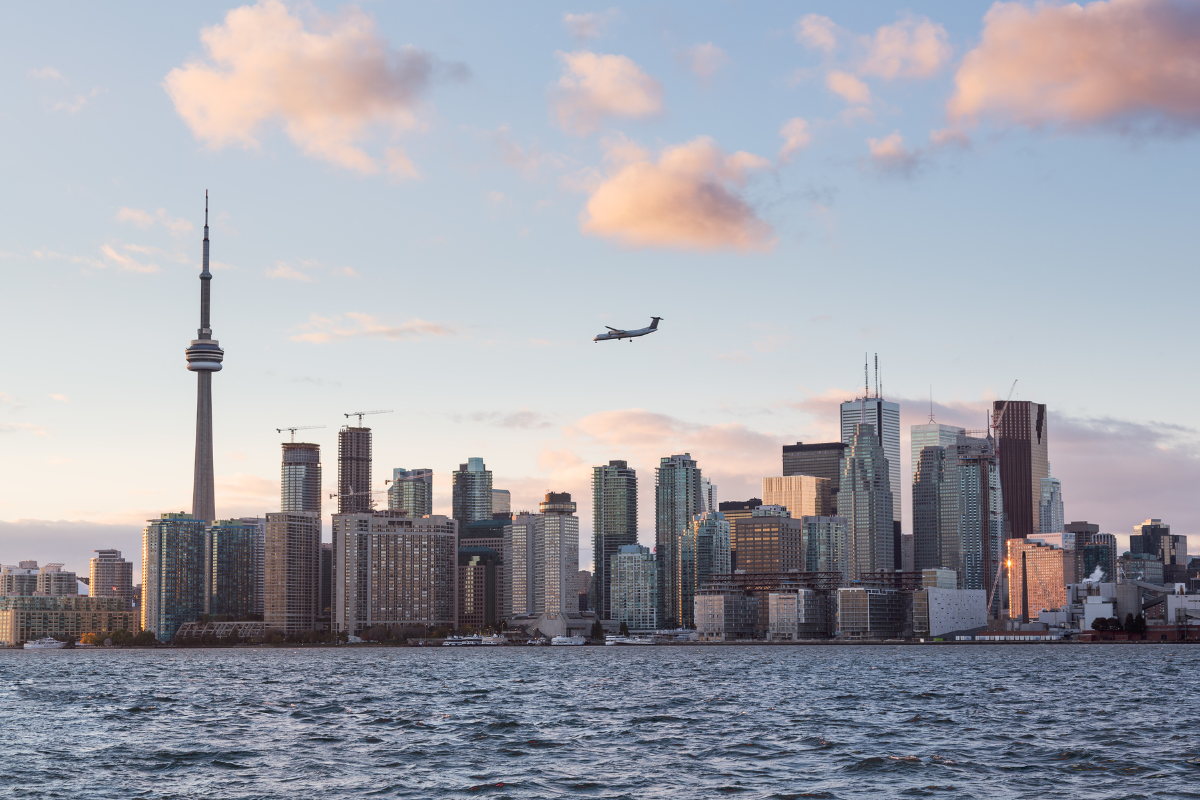
He points to something as simple — and as powerful — as the view from Toronto Island looking back at the city at dusk.
"As a visitor, you never forget that experience," he says. "Looking back at that enormous city, just glistening in the sun at sunset."
The waterfront, done right, is the kind of place that produces those moments at scale.
Part of that vision is making the journey to the waterfront an experience in itself — a summer water taxi pilot connecting points across the harbour is a small but telling example of the thinking the Master Plan is trying to embed more broadly.
"What an opportunity to see our waterfront," Weir says, "to be able to connect to and from the waterfront in a way that is not only functional, but also an experience."
Toronto has world-class assets, but in many ways lacks the connective tissue — transit integration, street-level vibrancy, seamless wayfinding — that turns individual attractions into a cohesive visitor city.
"We don't only want a city where there's an attraction over here, an attraction over there, and you simply move as fast as you can between them," Weir says. "That period in between can be part of the experience too."
The hard part
The plan's ten-year ambitions include expanded convention capacity, a permanent large-scale stadium, pedestrian streets, and a unified transit fare system. For all the ambition on the page, Weir is the first to acknowledge that a plan is only as good as what follows it.
"I'm not going to take a victory lap just yet," he says, "because what we can look at as the end of a process is really the beginning of a process. It turns out making a plan is actually the easy part."
Toronto has the scale, the diversity, and the global connectivity to compete with the world's great urban destinations. It also has, for the first time in a long time, a shared roadmap and a coalition willing to follow it.