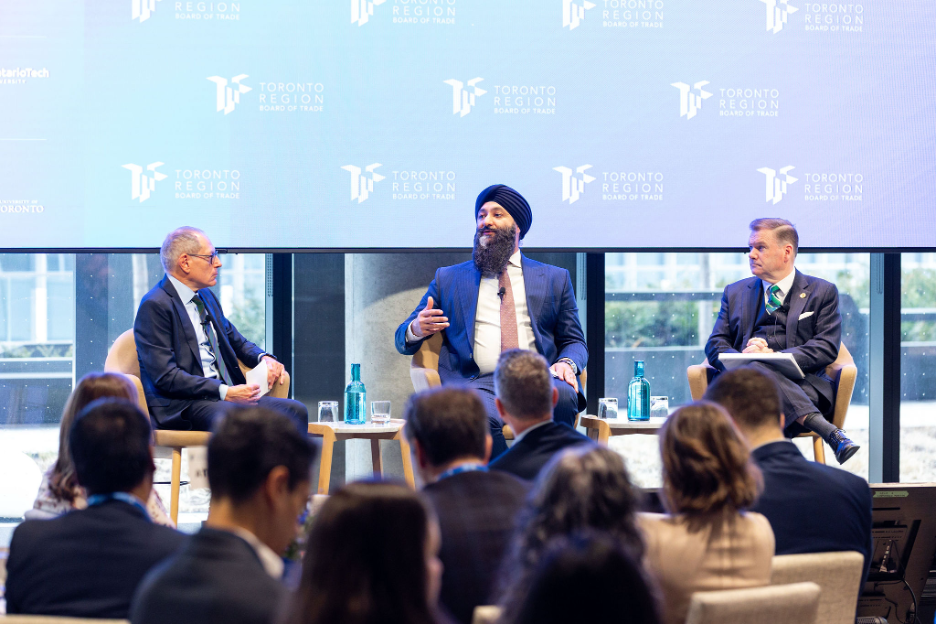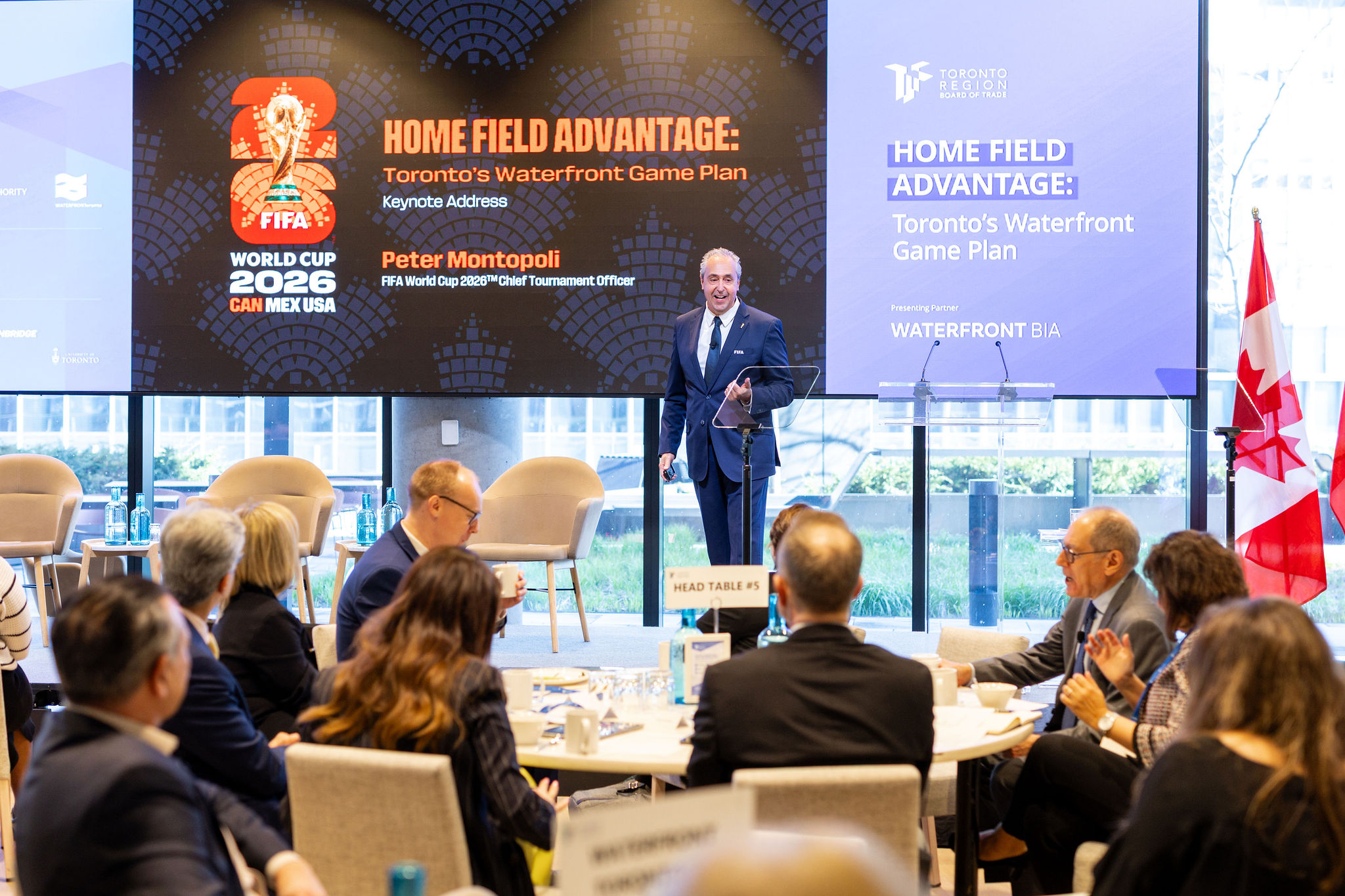
Thirty-six days. That was the countdown on the clock when we brought together transit CEOs, city officials, tourism leaders, government ministers, and sport advocates to ask a pointed question: is this city ready? On June 12th, Canada kicks off against Bosnia-Herzegovina in Toronto's first of six soccer matches, and the audience will be unlike anything this city, province and country has ever produced.
"The first match will be the largest broadcasted event to ever originate out of our country," said Peter Montopoli, Chief Tournament Officer Canada for the 2026 FIFA World Cup. "What do we want the world to see of Toronto? It's in your hands, not my hands."
Our President and CEO Giles Gherson described what is headed to our waterfront as an unprecedented convergence of visitors, media exposure, and business opportunity. "With the world's eyes upon us, this is our chance to showcase our city on our terms." Hundreds of thousands of people are coming to this city from across the world, many of them to Toronto for the first time. How we receive them, and what they spend while they are here, will shape this city's economy long after the final whistle.
WATCH | Can Toronto’s Transit Stay on Track When the World Comes to Town?
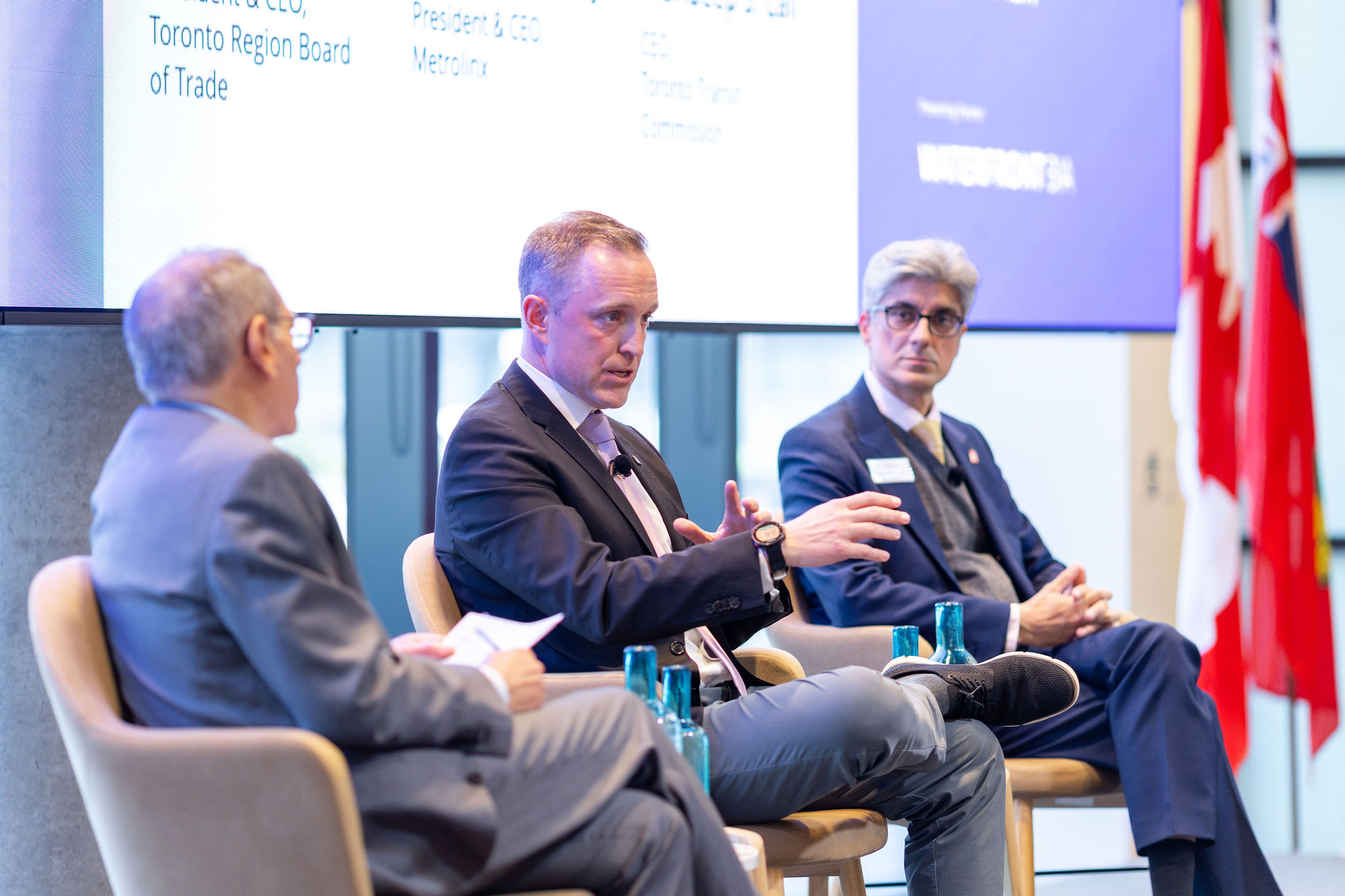
Toronto's transit system is being mobilized at a scale this city has never seen.
GO Transit projects 44,000 additional riders on a match days. For context, Game 7 of the World Series drew 20,000. To meet that demand, GO Transit will run 3,000 additional weekly trips throughout the June 10 to July 5 control period, with Lakeshore West running six trains per hour in the two hours before and after kickoff. The TTC is adding nearly 40% more subway capacity on match days, 30% more bus service, and has built a new interim Fleet Hub station to manage flow near the stadium and Fan Fest. Over 600 multilingual customer experience ambassadors will be deployed across the network, and the system has been stress-tested by zone to prove it can diagnose and resolve a critical failure in under five minutes.
The waterfront is Toronto's stage, and this is the moment to claim it.
Toronto began as a waterfront city, and FIFA is arriving at the moment it is being rebuilt. The Fan Fest, hosted jointly at the Bentway and Fort York, will run for the full duration of the tournament, not just Toronto's six match days. Biidaasige Park, the largest park to open in the city in a generation, is now open on the eastern waterfront. A new east-west water shuttle pilot launches June 1st connecting Billy Bishop Airport to Queens Quay and Biidaasige Park. The Under-Gardner Public Realm Plan is being accelerated to create a connected pedestrian and cycling corridor from Exhibition Place to Harbourfront.
The economic opportunity is real and it extends well past the final whistle.
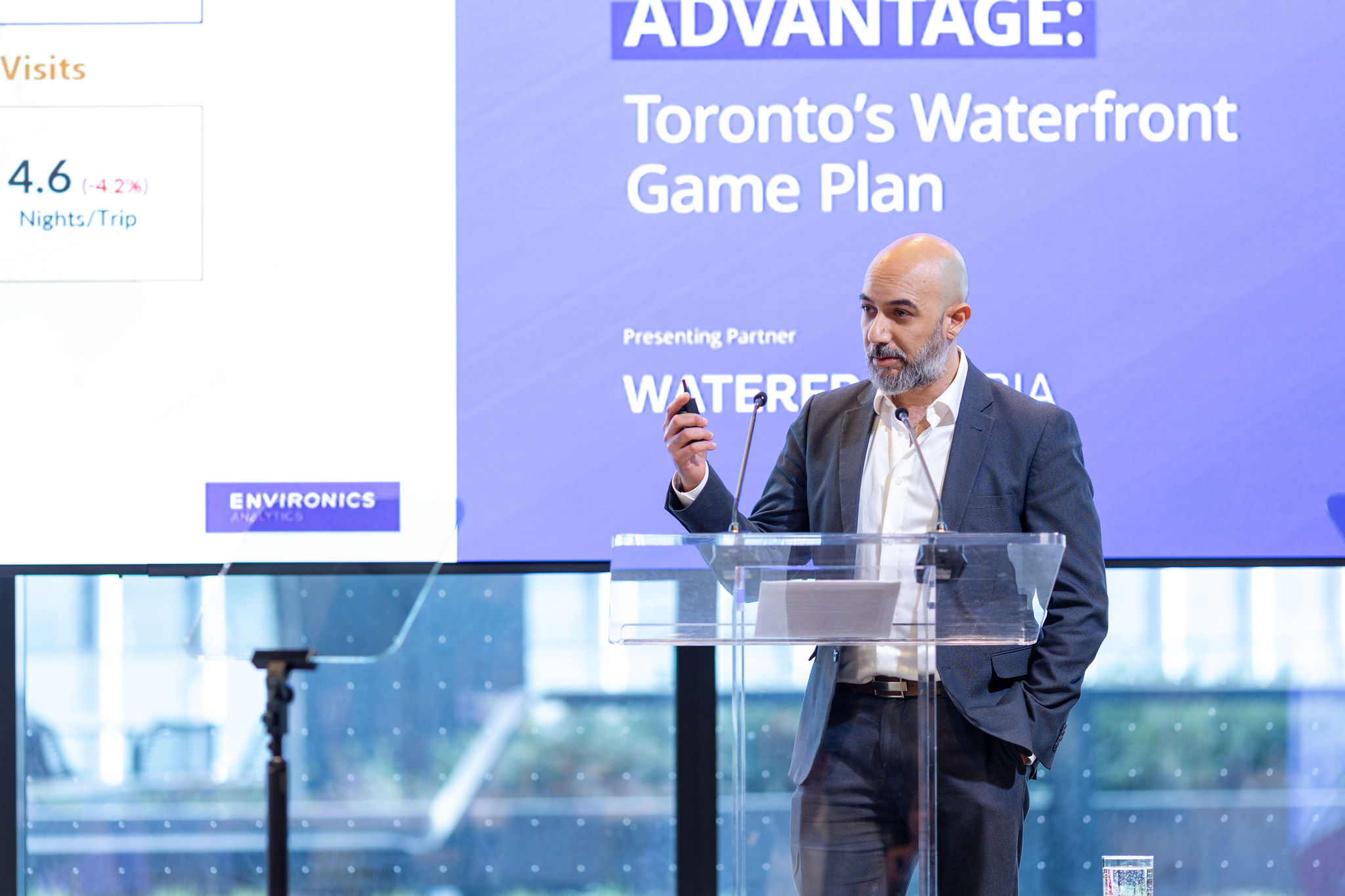
Unlike a local sporting event, the majority of FIFA's audience is coming from outside the city. Moneris measured a 45% increase in total city spending during Taylor Swift's Toronto visit compared to a typical week. The FIFA visitor mix is similar enough that the comparison holds: overwhelmingly out-of-town, multi-night, and spending broadly across hotels, restaurants, and retail. Environics Analytics profiled that mix as heavily European, South American, and multicultural GTA, communities that are deeply invested in the game and traveling specifically to see their nations play. For many of these visitors, this will be their first trip to Toronto. The ones who find a city worth exploring will come back.
Businesses should plan thoughtfully, not retreat.
This is not a summer for local residents to pull back from downtown. The City has developed a Business and Institution Travel Demand Guide covering match-day schedules, road closure windows, and practical guidance on adjusting deliveries and commutes. The transit plan works best when background vehicle traffic comes down, so employers choosing transit, cycling, and walking for their teams is part of what makes the whole system function. The Executive Director of the FIFA World Cup 2026 Secretariat at the City of Toronto, Sharon Bollenbach, committed to proactive outreach with major downtown employers in the coming weeks.
The tournament ends July 5th. The opportunity doesn't.
The physical legacy of the the games is already taking shape: improvements at BMO Field, a new community training site at Centennial Park, and four new mini pitches in city parks. The President and CEO of Destination Toronto, Andrew Weir, called this month-long event an "ambition reset," a chance to stop treating major global events as disruptions and start treating them as proof of what this city is capable of. The Pan Am Games changed something in Toronto's sense of itself in 2015. This international event has the potential to go further.
6
Toronto's share of the 104 tournament matches, making it one of the most significant single-city stages in the tournament
5th of 16
Toronto's ranking among the tournament's 16 host cities for how many people worldwide say they plan to attend matches there, trailing only New York, Miami, Los Angeles, and Mexico City, and ahead of every other host city including Vancouver
2nd in the world
Canada's ranking for FIFA 2026 ticket sales, behind only the United States, which is hosting 74 matches and has ten times the population
83%
FIFA World Cup awareness among Torontonians, up 20 percentage points from two years prior, reflecting the sustained community-building work of the City's World Cup Secretariat
~2 weeks
Average planned length of stay for international visitors, who are expected to follow their teams across multiple host cities rather than arrive for a single game, translating directly into hotel nights, meals, and experiences across the city
220,000
Fan Fest tickets sold in the first tranche in under four hours, a record across all 16 host cities and a signal of the demand waiting to be activated on the waterfront
400,000
Children between the ages of 5 and 18 currently playing soccer in the GTA, making it the largest participation sport in Canada and the foundation for whatever comes after the final whistle
$755 million
Federal investment in sport announced in the spring economic statement, described as the most significant federal commitment to sport in Canadian history, with $50 million earmarked specifically for hosting future international sporting events
$500 million
Total provincial community sport infrastructure investment across Ontario, deployed against a demand that far exceeded supply: the first $200 million tranche attracted more than $1.1 billion in requests
"I really want people just to look back and be able to say, do you remember the summer of 2026 when Toronto hosted the World Cup? And then have a slew of amazing positive stories to tell and memories that they carried for a lifetime." — Sharon Bollenbach, Executive Director, City of Toronto FIFA World Cup Secretariat
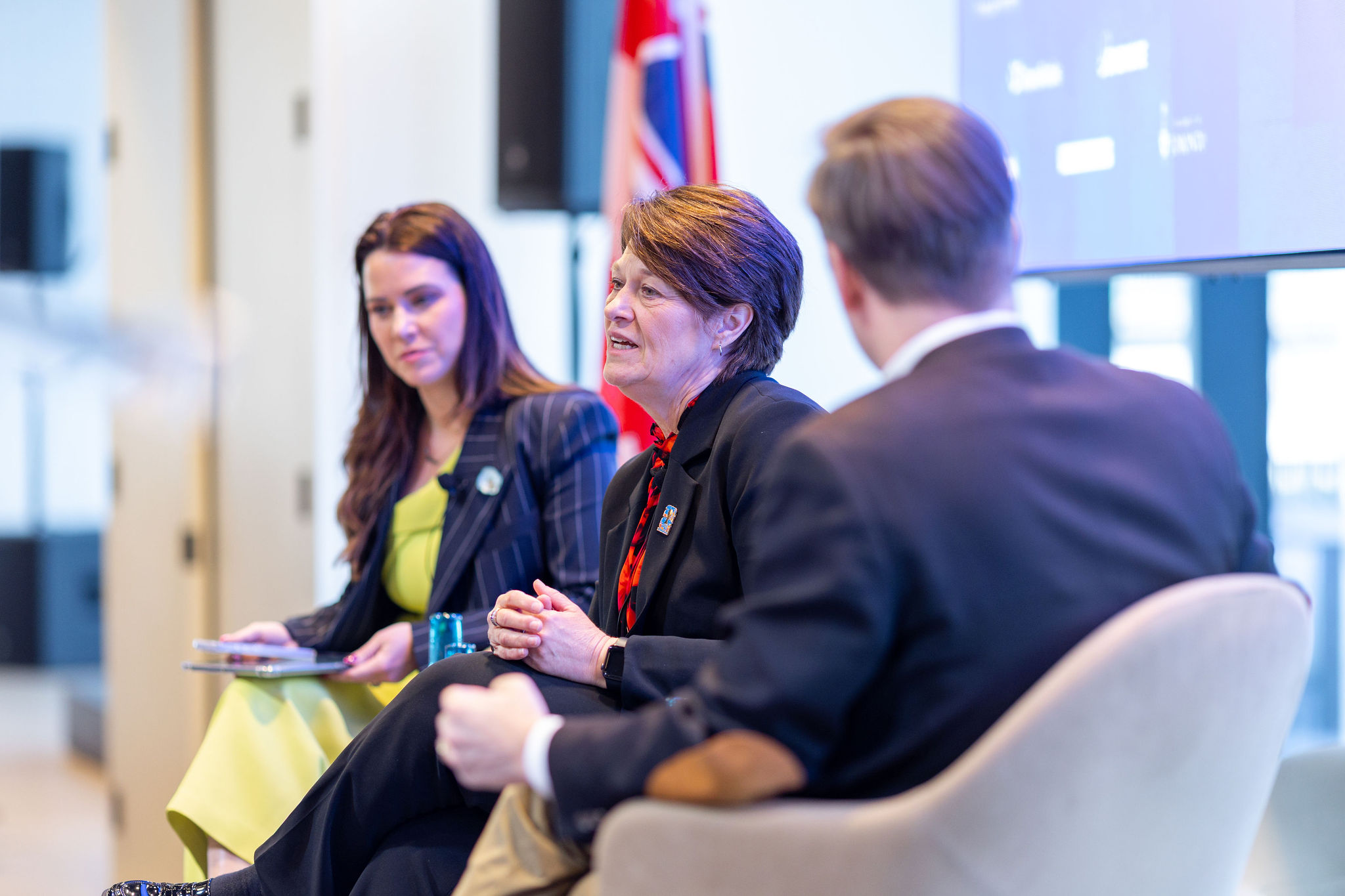
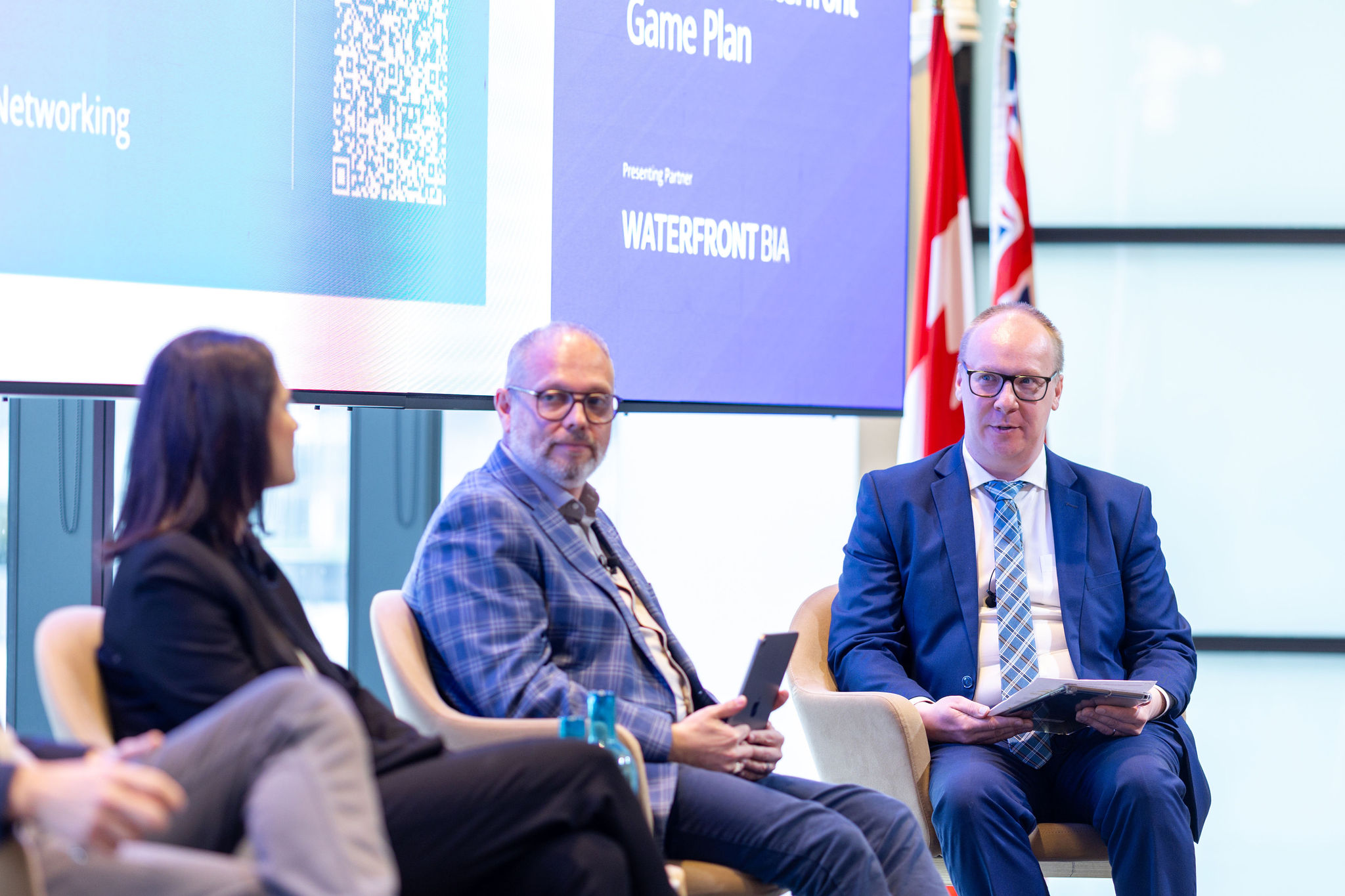
"When we look at this event, it's a once-in-a-lifetime event. It's not a question of just moving people from left to right, up and down, northeast, south and west. It's the experience. Are they going to come back here again? Are they going to visit the city and spend their money? Are they going to contribute to the economy? Will their kids want to come here based on their experience? So it's the customer experience." — Mandeep Lali, CEO, Toronto Transit Commission
"If the stadium and Exhibition Place and the Fan Fest at Fort York and the Bentway is going to be the heartbeat of this tournament, then we want the waterfront to be the front yard." — Joe Cressy, Chief Strategy and Public Affairs Officer, Waterfront Toronto
"The fan experience does not begin when you enter the stadium. The fan experience begins when you put on your jersey at home. So every part of our city that leads us to those stadiums matter." — Ilana Altman, CEO, The Bentway
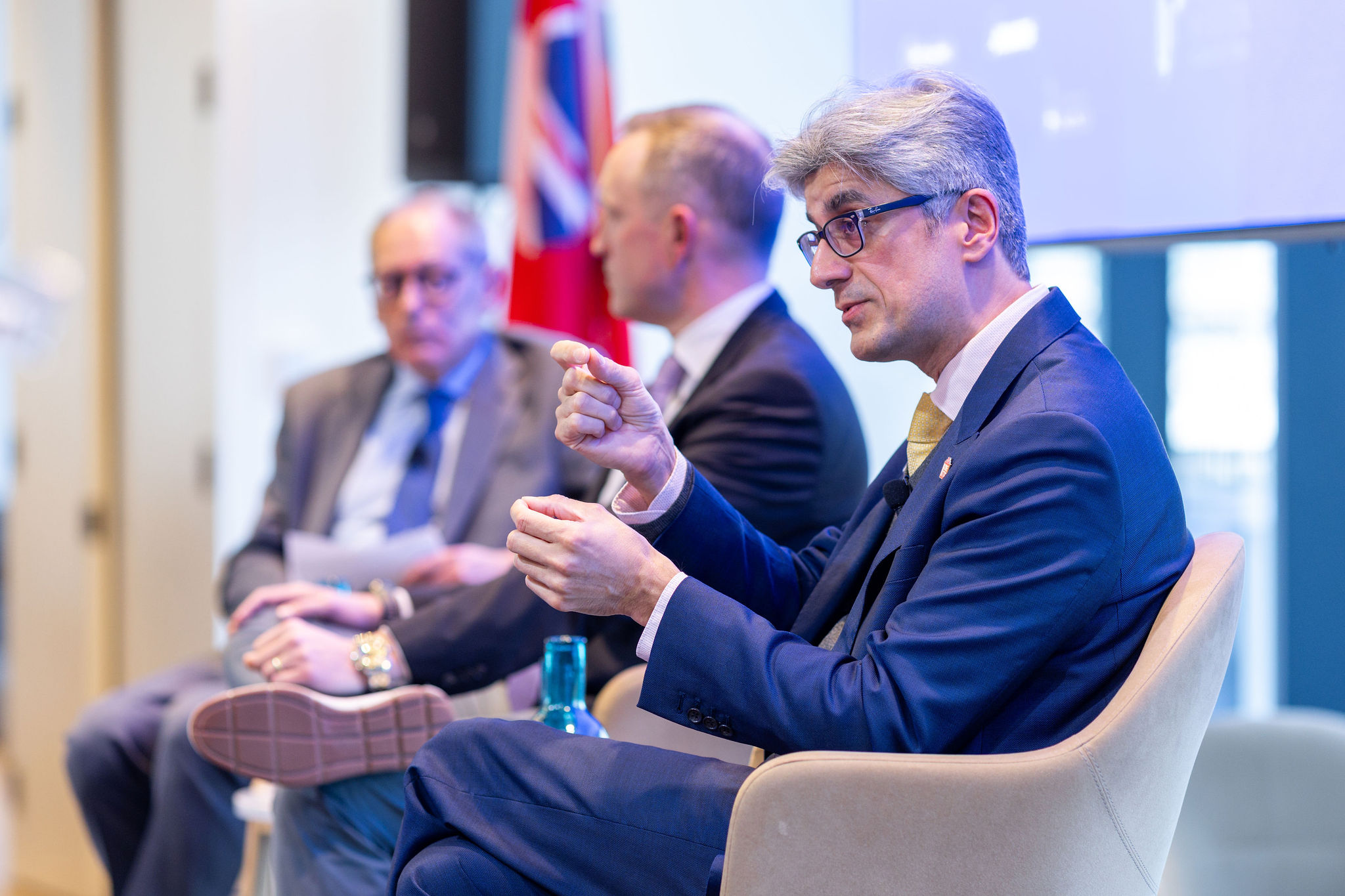
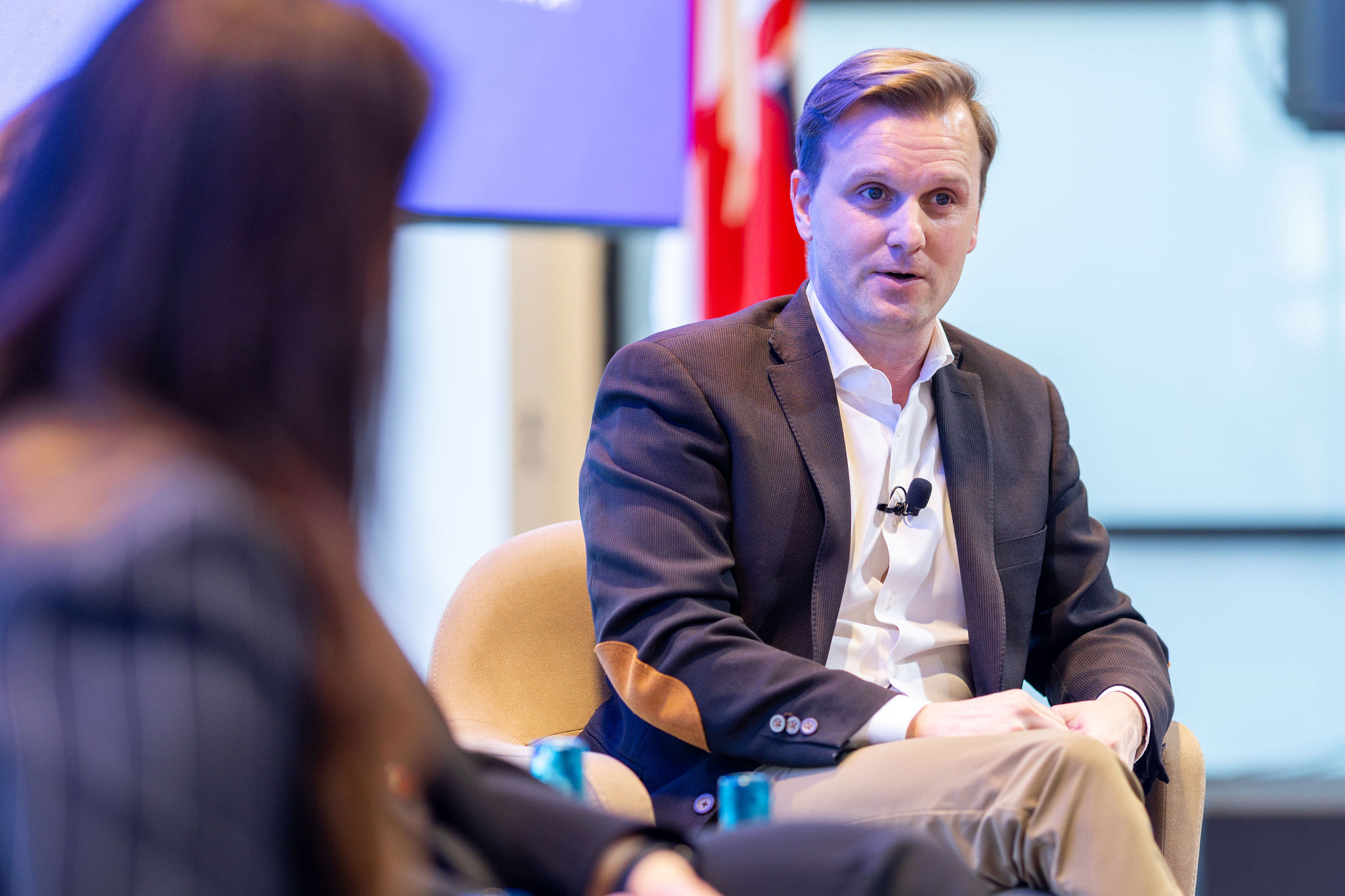
"There's economic opportunity, legacy, social opportunity. I see the greatest legacy of these games as the bump that we always see in interest, in participation rates, in enthusiasm, and the physical activity rates of kids in particular. It's the same as the Vince Carter effect that we saw in the late 90s when we got our first NBA team." — Hon. Adam van Koeverden, Secretary of State for Sport, Government of Canada
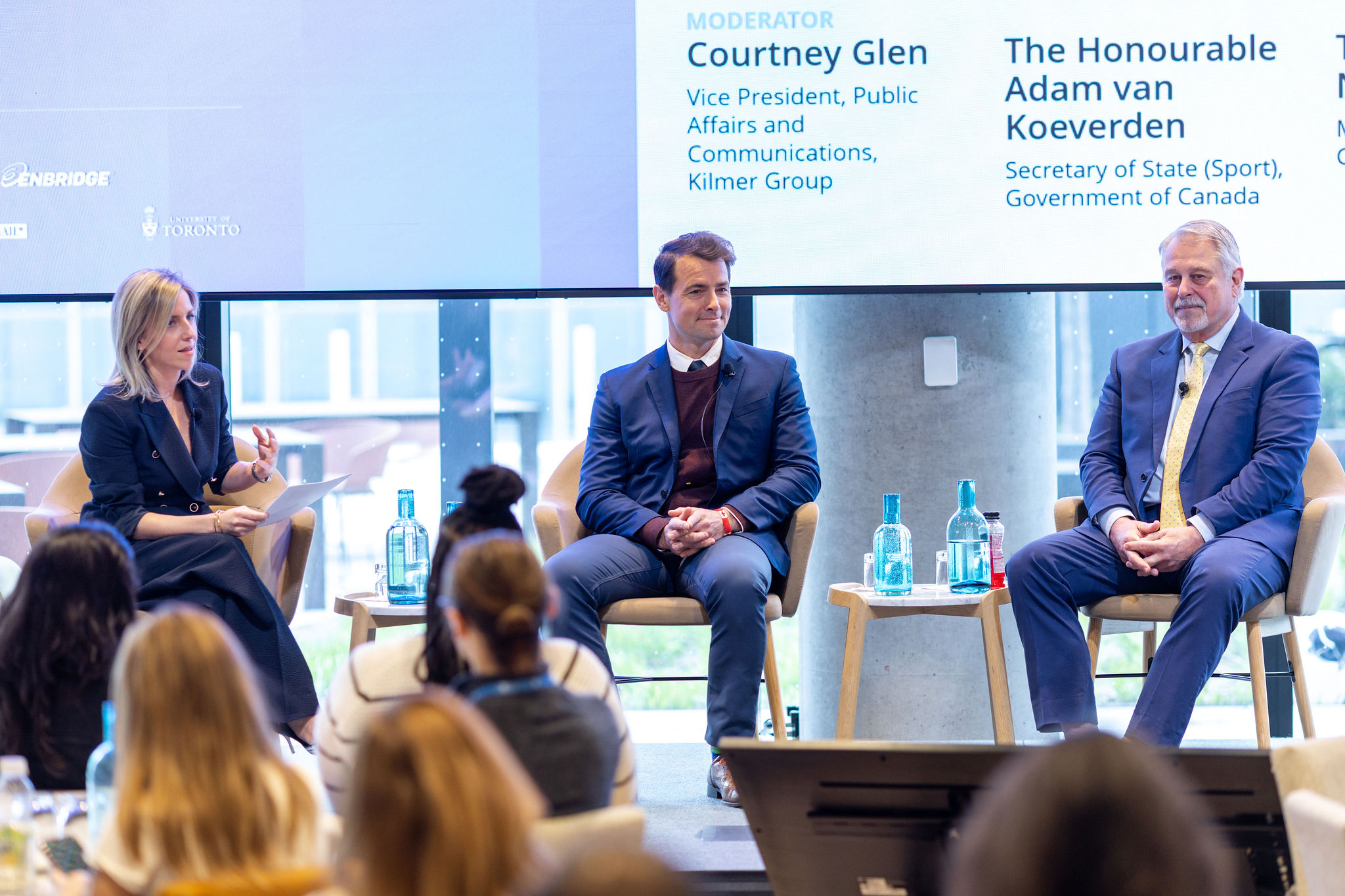
"People have no clue of how dynamic it's going to be for us in Toronto and Ontario. It is going to be a, ‘do you remember when moment.’ When it comes to the [tournament], people will say, where were you? Were you at the games? Were you at the FanFest. And this city and this province is going to be better off for it." — Hon. Neil Lumsden, Minister of Sport, Government of Ontario
"Go back to where you were eight years old. Soccer is your life. You dream, bleed about it. You're one of these countries that's come to Toronto, let's say, Ivory Coast. Every four years you try to qualify for the World Cup. Now, 12, 16 years later, your country is participating. People actually do this — they sell whatever assets they have, they sell their cars, even their homes, to come here for 10, 15 days, just singing their national anthem, singing songs about their countries, crying, shouting. It's a very impactful scene for people in Toronto to see this first-hand." — Ricardo Pasquel, President and Co-Owner, Inter Toronto FC