Skip to content

Event Recap

Event Recap: Annual Lunch 2026

Presenting Partner:

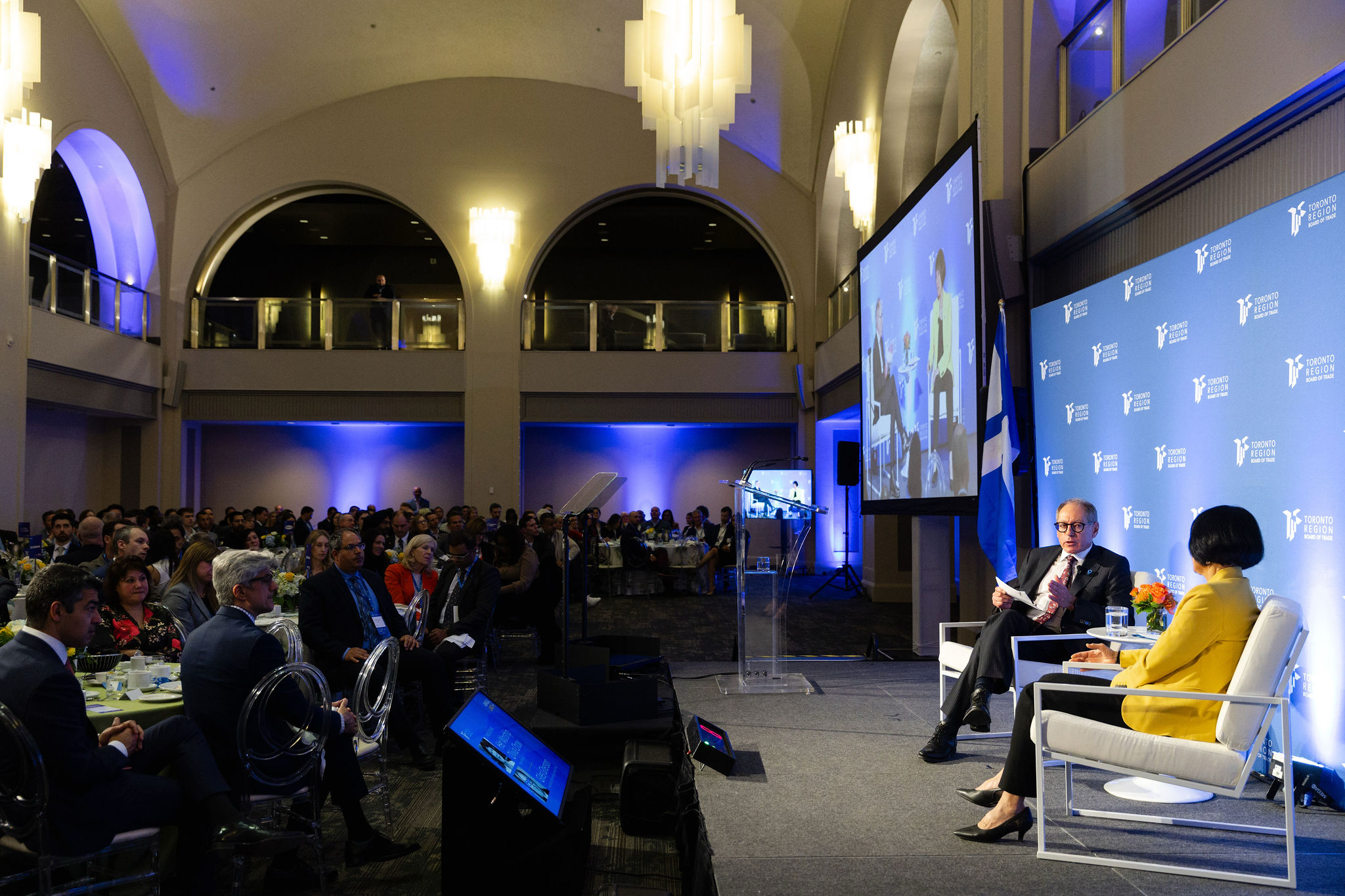
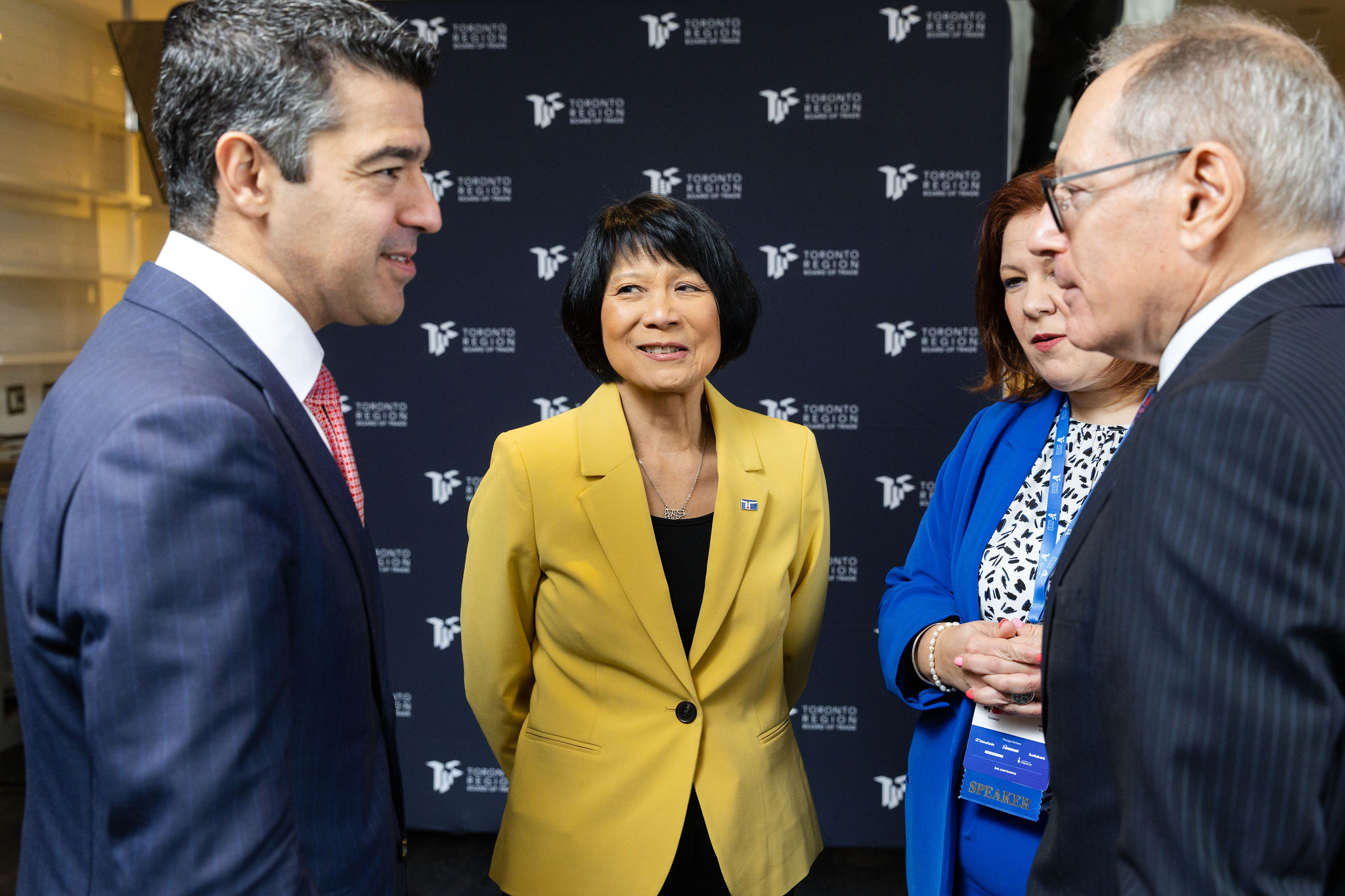
Giles speaking with Mayor Chow

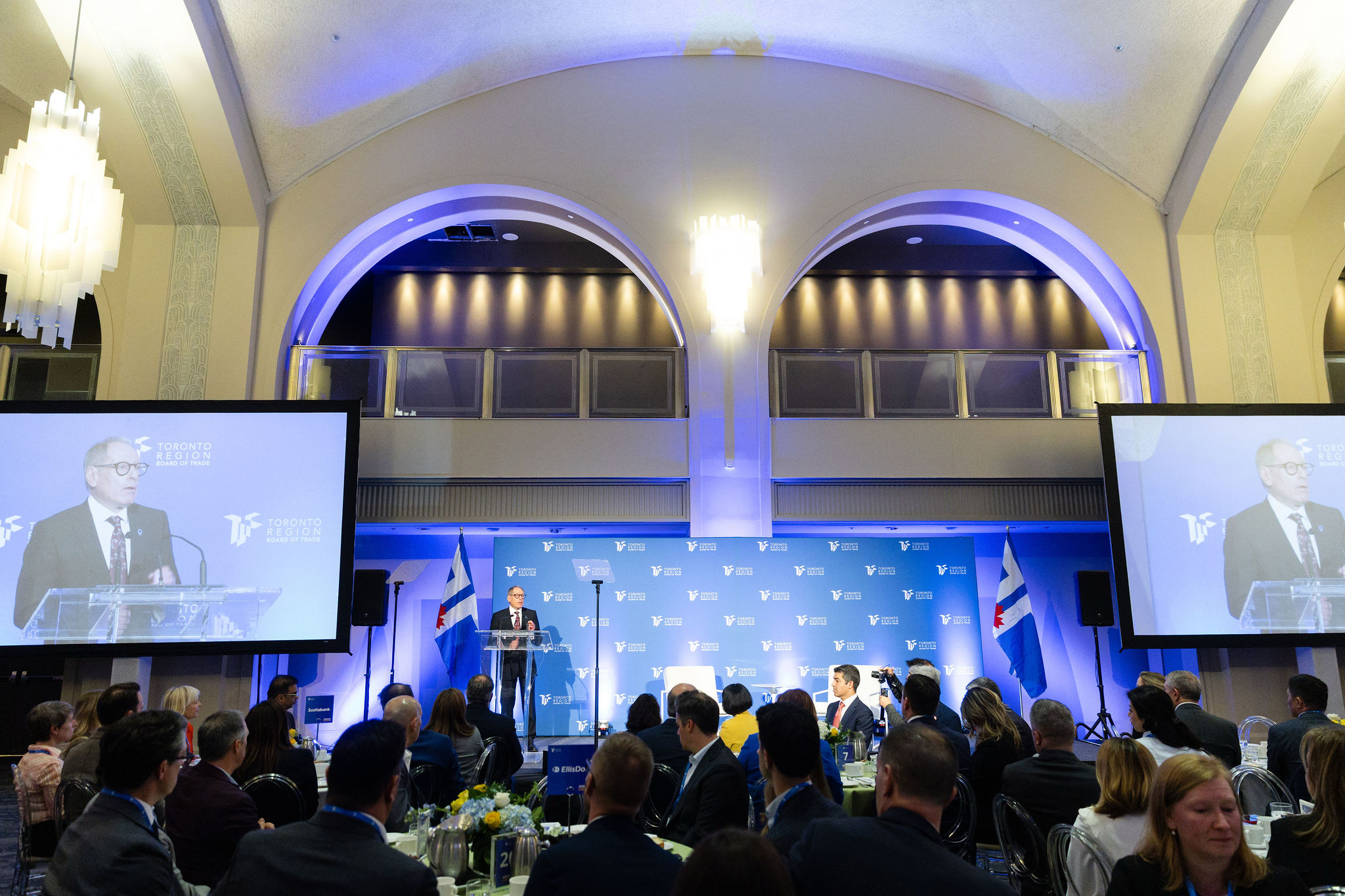
With 30 days to go before the biggest sporting event on the planet kicks off in Toronto, Mayor Olivia Chow joined the business community for the Board’s 2026 Annual Lunch, sharing her reflections on the state of the city at a time of global turbulence and change.

"Toronto’s in the midst of a massive makeover,” our President and CEO Giles Gherson said to open the lunch, “a generational infrastructure build spanning transit… transportation, energy generation and transmission, and big moves on housing."

Three years into her term, Mayor Chow focused her remarks on the progress made on housing, congestion, safety, and the city’s improved fiscal position, framing each as essential to Toronto’s ability to attract investment, retain talent, and compete on a global stage.
KEY TAKEAWAYS

Attracting new investment

Toronto’s manufacturing economy supports more than 1.5 million jobs. The Mayor highlighted Sanofi’s recent announcement of a $294 million expansion of its Toronto AI Centre of Excellence, an investment endorsed by City Council and supported by the Board. The Board has long pushed to protect Toronto’s employment lands, the industrial spaces that anchor our economic prosperity, and will continue to work with the City and Province to preserve and grow other major employment sites.

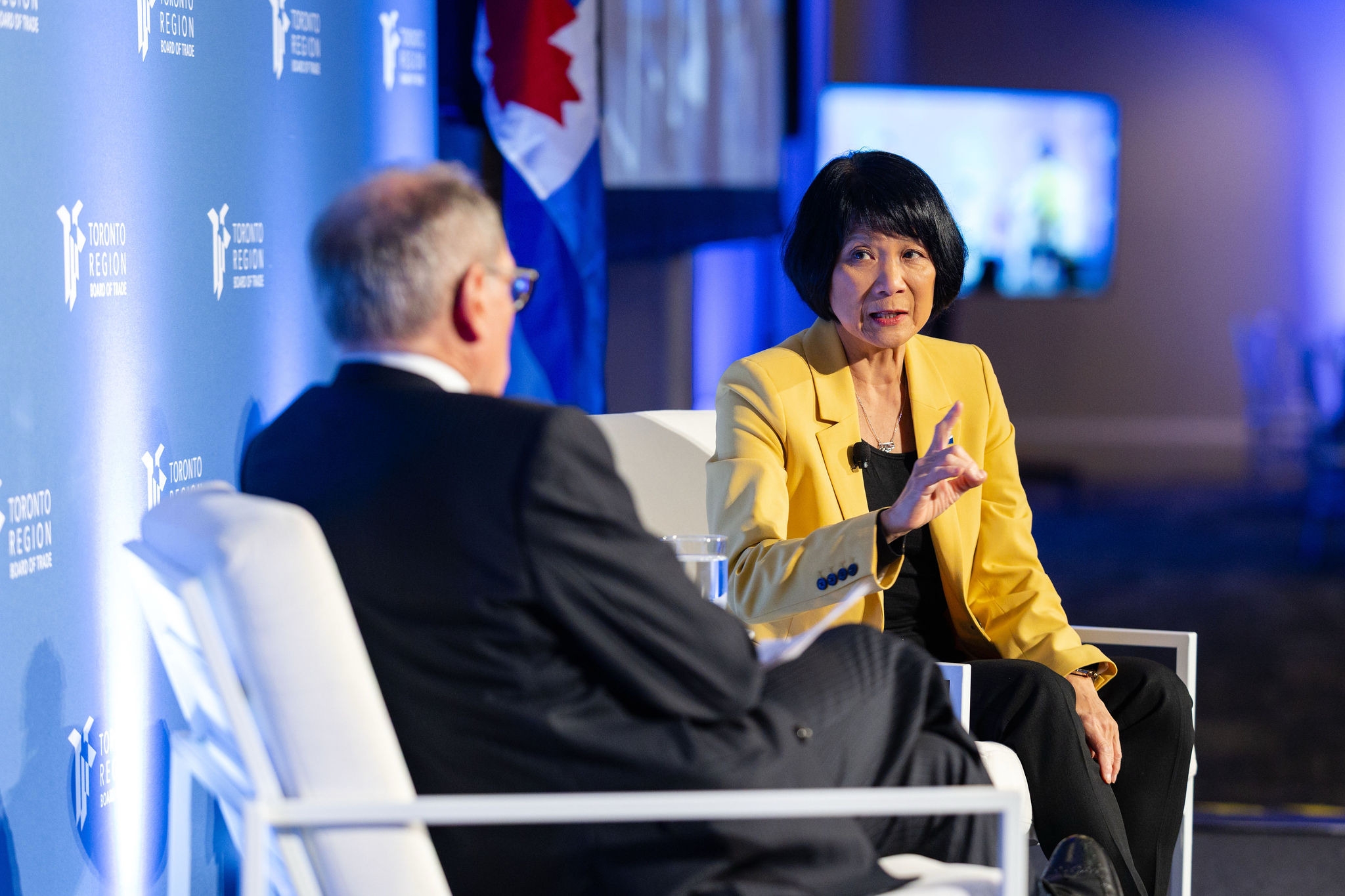
Giles speaking with Mayor Chow

Housing supply remains a top priority

The Mayor pointed to housing as her headline accomplishment of the past year. Toronto expanded its existing development charge exemption from four units to six units, broadening eligibility for the multiplex and missing middle housing the Board has long championed. A separate city housing initiative, which waives development charges for projects that include affordable units, has attracted 77 home builders proposing 33,000 new homes since its November 2024 launch. The recent $8 billion housing and infrastructure announcement made by Prime Minister Carney and Premier Ford was another major step forward. The Board continues to advocate for broad-based development charge reform that supports all new residential construction.

The Board’s congestion plan is delivering

Congestion has been a top advocacy priority for the Board, and the Mayor and City Council have responded by adopting all five recommendations contained in our Congestion Action Plan, including the appointment of a Chief Congestion Officer. The Mayor told the audience that hundreds of AI-controlled traffic lights will be deployed across the city over the next two years. Dynamic pricing on lane occupancy, in place since April, has cut road closures by 2.4 days on average. Downtown travel times are 12% faster, and the new Eglinton Crosstown and Finch LRTs save riders 10 to 15 minutes each way. The Mayor also highlighted the deployment of 100 traffic agents at the city’s most congested intersections as a key congestion measure. The Board will continue to push for the establishment of Key Performance Indicators to measure progress on Congestion. 

Giles speaking with Mayor Chow

Toronto’s balance sheet

The Mayor indicated that Toronto’s AA+ credit rating has helped secure more than $13 billion in funding from other levels of government, including the Gardiner Expressway/Don Valley Parkway upload that freed up $2 billion in capital and the recent $8 billion housing and infrastructure deal on Development Charges.

IN THEIR OWN WORDS

“And what I’ve learned from working across borders is that cities that thrive are not necessarily the ones with the best geography or the lowest costs. They’re the ones where business, government, and civic institutions move together. They move with speed, with clarity, and with trust. Cities that thrive focus on driving productivity, something that’s good for all of us.”

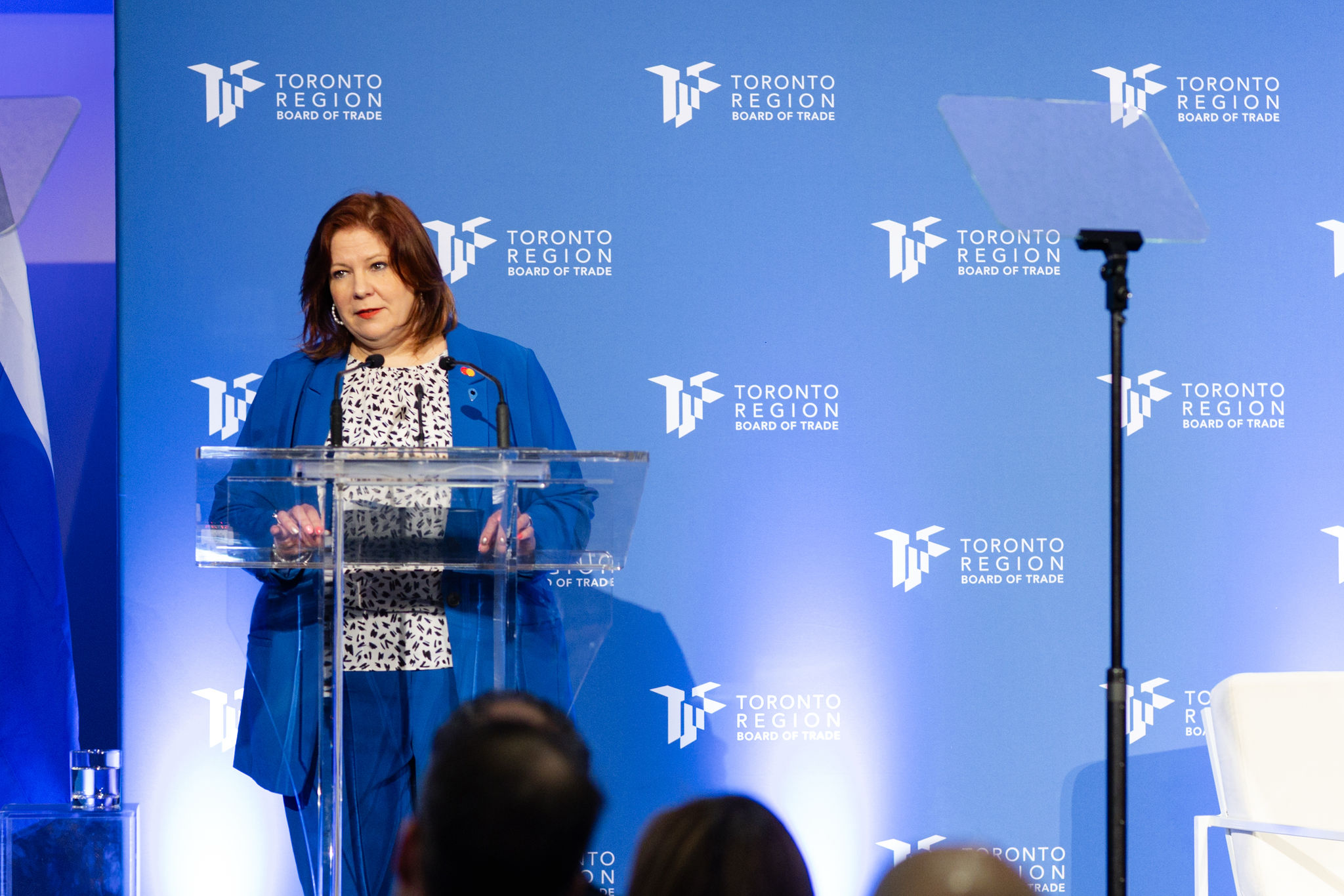
Sasha Krstic, Chair, Toronto Region Board of Trade and Executive Vice President, Security Solutions, Mastercard

“When I spend time with the business owners across Canada, I consistently see two things. Ambition for the future and resilience. This is despite the increasing uncertainty and complexity that we face.”

 Pouya Zangeneh, Senior Vice President and Head of Business Banking, Scotiabank


Pouya Zangeneh

“There’s no doubt we live in an age of unsurpassed consumption. But for consumption to be sustainable, we need to be able to pay the bill. We need production to match. It can’t all be on the credit card that our kids and grandkids will have to pay. So we have a lot of work to do and it’s not an insignificant lift. We all need to be pulling in the same direction to help lift our economy into a higher orbit, achieve escape velocity from more than a decade of sluggish growth.”

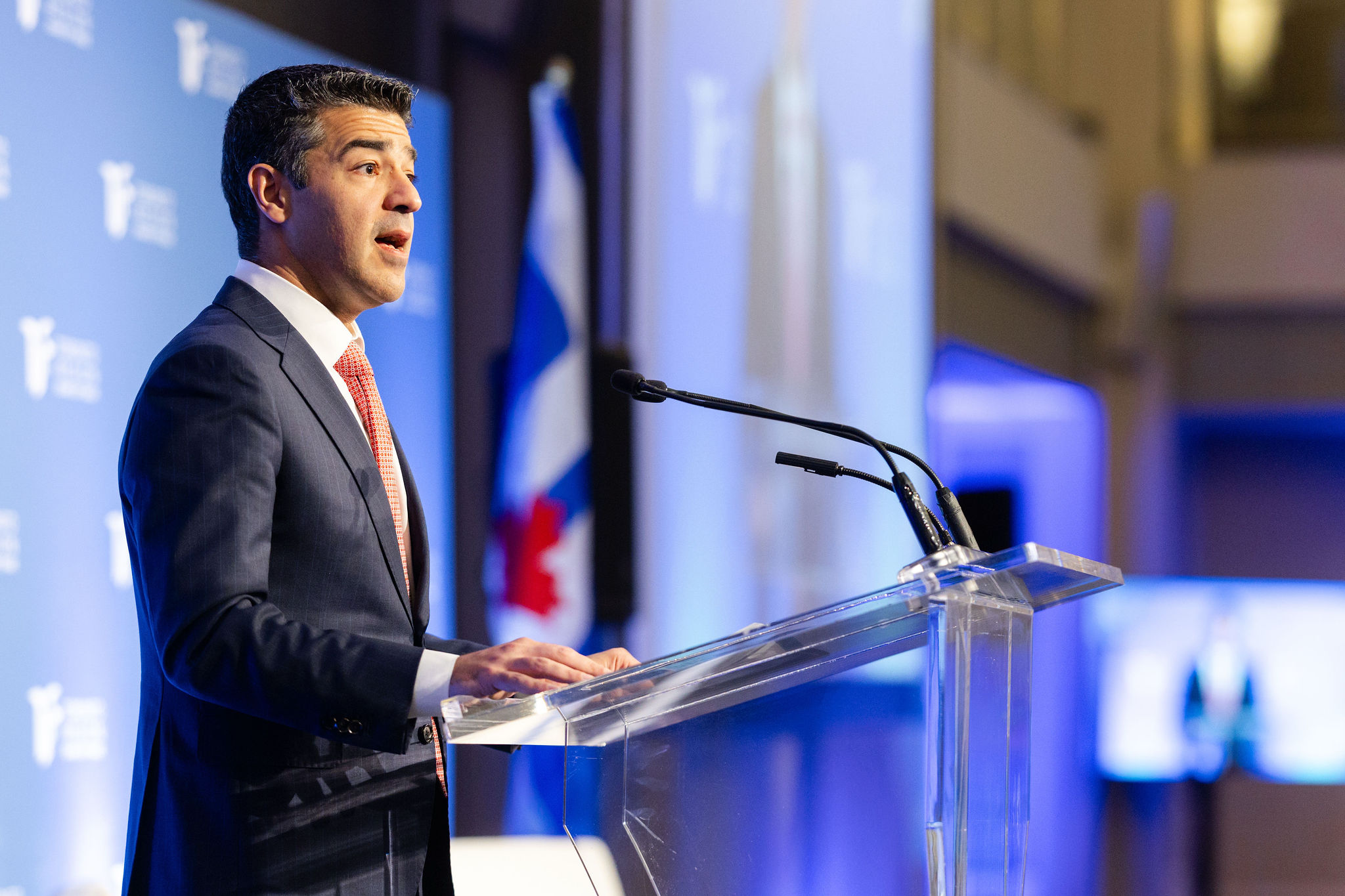
Giles Gherson, President and CEO, Toronto Region Board of Trade

Giles Gherson

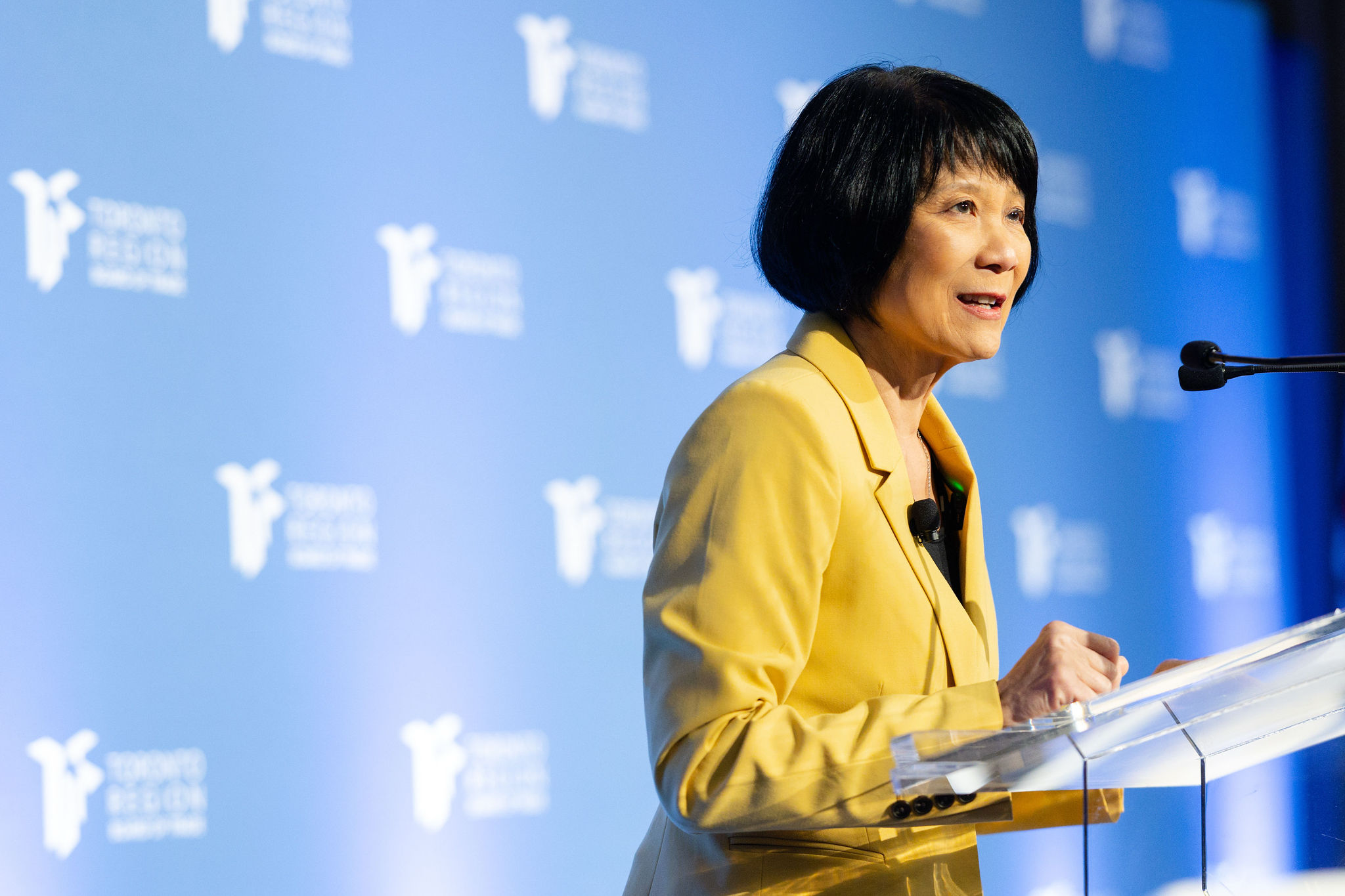
“You have to know when to fight back, when to work together, when to pick your battles, but it starts with believing that we can be ambitious, that Toronto is deserving, that we can build a city that fuels our ambition and hard work and doesn’t get in the way of it. My job is to make sure that safety concerns, congestion, high costs will never jeopardize our city’s potential. To create the condition for success this year, next year’s, 10 years from now.”

Mayor Olivia Chow, City of Toronto

Olivia Chow

VIP RECEPTION PARTNER

EVENT PARTNER

Related Content

Event Recap

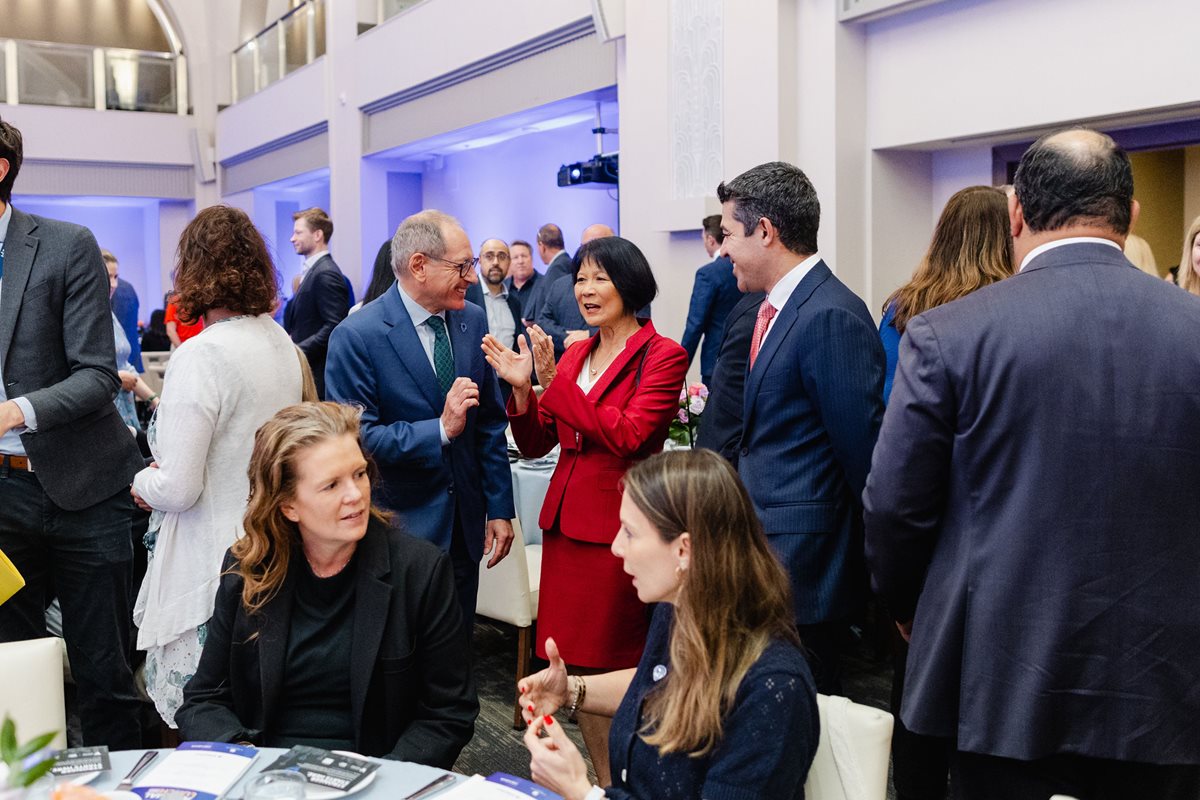
Giles, Mayor Chow and Pouya chatting after our Annual Lunch
Annual Lunch: Celebrating our 180 Year Legacy

For 180 years, the Toronto Region Board of Trade has stood at the heart of this region’s economic engine. At this year’s Annual Lunch, we didn't just celebrate our legacy, we activated it.

JUN 2025

Event Recap

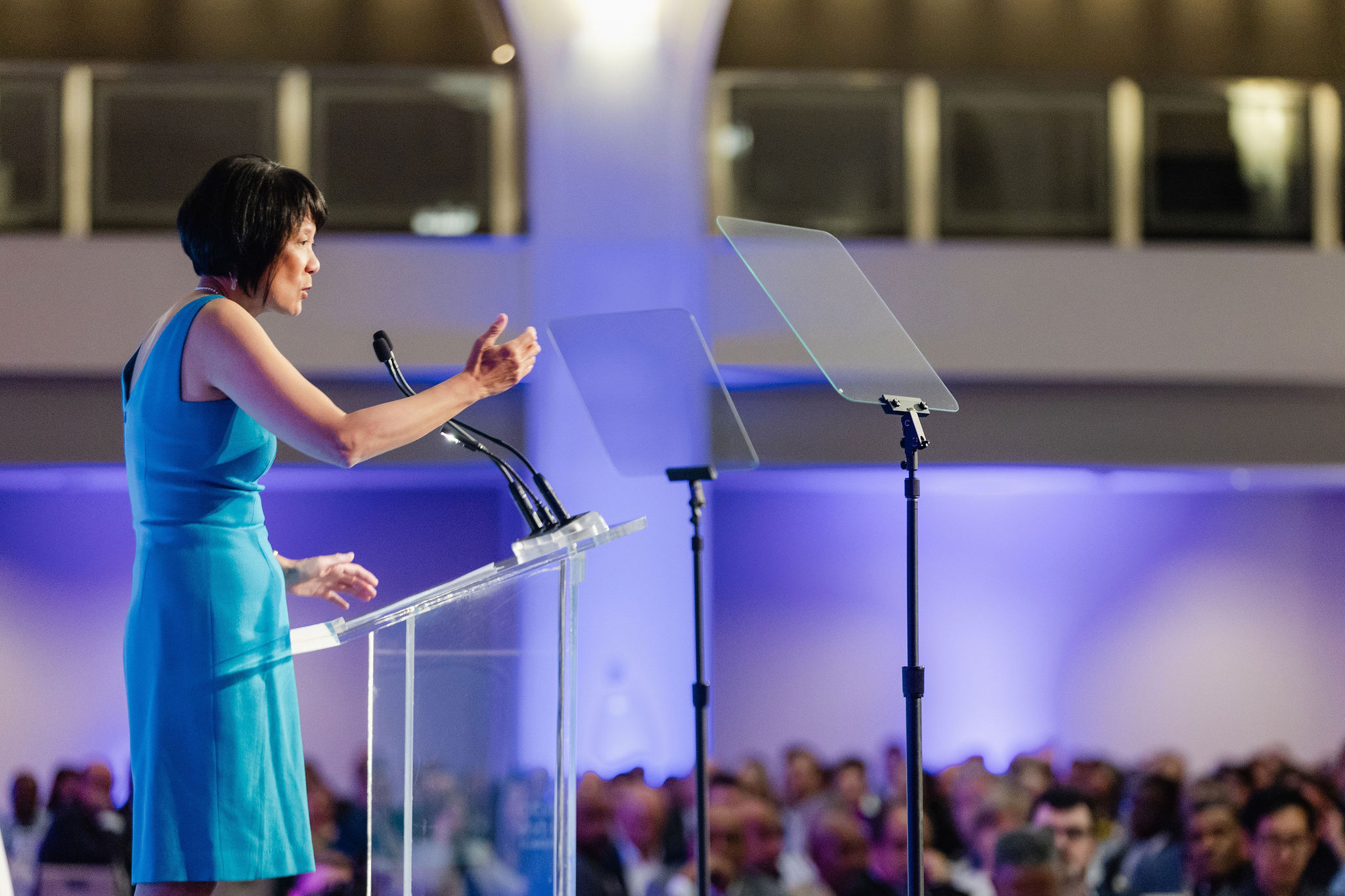
Mayor Chow at the podium at our 2024 Annual Lunch.
2024 Annual Lunch - Mayor Olivia Chow on Building Tomorrow

Our Annual Lunch, a time-honored tradition served as a dynamic platform for Toronto’s Mayor, Her Worship, Olivia Chow, to outline her vision to Toronto’s business leaders.

JUN 2024