The Toronto region’s housing shortage is getting worse, not better. Escalating costs and development charges are driving up the sale price on new builds, leading to cancelled projects and increased scarcity.
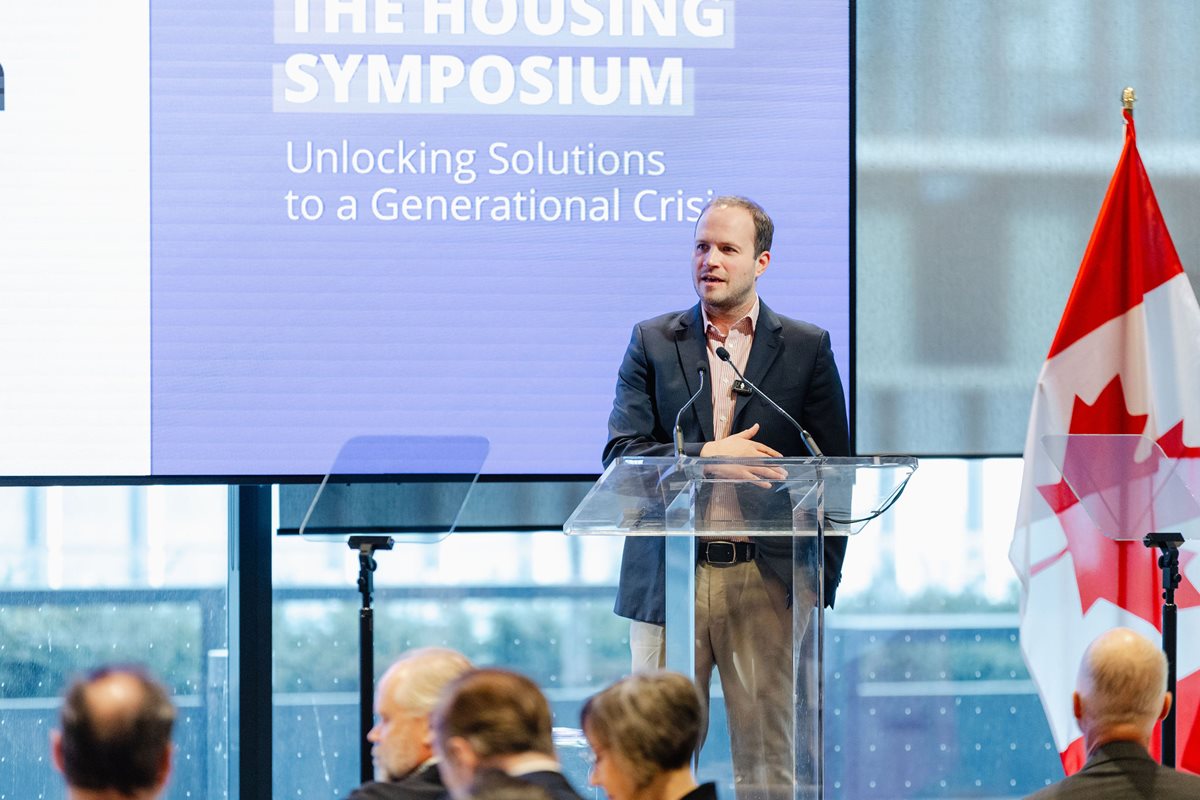
At our Housing symposium, Out with the Old: New Paths to New Housing, leaders from government, finance, and industry proposed a wide range of reforms and innovations to accelerate the pace of construction across the spectrum of housing options.
The big takeaway: builders want to build what people want to buy in places they want to live, but a series of regulatory, financial, and zoning restrictions are holding them back.
Over the past 25 years, we’ve added two million new residents to the Toronto region, but housing supply has failed to keep up because of the cumulative impacts of hundreds of policy choices across the private sector, and at all levels of government.
The good news is that there is a wide array of policy choices that decisionmakers, investors, and builders can make to get us out of it. Through innovation, streamlining, creativity, and advanced technology, the tools are there.

As the Toronto Region Board of Trade’s Giles Gherson reminded attendees, “We can’t just cherry-pick solutions for a problem as layered and complex as the housing shortage. We need a holistic approach.”
- Outdated and Patchwork Policy is Making Construction Too Expensive, Too Delayed, Too Limited
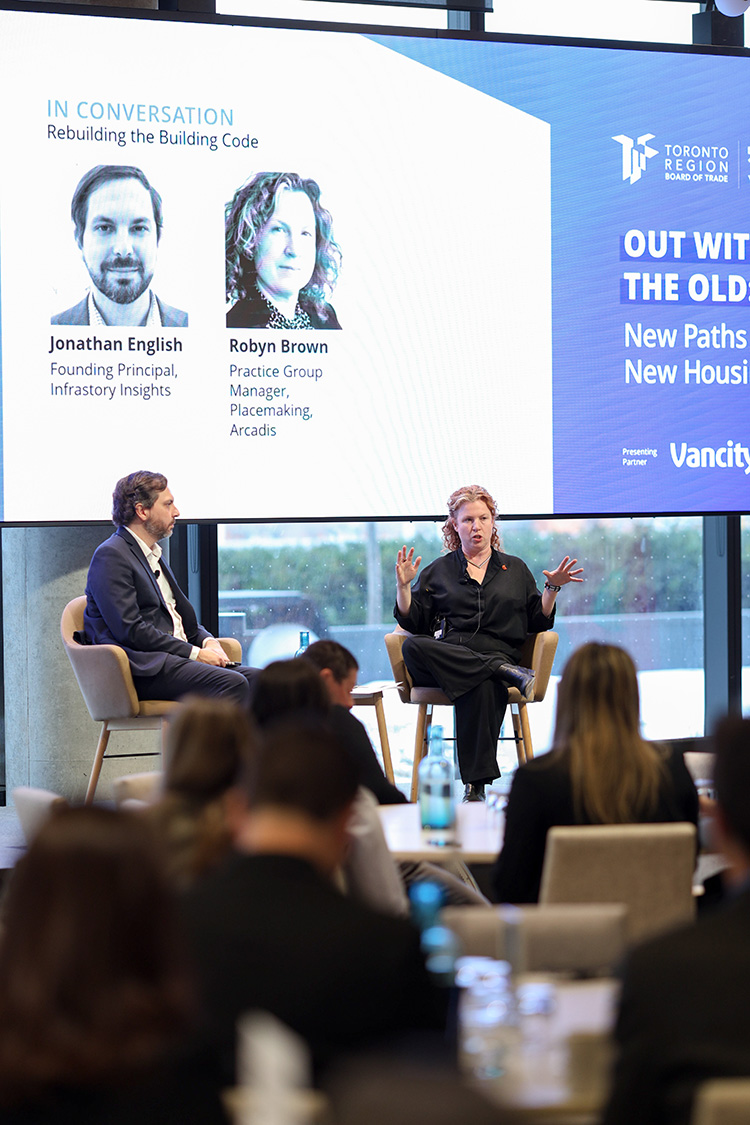
- Building codes and regulations limit the kinds of housing that builders can propose, delaying construction by several years and driving sale prices even higher. By modernizing, streamlining, and harmonizing building codes, governments can cut years off of construction timelines and get more shovels in the ground at a lower cost.
- Development Charges are a Tax on Today’s Builders and Customers to Pay for Generational Infrastructure
- The Board’s new report Priced Out: The High Cost of Development Charges highlights that while Development Charges are an important tool for funding vital infrastructure, they need to be modernized to meet this moment. Changes like deferring DCs until occupancy, allowing for alternatives like municipal services corporations, municipal bonds, and innovative funding models can reduce the cost of new construction and bring new units to market.
- Focusing on Consumer Needs – Not Commoditization – Benefits Builders
- A variety of factors have created a housing market that ignores what end users need and want. Modernizing zoning and building codes, reducing taxation on housing, and creating an environment for innovation will allow developers to sell what customers want to buy. Every sector and level of government has a part to play in refocusing to a consumer-centric approach that actually meets the market demand.
- Derisking Financing for Developers Will Speed Up Construction and Meet the Existing Demand
- Charging developers up front for new infrastructure, reducing financing options, patchwork building codes, and increasing construction timelines have created a level of risk too steep for developers to get shovels into the ground. We need to bring predictability back to investment for home builders.
176%
- The rate that development charges have increased between 2011 and 2023, pushing up the sale price of a single-family home by over $100,000.
80,000
- Every year, 80,000 Toronto residents – mostly young adults with families in the prime of their careers – leave the Toronto region for other parts of Canada due to housing prices.
51,000
- The number of rental starts by Ontario’s rental housing providers over the last three years, a provincial record.
2x and 5x
- Edmonton has built twice and Calgary five times as many “missing middle” units than Toronto, according to CMHC.

“Industrialization of housing is the last mile of a marathon. In many cases, it takes us about 150 days to build a single-family home. If we can, through industrialization and modular housing reduce that to 90 days, that's wonderful – 40 days saved. But if it takes us seven years to get the draft plan approval to build those houses, guess what, that 40 days is a rounding error.”
- Brad Carr, CEO Mattamy Homes and a member of the Business Council of Toronto
“Benjamin Franklin said that “Well done is better than well said.” We have to protect the dream of home ownership. It is the quintessential Canadian dream, and I believe if we do what we're doing now, along with more, we will help that dream stay alive.”
- Minister of Municipal Affairs and Housing Hon. Rob Flack

“Housing is taxed like alcohol and tobacco, which is kind of wild if you think about it. We have this huge cost around development, development charges, other types of fees. We have a regulatory environment that makes things really slow to happen and very uneven from city to city. The financialization of housing, which we’ve really seen with the condo market, that's deeply changed how we finance things. We have huge demographic shifts. So, this is stacks upon stacks of issues. And we have to solve all of them.”
- Robyn Brown, Practice Group Manager, Placemaking, Arcadis
“In most markets, being big is scary because then you can't fail. And in Canada what we've done is we've created an environment where being big is the only thing that matters. Which is why we've seen so many banks disappear… the reality is we could use some help of a more friendly regulatory regime for smaller financial institutions or mid-sized financial institutions, so we see more of them.”
- Wellington Holbrook, President and CEO, Vancity
“Where does the nurse live? One to way to kill a region, make sure that the essential service workers that have to live here can't afford to live here… What we have to do isn't just ‘number of units.’ They have to be accommodating across the needs of the continuum. They have to be affordable across the continuum. They have to be sustainable. They have to be resilient.”
- George Carras, CEO, R-LABS