As one of the Toronto Region Board of Trade’s principal partners, Scotiabank plays a central role in supporting the businesses that power the Toronto region’s economy. Through its work with entrepreneurs and small and medium-sized enterprises, the Bank is often engaged at moments that define a company’s future, whether that is growth, transition, or uncertainty, that have a real impact on employees, families, and communities.
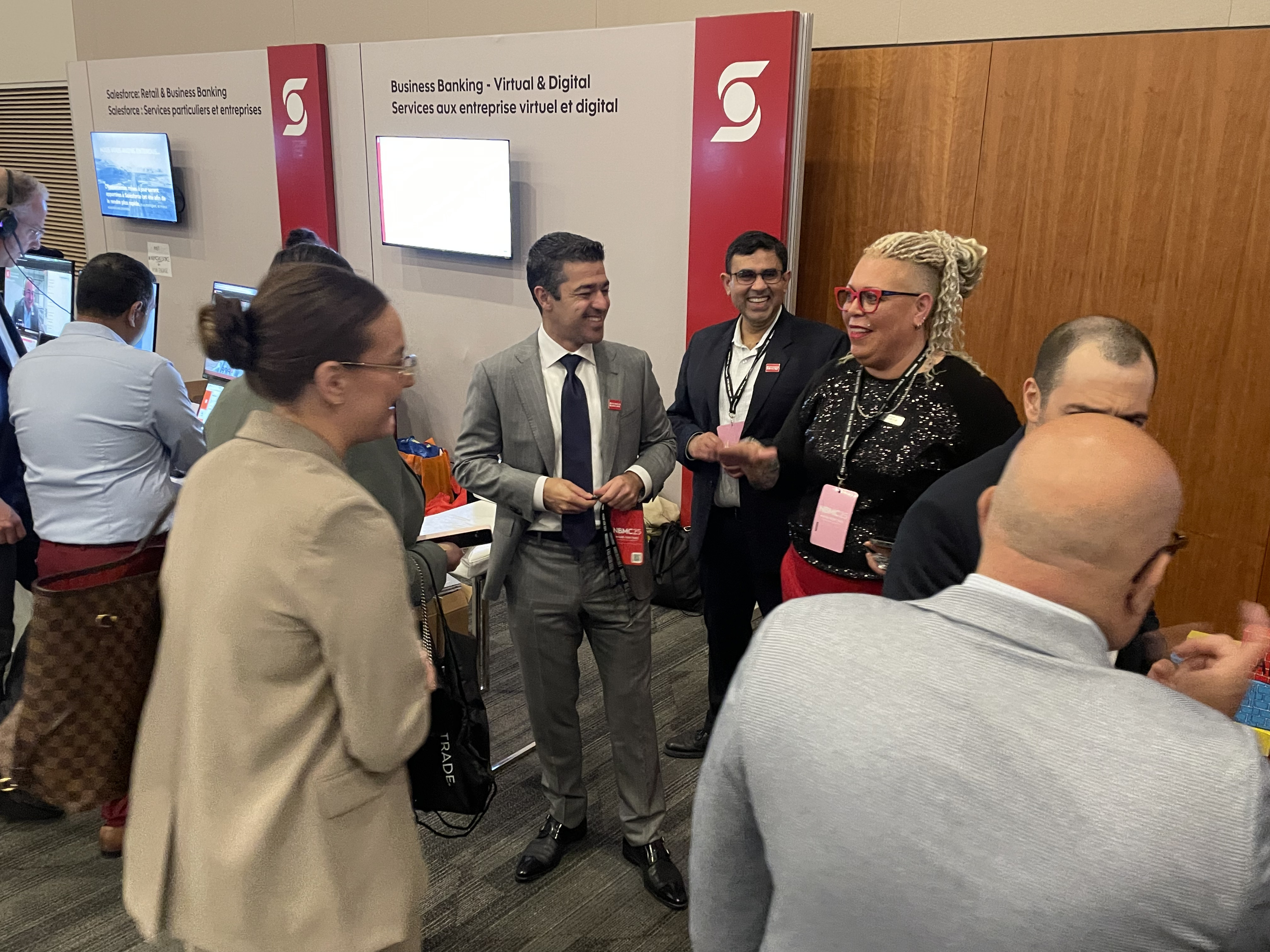
Over the last couple of years, Pouya Zangeneh, Senior Vice President, Business Banking at Scotiabank, has spent his time working alongside business owners at these defining moments. That proximity has shaped how he thinks about leadership and responsibility.
“What motivates me as a leader is people,” Pouya says. “Their growth, their potential, and the impact they create. My purpose is people. That includes our clients, our employees, and the communities we serve.”

Leadership Grounded in People
For Pouya, supporting a business owner requires understanding what sits beneath the numbers. Behind every enterprise are livelihoods, families, and long-term ambitions that extend well beyond a single financial quarter.
“When we help a business owner, we are not just helping a company grow,” he says. “We are helping to create jobs, support families, and contribute to the economic resilience of the Toronto region.”
That perspective informs how he leads his teams. He places emphasis on clarity, accountability, and trust, believing that sound judgment comes from people who feel supported and aligned.
“My role is to be present and thoughtful,” Pouya says. “When our teams feel supported and aligned, they are better equipped to help clients navigate change, uncertainty, and opportunity.”

Being Present When Decisions Matter Most
Scotiabank’s enterprise-wide commitment to inclusive growth provides an important framework for this work. Initiatives such as ScotiaRISE and the Scotiabank Women Initiative® designed to build economic resilience and expand access to capital and advisory support. For Pouya, their significance lies in how they translate into practical outcomes.
“These initiatives matter because they meet the communities we serve and business owners where they are,” he says. “They reflect the realities of running a business, not abstract ideals.”
“There have been many meaningful moments in my career,” he says, “but the ones that stay with me are the moments where you genuinely see the impact we have on people and when you see firsthand how our support helps a business, a family or a community move forward.”
Turning Commitment into Real-World Impact
One experience stands out. Pouya recalls working with a woman‑led business owner who came to the bank during an especially challenging period for her company. She wasn’t looking for a quick fix, she needed steady, practical guidance that would help her stabilize her operations, protect her team, and make decisions she could stand behind long term.
Pouya and his team spent time understanding the full picture: her cash‑flow pressures, revenue volatility, staffing concerns, and the operational choices she was trying to navigate on her own. They worked with her to build out a more resilient financial plan and connected her with specialists through the Scotiabank Women Initiative® who could provide tailored advice on everything from credit solutions to refining her business model. They also helped her access the most suitable financing options and relief supports available at the time, ensuring she had both immediate breathing room and a plan for sustainable recovery.
“Months later, she told us her business was beginning to grow again. Hearing that she kept her doors open, and kept her employees working, that stays with you.”
For Pouya, moments like this clarify the responsibility that comes with leadership.
“They remind you that leadership is about being steady,” he says. “It is about helping people make decisions they can live with, not just decisions that look good on paper.”
Leadership in Uncertain Times
That steadiness was tested during the uncertainty of COVID. For Pouya, the period reinforced the importance of presence over prescription.
“Many clients did not know if they would make it through,” he says. “What mattered most was that we stayed available, keeping our branches open so we could help our clients work through relief programs, and find ways to keep going.”
When asked what lesson he carries forward, Pouya returns to the role of teams.
“Leadership is only as strong as the people behind it,” he says. “If you invest in people, give them clarity, and trust their judgment, they will create meaningful outcomes for clients and communities.”
It is a perspective shaped by years of working alongside business owners when decisions matter most, and one that continues to guide how Pouya approaches leadership today.