Skip to content

Event Recap

Event Recap: Beating the Competition, Ontario Auto Forum 2026

Sponsored by:

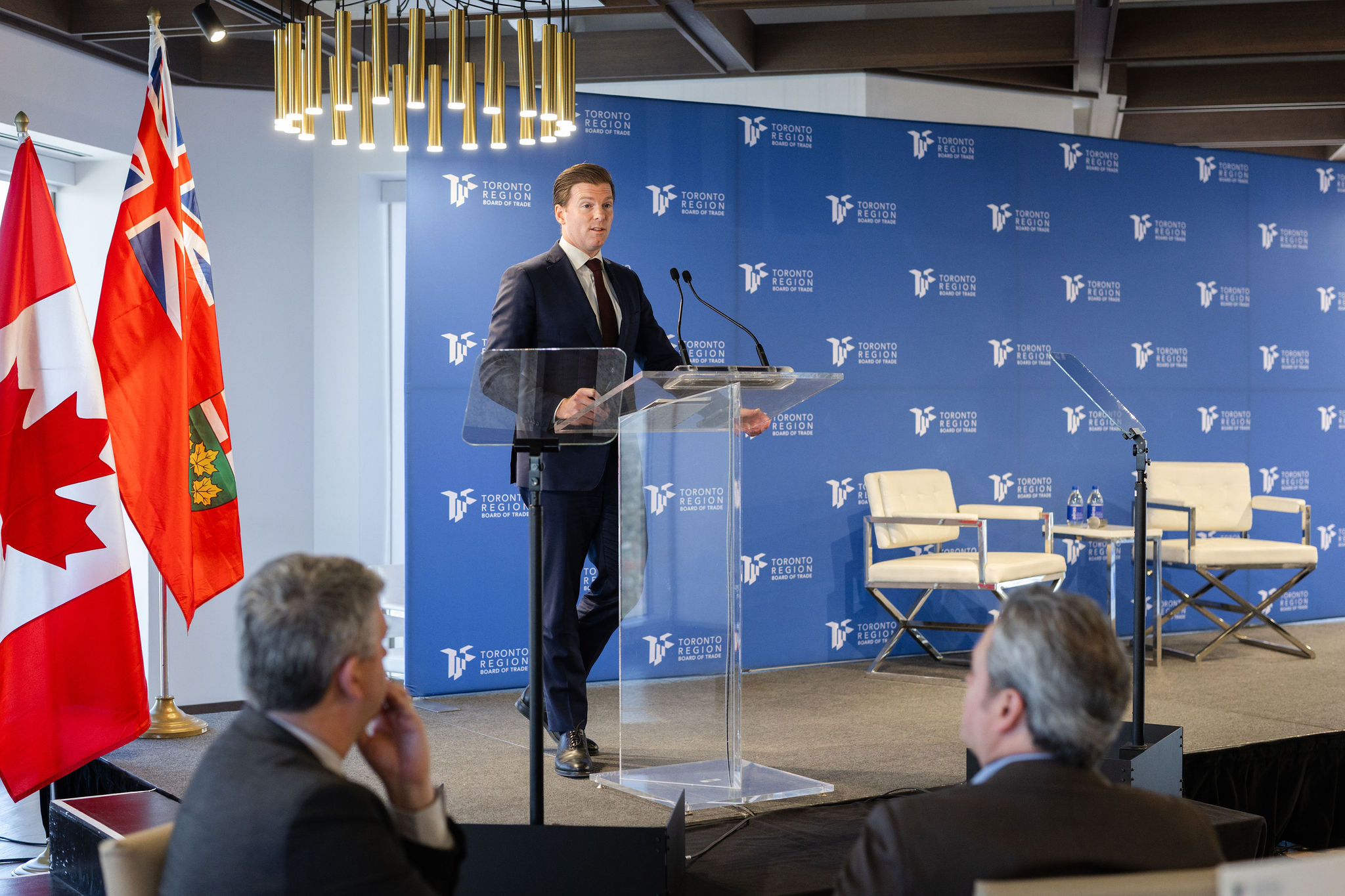
Giles speaking at the forum

For the past year, Ontario's auto sector has been in the crosshairs. Cancelled EV programs, two empty assembly facilities, U.S. tariffs, "Buy America" policy, and the rise of Chinese auto manufacturing have all made the past year a challenging operating environment. Recently, the Board convened Beating the Competition: Ontario Auto Forum 2026. We gathered the people building, financing, and shaping the sector's future to chart a way through. 

"There’s a growing sense that this sector, for so long a cornerstone of Ontario’s high-value manufacturing economy, a big source of this region’s prosperity, finds itself at an inflection point," our President and CEO Giles Gherson said in opening the forum. "At the Board of Trade, we believe that this sector is too important, too high value, to lose or to see further diminished." Canada’s automotive sector is enterprising, risk-taking, and innovative, and the quality of its workforce is unsurpassed. It stepped up during COVID, helping build the O-Two ventilators that became a symbol of the sector’s manufacturing agility during the pandemic. The conditions, as the morning made clear, are demanding, but they are not impossible. 

Anchoring the day was the launch of RBC’s new report, Steering Through Uncertainty, which became the jumping-off point for many of the conversations that followed. 

KEY TAKEAWAYS

Growth is the only viable scenario

Jordan Brennan, Managing Director of RBC Thought Leadership, presented Steering Through Uncertainty, a report examining four possible futures for Canada’s auto sector against five converging pressures: tariffs, slower-than-expected EV adoption, software-defined vehicles, a mature North American market, and the rapid rise of China’s auto industry. 

The report’s central argument was that Canada cannot compete on assembly volume alone. Future growth will depend on capturing more of the high-value software, electronics, and advanced manufacturing content embedded in each vehicle, sectors expected to drive much of the industry’s growth over the next decade. 

RBC’s “fast lane” scenario would see Canadian production rise from 1.3 million vehicles today to 2 million annually by 2040. The alternatives range from stagnation to a decline similar to Australia’s, which exited large-scale auto manufacturing and has since struggled to rebuild industrial capacity.

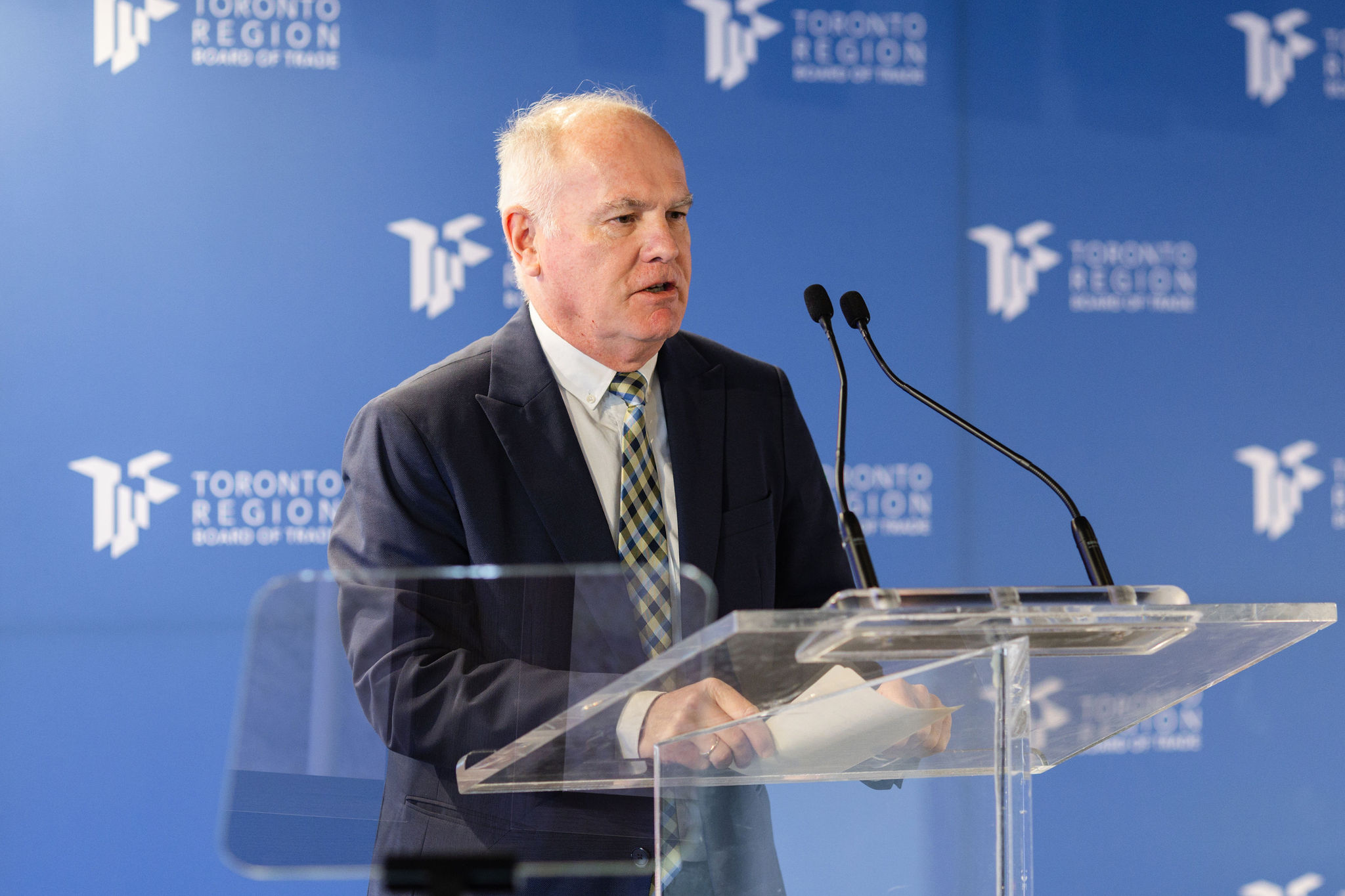
speaker

Zero-to-low tariff access to the U.S. is the defining factor

Ontario’s auto industry remains fundamentally tied to the U.S. market. Roughly 90% of vehicles assembled in the province are exported south, making access to the American market the central condition for the sector’s survival and growth. 

Brian Kingston, President and CEO of the Canadian Vehicle Manufacturers’ Association, outlined the scale of disruption already caused by Section 232 tariffs. Automakers have already absorbed an estimated $24 billion in assessed tariffs, while the Center for Automotive Research projects cumulative costs could reach $188 billion by 2027. Sales of Canadian-built vehicles into the United States fell by 132,000 units last year alone. 

Speakers repeatedly argued that without predictable, low-barrier North American trade, Ontario’s auto sector cannot maintain critical mass. Ontario’s Minister of Economic Development, Job Creation and Trade, Vic Fedeli, argued that restoring free North American trade in the auto sector remains the only viable long-term path forward. 

speaker

Ontario’s cost structure matters

Despite growing uncertainty, major manufacturers continue investing in Ontario operations. 

Jack Uppal, President and Managing Director of General Motors Canada, pointed to more than $3.3 billion invested in Canadian manufacturing since 2020, including major commitments in Oshawa and St. Catharines. He also highlighted the strategic importance of GM’s Markham technical centre, where more than 1,000 engineers work on technologies including Super Cruise and hands-free trailering systems. 

The broader point was that Ontario continues to compete successfully on engineering capability, manufacturing expertise, and supply chain resilience. Industrial electricity costs were flagged as a competitiveness issue to watch, particularly as production becomes more electrified, software-intensive, and energy-dependent. 

The supplier base needs to accelerate technology adoption 

The forum’s two panels reached the same underlying conclusion: incremental change will not close Canada’s productivity and technology gap. 

The first panel, on supplier reality, pointed to persistent underinvestment in automation among smaller Canadian manufacturers compared with facilities in Mexico and the United States, experienced talent retiring faster than the next generation is entering the sector, and a structural weakness in scaling Canadian technology companies into globally competitive industrial players. 

The second panel, on advanced manufacturing as a competitive advantage, made the case that Canadian plants are already competing on capability rather than scale, earning investment allocation through KPI leadership, cross-functional retention, and treating AI as foundational to operations rather than peripheral. 

The work ahead is scaling advanced manufacturing, AI adoption, automation, and digital systems quickly enough to remain globally competitive. 

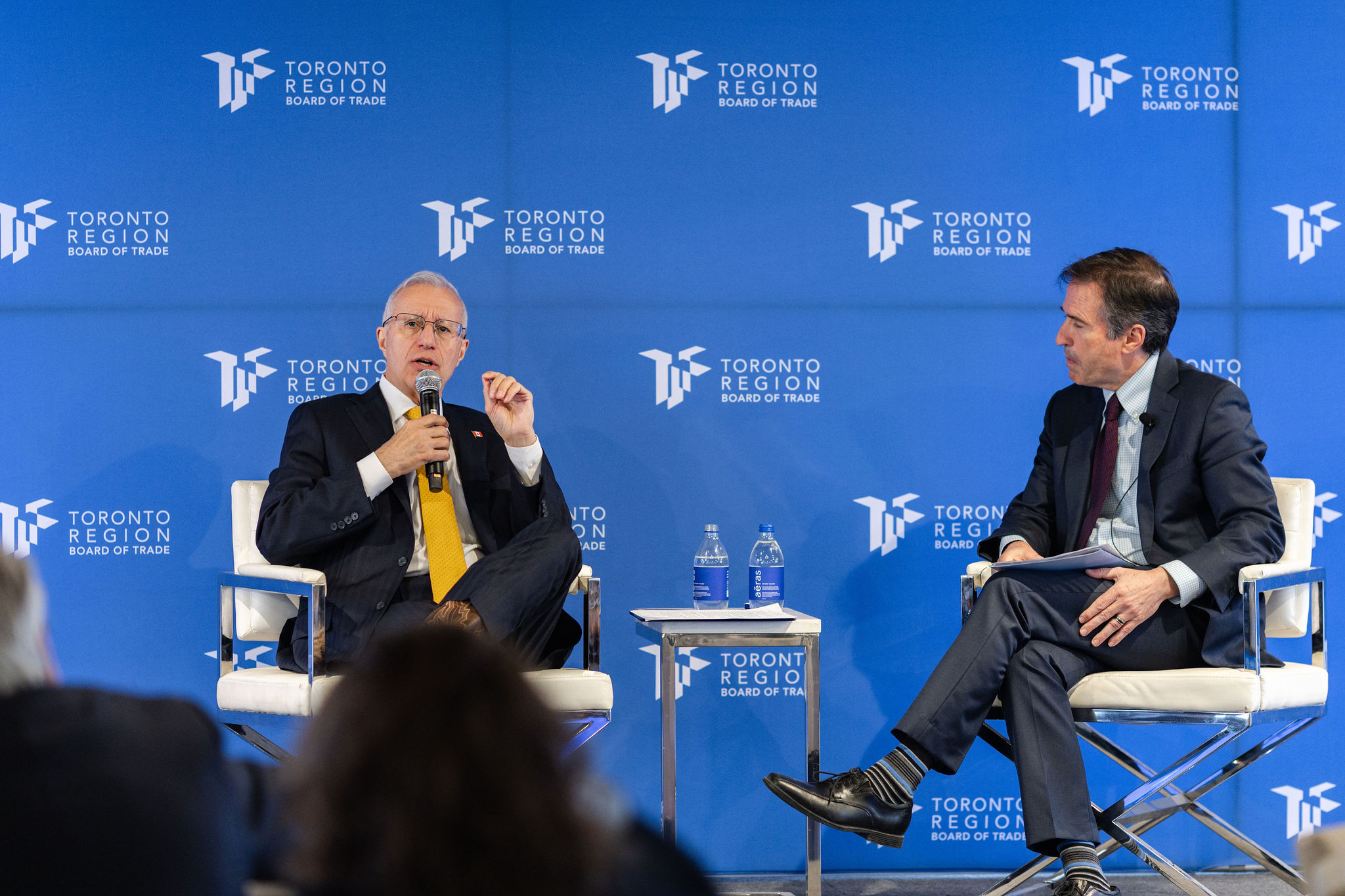
forum

Canada cannot compete alone

The forum closed with a broader geopolitical discussion about scale, industrial strategy, and global competition. 

Flavio Volpe, President of the Automotive Parts Manufacturers’ Association and a member of the Prime Minister’s Advisory Committee on Canada–U.S. Economic Relations, pointed to the rapid expansion of China’s auto sector, which exported 7.1 million vehicles last year, up from roughly one million in 2020. 

The argument was not that Canada can outscale China independently, but that Western allies collectively retain enormous industrial capability if they operate in a coordinated way across North America, Europe, Japan, and Korea. 

Panels and speakers also agreed, despite escalating rhetoric, both Canada and the United States remain deeply economically integrated, particularly in automotive manufacturing. There was cautious optimism that negotiations in Washington are already moving toward some form of off-ramp on tariffs and trade restrictions. 

speaker

The broader takeaway from the day was that Ontario still possesses the ingredients of a globally competitive auto sector: advanced manufacturing capability, engineering talent, deep supply chains, and production expertise. But retaining that position will require coordinated action, faster technology adoption, stable trade access, and a willingness to compete at a much larger scale than in the past. 

KEY NUMBERS

$66 billion

Ontario auto sector exports in 2024. As our President and CEO, Giles Gherson, noted, the province’s automotive value chain remains one of Ontario’s largest generators of exports, advanced manufacturing activity, and high-value employment, with no equivalent industry waiting in the wings to replace it. 

2 million

Canadian CEOs with a clearly defined roadmap for AI initiatives, compared to 51% of global CEOs. 

90%

Roughly 90% of vehicles assembled in Ontario are exported to the United States. The number explains why trade access dominated nearly every discussion at the forum and why participants viewed low-barrier North American trade as existential to the sector’s future. 

$188 billion

The Center for Automotive Research projects cumulative U.S. tariff costs on automakers could reach $188 billion by 2027, with manufacturers already absorbing an estimated $24 billion in assessed tariffs. 

7.1 million

China exported 7.1 million vehicles last year, up from roughly 1 million in 2020, according to figures cited by Flavio Volpe of the Automotive Parts Manufacturers’ Association.  

IN THEIR OWN WORDS

“If we’re lucky, these last few years may end up being a worrying but reversible case, for Ontario anyway, of auto revival interruptus, which is certainly a much better outcome than the alternative, transitioning out of autos. This is a vital industry for Ontario’s future with over $66 billion in exports in 2024 and a massive value chain behind it. There’s no real replacement in the wings.”
 — Giles Gherson, President and CEO, Toronto Region Board of Trade

“Canada’s auto industry is under pressure, and we’re definitely at an inflection point, and we all know that. But what’s at stake goes far beyond assembly plants and employment numbers. The auto sector anchors advanced manufacturing across Canada. It creates demand for steel, aluminum, skilled trades. It concentrates engineering talent and technological capability that spills into aerospace, defense, and other industries.”
Sue Noble, VP, Automotive Finance  

Sue Noble

“We have to secure access to the U.S. market. Diversification is not an option for automotive. We have to remove the Section 232 tariffs and renew CUSMA. Bottom line: no U.S. access, no auto industry.”
Brian Kingston, President and CEO, Canadian Vehicle Manufacturers’ Association 

“Capabilities are different than opportunities, and right now Canada has all sorts of opportunities, but we need to execute on the capabilities. Collaboration is key. The automotive industry in Canada is small, and generally located in southern Ontario. We all know each other and we all have an interest in maintaining and growing a strong automotive industry in Canada.”
David C. Adams, President and CEO, Global Automakers of Canada 

Phil Sadler

“The greatest strength is the people here. We have the credibility in the industry, the experience, but also the young innovators coming out… I would put us up against anybody in the world.”
David C. Adams, President and CEO, Global Automakers of Canada 

“There’s only one solid approach forward, free North American trade in the auto sector, period. That has got to be the ultimate goal. That’s why we see Ford expanding with a multi-billion dollar plant here in Ontario. That’s why we saw General Motors announce $700 million in a new engine facility. That’s why Stellantis put a third shift on, first time since 2020. That’s why we saw Toyota announce $1.1 billion in January.”
Hon. Vic Fedeli, Minister of Economic Development, Job Creation and Trade, Government of Ontario 

Vic Fideli

“There’s only one solid approach forward, free North American trade in the auto sector, period. That has got to be the ultimate goal. That’s why we see Ford expanding with a multi-billion dollar plant here in Ontario. That’s why we saw General Motors announce $700 million in a new engine facility. That’s why Stellantis put a third shift on, first time since 2020. That’s why we saw Toyota announce $1.1 billion in January.”
Hon. Vic Fedeli, Minister of Economic Development, Job Creation and Trade, Government of Ontario 


Host Partner