If you run or lead a business in Canada, you’ve probably been hearing a lot about tariffs and shifting U.S. trade policies. For many Small and Medium-sized enterprises (SME) owners and decision-makers, the questions sound the same:
Is this going to affect our margins? Are we protected by CUSMA? Are we overpaying at the border? And how much money might we be leaving on the table without realizing it?

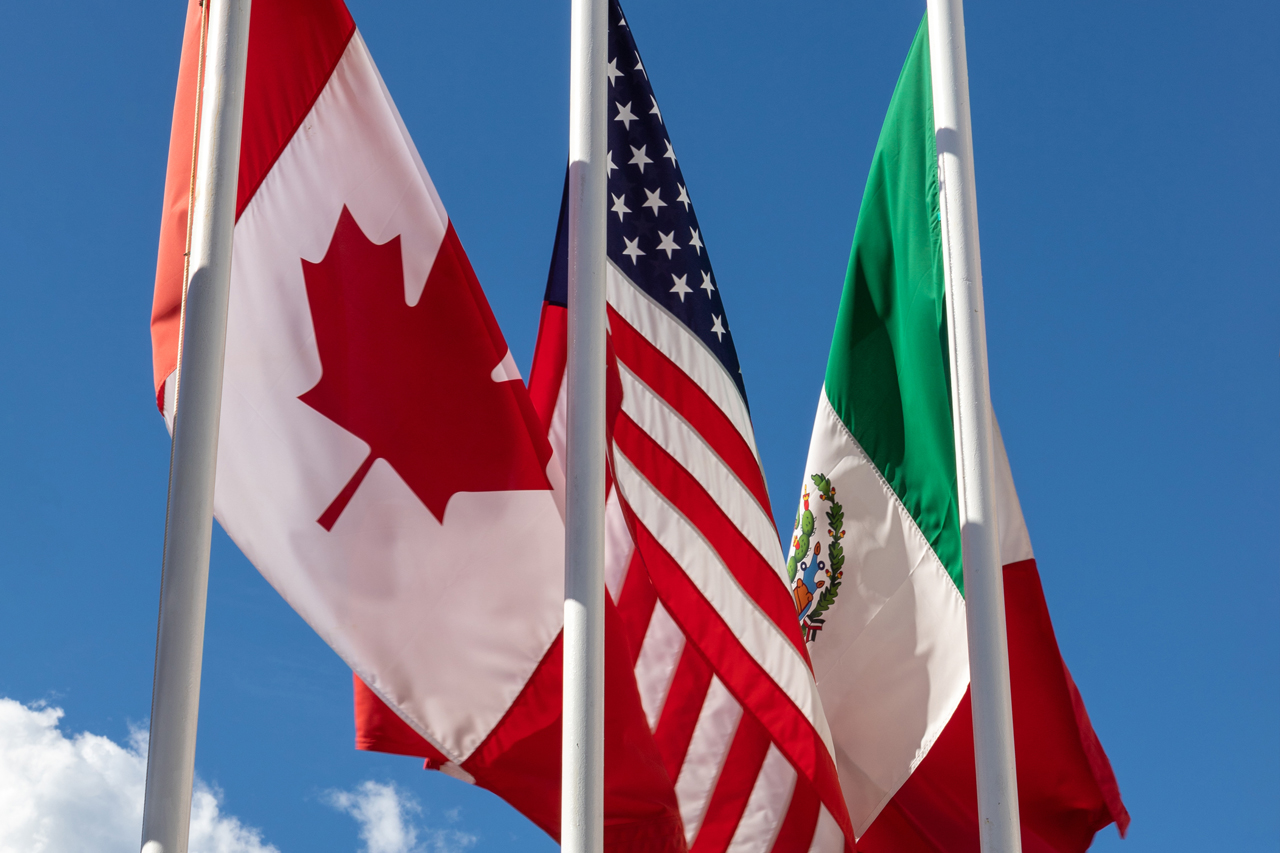
Here’s the simple truth most Canadian businesses need to hear: if you sell goods to the U.S. or Mexico, the Canada–United States–Mexico Agreement (CUSMA, aka the updated NAFTA) is designed to shield you from most tariffs—so long as your product qualifies.
CUSMA is still very much in force. It provides zero tariffs on qualifying goods moving between Canada, the U.S., and Mexico. Even when headlines are loud, that core benefit hasn’t changed.
The challenge is in the word “qualify.” To access duty-free treatment, three pieces must line up: your product must be classified under the correct Harmonized System (HS) code, it must meet CUSMA’s Rules of Origin, and you need documentation that clearly demonstrates both. When those elements are in place, tariff noise becomes far less of a concern.
But, here's what many SMEs don't realize: they may already qualify under CUSMA but aren't claiming the benefits. U.S. policy changes haven't disqualified their products—they just require proper paperwork.
The problem is that for smaller parcels moving through courier networks, CUSMA paperwork can feel burdensome. Couriers and customs authorities struggle to process the volume of documentation, so to avoid the hassle, many businesses choose not to claim CUSMA at all. Instead of setting up CUSMA-compliant shipping, they used to rely on de minimis thresholds or courier-based shipments.
As a result, companies are absorbing duties they didn't need to pay or even sending products in bulk to U.S. warehouses just to bypass documentation challenges at the border.
In most cases, the issue isn't that the product fails to qualify under CUSMA—it's that the business hasn't built a clear, scalable workflow to prove origin, document compliance, and ship goods under the agreement with confidence.

As we head into 2026 two major shifts are raising the stakes for Canadian SMEs:
1. Trade agencies are tightening enforcement.
Canada Border Services Agency and U.S. Customs and Border Protection are conducting more verifications and expect SMEs to demonstrate stronger internal controls—clear HS classifications, documented Rules of Origin decisions, and complete Certification of Origin files. Businesses that cannot show how they determined eligibility are more vulnerable to reassessments, penalties, or shipment delays.
2. U.S. buyers increasingly demand proof of CUSMA eligibility.
Large U.S. manufacturers—and even many mid-sized buyers—now ask suppliers to prove CUSMA eligibility before awarding contracts. They want to see accurate HS codes, valid Certifications of Origin, and evidence that a supplier can support duty-free treatment reliably. In many sectors, the ability to demonstrate CUSMA compliance is becoming a prerequisite, not a nice-to-have.
In this environment, SMEs need frictionless, CUSMA-compliant processes so shipments move quickly, costs stay predictable, and goods don’t get caught in documentation bottlenecks. Being CUSMA-ready is becoming essential for smooth day-to-day operations.
To help businesses navigate this new reality, the World Trade Centre Toronto is launching a practical, hands-on CUSMA webinar series designed specifically for SMEs. Instead of talking about trade rules in the abstract, the series focuses on the day-to-day decisions business leaders actually face: how to classify goods correctly, how to determine origin with confidence, how to prepare a compliant Certification of Origin, and how to get audit-ready without needing a dedicated compliance department.
It’s important for SMEs to remember: CUSMA remains one of the strongest advantages Canadian businesses have in the North American market. If your products qualify—and many do once they’re properly classified—there’s no reason to leave that value on the table. With a few clear processes and the right templates, CUSMA compliance becomes manageable, predictable, and an asset rather than a source of uncertainty.
In a year when every percentage point of margin matters, getting CUSMA right is not just about avoiding problems—it’s about making sure you’re not paying more than you have to, and that your business is positioned to grow.
-

Jon Joel
Senior Manager
World Trade Centre Toronto
Jon Joel is a Senior Manager at the World Trade Centre Toronto, a division of the Toronto Region Board of Trade. In this capacity, Jon collaborates with hundreds of small and medium-sized enterprises (SMEs) annually, specializing in international expansion, AI adoption, and scale-up readiness.
With a robust background in international business development, Jon previously spearheaded market entry strategies into numerous global markets for a small manufacturing firm. He brings extensive expertise in international sales and channel partner management, having partnered with, Fortune 500 companies and businesses across diverse industries—including automotive manufacturing, building products, appliances, metallurgy, mining, food and beverage, and logistics.
Jon holds an MBA in Global Business from the Ted Rogers School of Management and a Bachelor of Applied Science in Nanotechnology Engineering from the University of Waterloo.