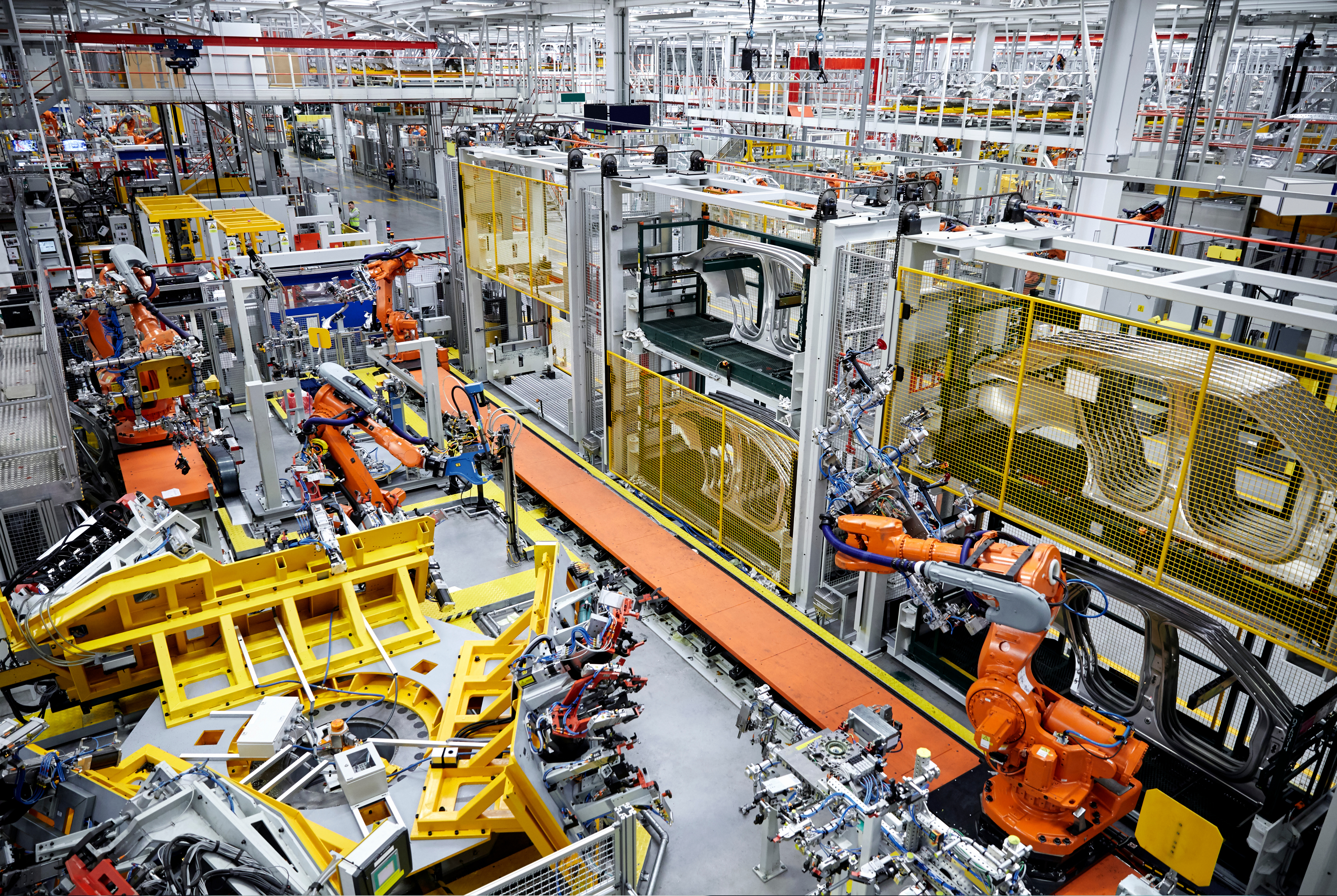
Canada didn't enter this crisis empty-handed. Toyota's Cambridge plant is, by Toyota's own assessment, the most productive auto assembly operation on the planet.
"Magna, Linamar, Multimatic, Martinrea — we have world-class parts makers," Brennan says. "We have what it takes to succeed."
The question is which direction the industry heads from here – and whether Canada will act quickly enough to influence the answer.
Brennan's report — Steering Through Uncertainty: Four Future Paths for Canada's Auto Industry, published this month by RBC Thought Leadership — lays out possible futures for the industry by 2040, ranging from revival to collapse:
- Fast Lane: Duty-free access to the U.S. market is restored, Canada assembles 2 million vehicles by 2040, and investment flows into software, batteries, and advanced manufacturing.
- On-Ramp: Canada uses its consumer market as leverage to attract non-American OEMs, linking market access to investment commitments in domestic production and R&D.
- Slow Lane: Assembly holds but higher-value mandates migrate elsewhere — the easiest path to sleepwalk into, and the hardest to reverse.
- Off-Ramp: Tariffs persist, investment dries up, and all Canadian assembly plants are shuttered by 2040 as Chinese EVs fill the demand gap.
Which path Canada heads down is dependent on choices made over the next 18 months — many of them outside of this country. However, Brennan is adamant that one variable matters more than the rest.
"Securing duty-free access to the American market is the most important single policy outcome for the future of Canada's auto industry," Brennan says. "That's the precondition for future growth."
The math of even a 5% tariff, Brennan argues, is unforgiving.
"If you average over the business cycle — capturing the downswing and the upswing together — you're looking at 6 to 8%," he says. "Top of the cycle, maybe 10%. Bottom, maybe zero or lower. Just do the math on what the tariff needs to be to make that viable long term."