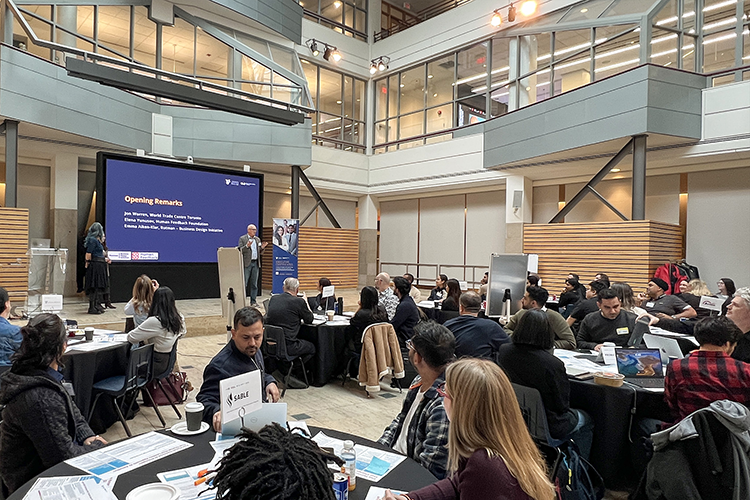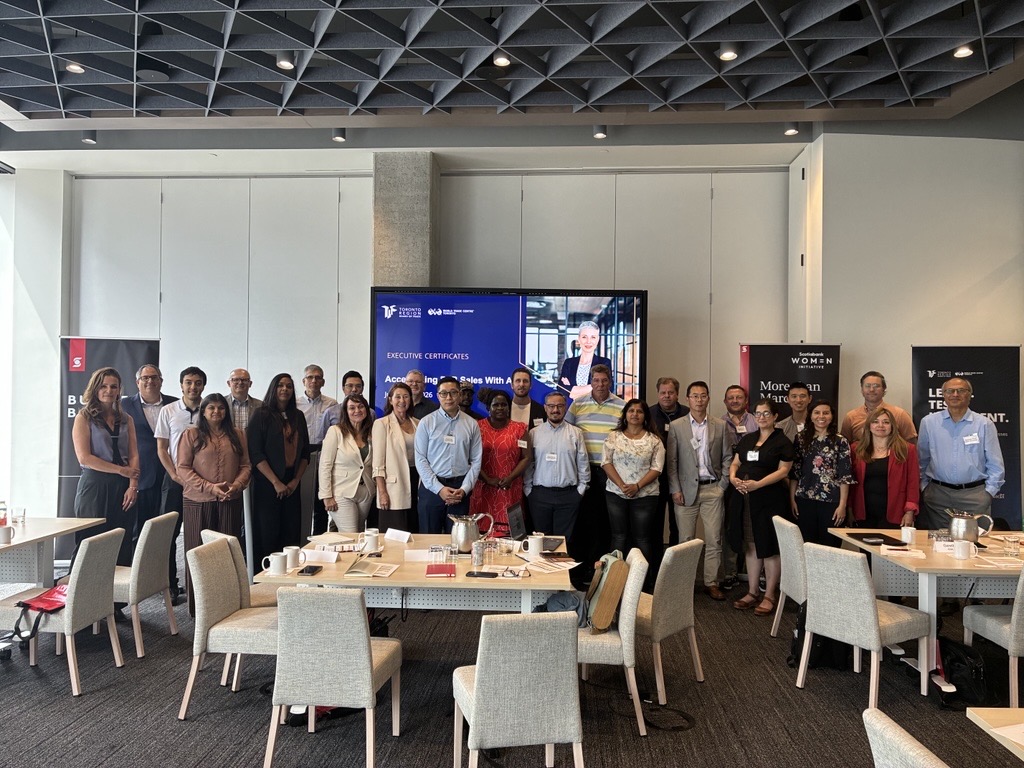
"As a business owner, have you ever gone home early because you didn't have enough to do?”
“Didn't think so.”
Daryl Edwards, founder and CEO of Agent Impact, got a knowing laugh out of a room full of founders and senior leaders with that line. They all know that with only so many hours in the day, most of them are already spoken for.
Accelerating B2B Sales with AI was a full-day cohort hosted by the World Trade Centre Toronto and sponsored by Scotiabank. Facilitated by the Scotiabank Women Initiative, it brought together sales leaders who all share the same problem: they're too busy running the day-to-day operations of their businesses to focus on growing revenue. The question on the table was whether AI could change that.
The answer, according to the speakers, is AI.
With a catch.
The first session belonged to Jelena Savic-Brkic, founder and CEO of the Toronto risk-management platform MiraNu. She said that the biggest time drain in B2B sales isn't the selling, it's the chasing. Chasing the wrong leads, crafting pitches for people who were never going to buy, and following up on conversations that were never going anywhere.
She said that AI can help fix this by narrowing the chase before you ever pick up the phone. Find the right people to contact, sharpen the message for that specific audience, and let the tool flag leads an experienced rep might overlook.
"Don’t use AI to make more content or bigger sales pitches, but to use it to narrow your sales focus. Less is more."
She stressed that the one thing AI can't do is close the gap between an email and a real relationship. That part still takes a human.
"AI cannot help you gain the trust of a human in a cold outreach, but it can help you write a great email."
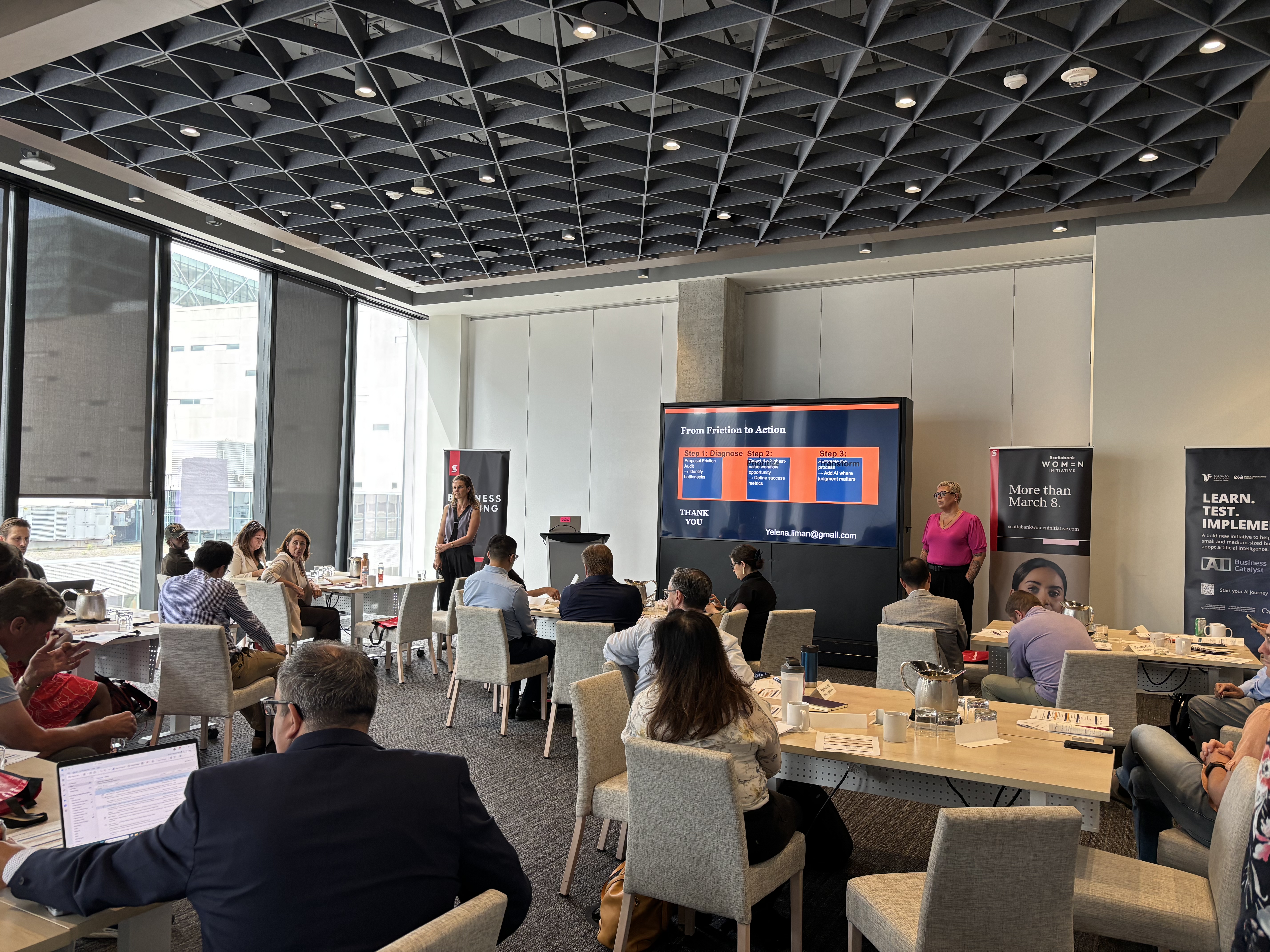
The next session shifted the focus from winning business to fulfilling it. Yelena Liman, Director of Product Management at EMPRO, counterintuitively began by saying what AI can’t do.
She did this by first pointing to examples of human inefficiencies in the fulfillment process: something that has to be redone by different people, knowledge that only lives in one person's head, or replies that should take hours but actually take days. All of these are moments in the process where time is lost, and AI can't simply fix them.
To fix it according to her, business leaders have to document their pain points first, then move to automating second.
She made the point concrete with a scenario most people in the room recognized. She asked everyone to imagine they had an employee named Mike. He prices custom jobs based on experience. He's been doing it for years, and he’s great at it. Nobody else knows how, and nobody has written it down. When Mike is at his desk, everything works great. But the day Mike is unavailable, the whole process stalls.
"Your goal should be to create a strong starting point that saves hours and lets your team focus on meaningful work that requires human judgment."
Daryl Edwards closed the day with a different angle on the time problem. Rather than spending time chasing new customers, he pointed to the ones already on the books.
"The fastest revenue is the customer you already have," he said. "You came to fill the funnel. But the money might already be in there."
This is where AI earns its keep, he argued. It could watch existing accounts so you don't have to. A customer who hasn't ordered in three months. Someone whose order size has been shrinking. An account that's gone quiet after years of steady business. A human could catch any one of those signals, but not across every account, every week, without dropping something else. AI could flag them automatically, so the follow-up call happens before the customer is already gone.
His framework for what to do once AI surfaces the opportunity was four words: again, more, wider, up. Get a quiet customer buying again. Get an active one buying more. Sell something wider they've never bought. Move someone up a tier. Every business already has a customer who proves the model works. The gap is between that account and the dozen others that look just like it but haven't been asked.
"AI doesn't know your customers better than you do," he said. "It does the work you never have time for: spotting the gap and drafting the move."
Daryl's advice, like all the other speakers', was that AI isn't a magic wand to allow business owners to automate everything and go home early. That's the catch.
But the right tools, pointed in the right direction, might mean fewer late nights.