Skip to content

Insights

A Case for Employer Competitions in the Classroom

The student transition from the classroom to the workplace is a perennial workforce challenge. But getting that transition right requires blending learning with work well before the first day on the job. These work-based learning experiences are critical, and employers are the key partners in enabling these opportunities. Here is an example of what that looks like in practice: The student transition from the classroom to the workplace is a perennial workforce challenge. But getting that transition right requires blending learning with work well before the first day on the job. These work-based learning experiences are critical, and employers are the key partners in enabling these opportunities. Here is an example of what that looks like in practice:

For six years, the Toronto Region Board of Trade has worked with the Masters in Urban Innovation (MUI) program at the University of Toronto Mississauga to host an annual case competition for first year students. For the Board, it's a source of rich ideas from students immersed in the tools and frameworks of urban economic development. It's also served as a talent pipeline for our team. For students, it’s a testing ground where they can apply their academic training to real-world policy problems that the Board itself is grappling with. Students move beyond theory to develop applied skillsets: communicating with a client, addressing live feedback, and developing practical solutions.

This year we did something a little different. We invited Waterfront Toronto to present a live challenge to the students. Waterfront Toronto – the tri-government agency responsible for the revitalization of the waterfront – is in the midst of developing a new Waterfront Destination Strategy. With the goal of transforming the waterfront into a year-round, world-class destination, they brought a complex, live problem with no predetermined answer to the students.

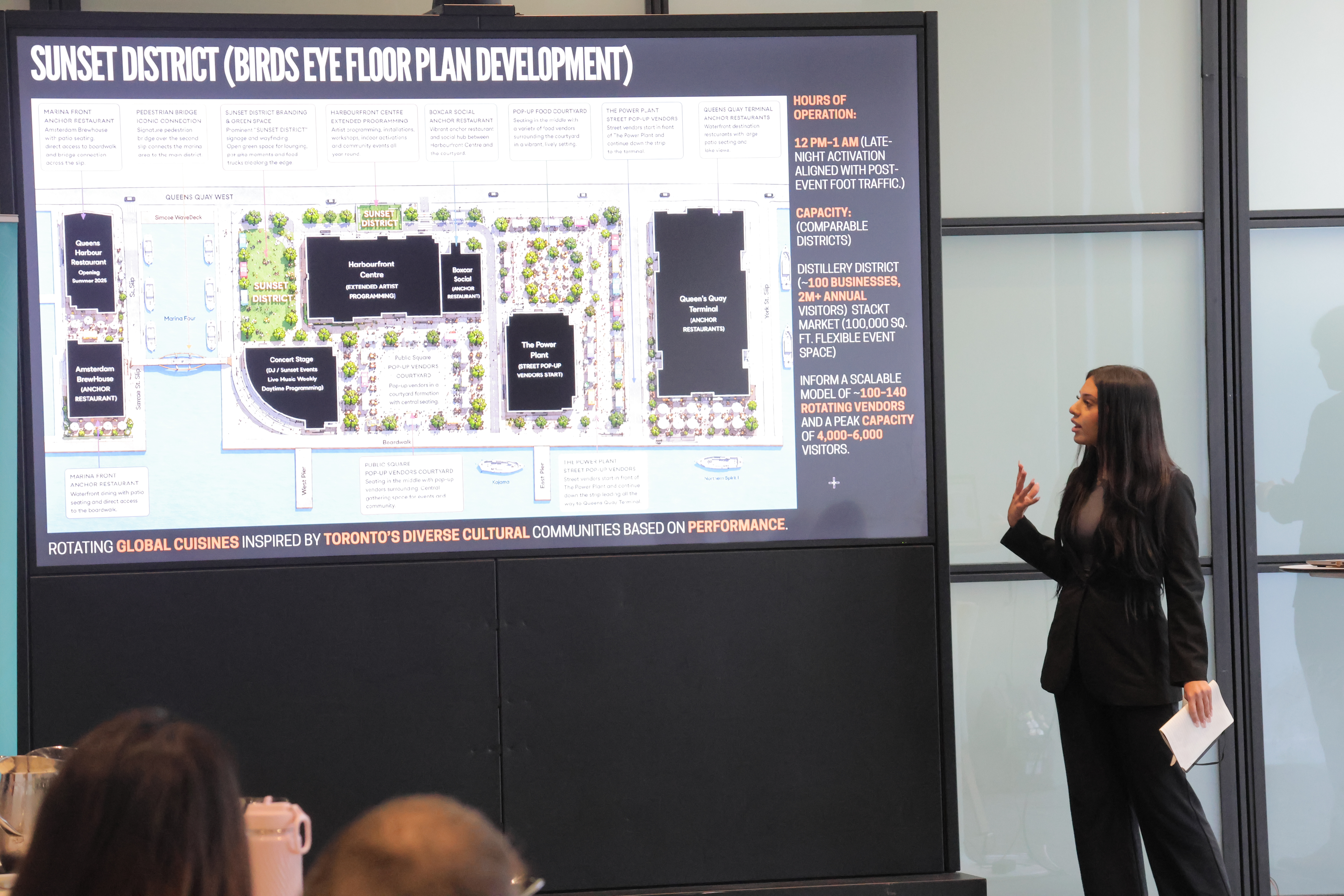
Over the course of two weeks, six teams of MUI students wrestled with one overarching question: What innovative policies, programs, or partnerships would position the waterfront as a global destination that attracts people and investment to the Toronto region. As was the case for the past five years, the ideas were novel and well-researched. What stood out in this year's presentations most was the creative application of Artificial Intelligence. AI-generated images that demonstrated “the what,” infographics that demonstrated “the how,” and maps that showed “the what and where” better than any words could. The ideas themselves were refreshing, both in their variety and in the thought given to problem identification and implementation.

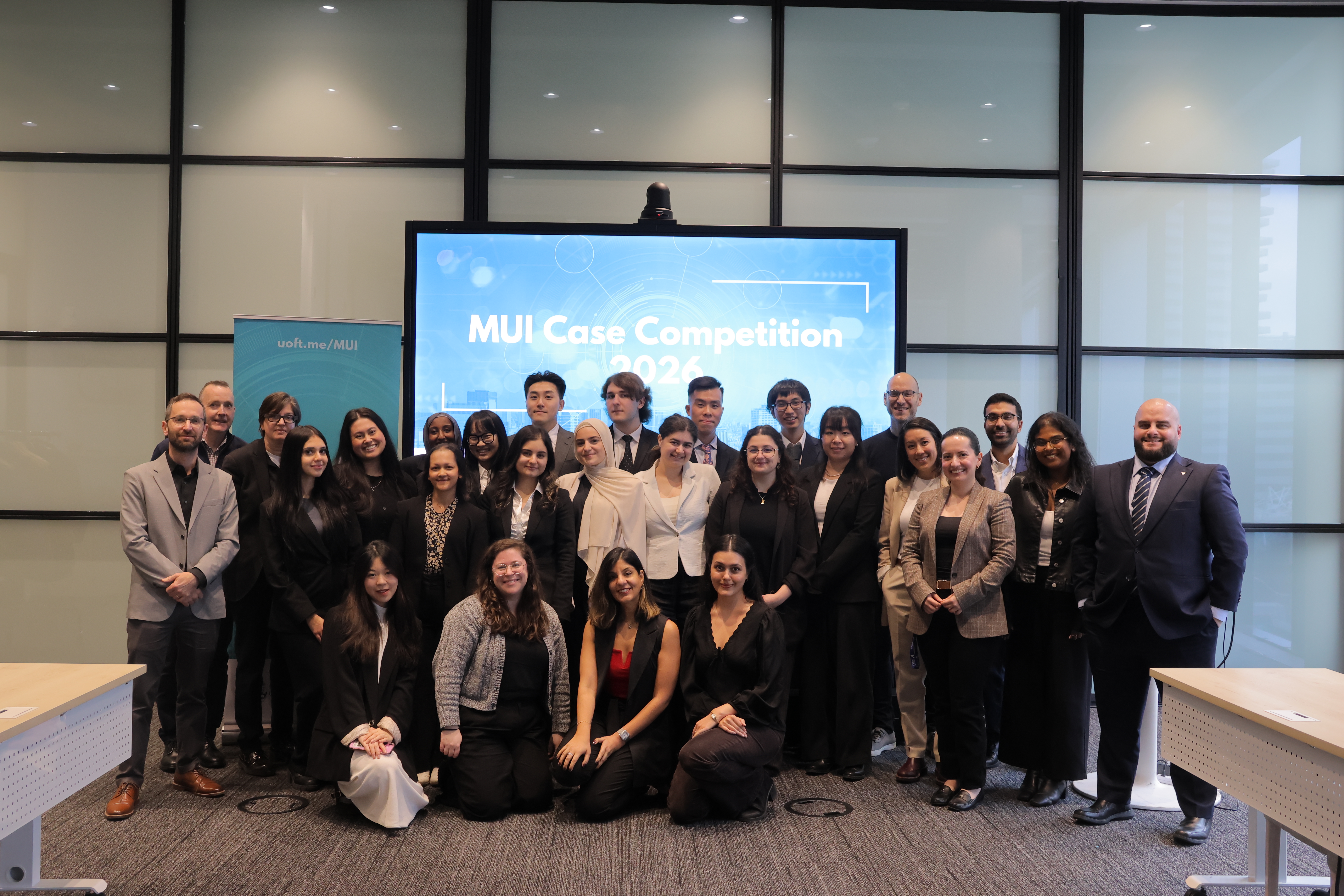
students at the MUI Program

Case competitions aren't new. Many of us have participated in our fair share of these intense yet rewarding sprints. Yet, at a time when there is growing anxiety that the bottom rung of the career ladder is disappearing, the business community needs to think deeply about how we are building a robust pipeline both for ourselves and for the broader economy. Experience doesn't develop overnight, but is a product of time, guidance, and lived experience. Case competitions or business challenges are one low-stakes and low-cost avenue for businesses to prime the talent pump.

At Toronto Region Board of Trade, we want to continue hosting this annual competition but also want to encourage our members and the broader business community to do the same. Our region’s students crave work-based experiences, our post-secondary institutions are keen to give them those opportunities, and the Board is ready to make those connections to the workplace. If you're keen on hosting an employer challenge, send us a note (email below) and we can help get the ball rolling.
  • Saad Usmani

    Saad Usmani

    Director of Economic Research and Workforce Development

    Saad Usmani is the Director of Economic Research and Workforce Development at the Toronto Region Board of Trade. Prior to the Board, Saad spent several years at prominent public policy think tanks in Ontario and most recently as a consultant in EY's Economic Advisory practice.  

    Saad's work supports the Board's efforts to improve business competitiveness and encourage broader economic growth in the region. This includes using data and research to better understand underlying business and economic conditions; advocating for policies and implementing initiatives that address our workforce needs; and developing approaches to best position key sectors and economic zones in the region for growth.