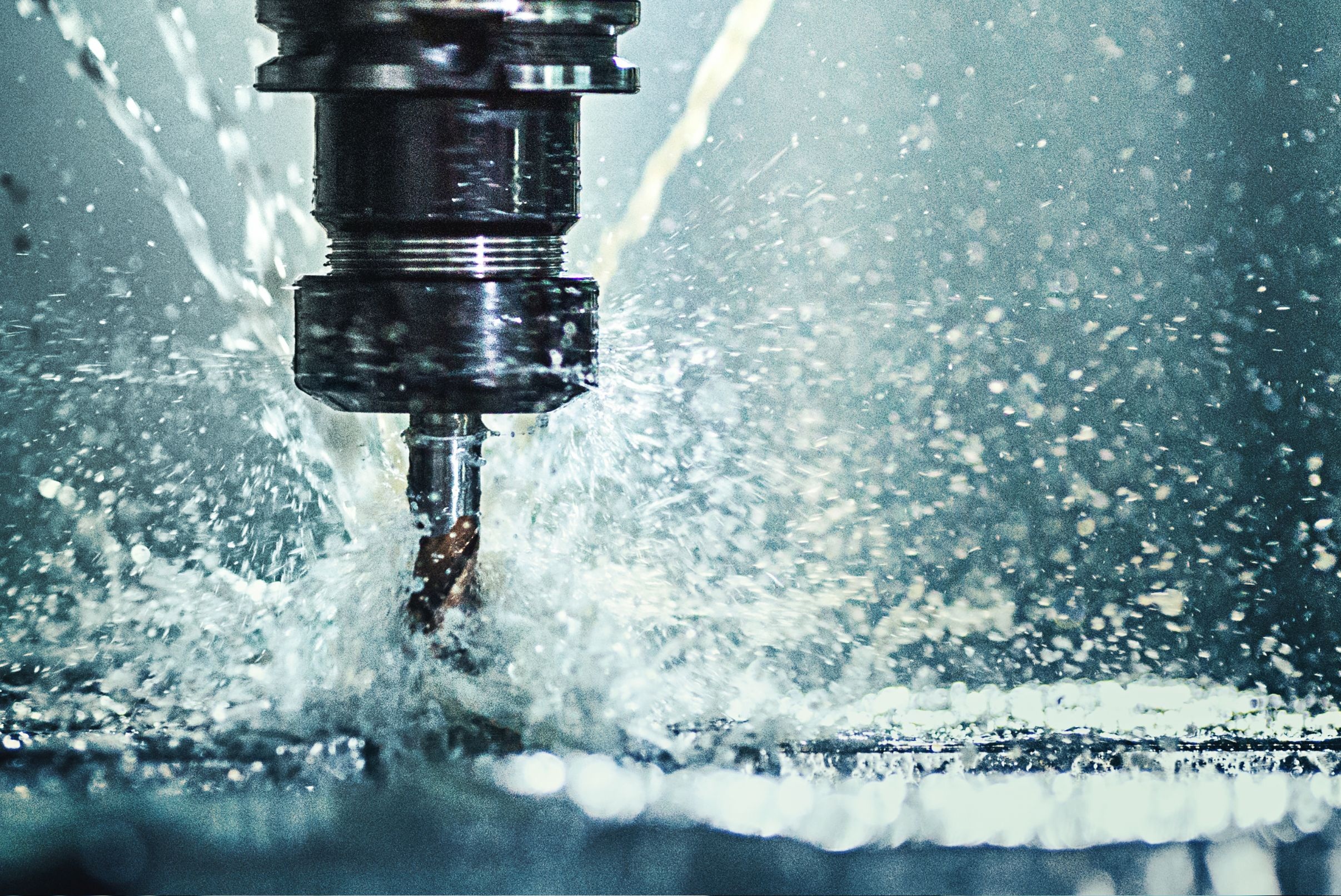
When Muthu Amirthamanoharan joined the Growth Development Program, he wasn't sure AI had anything to offer a company that had been making precision machined parts for decades. By the time he finished, his quality team had cut down a two-hour data entry task to under a minute — and nobody asked him to make it happen.
That's the part of the story he likes best.
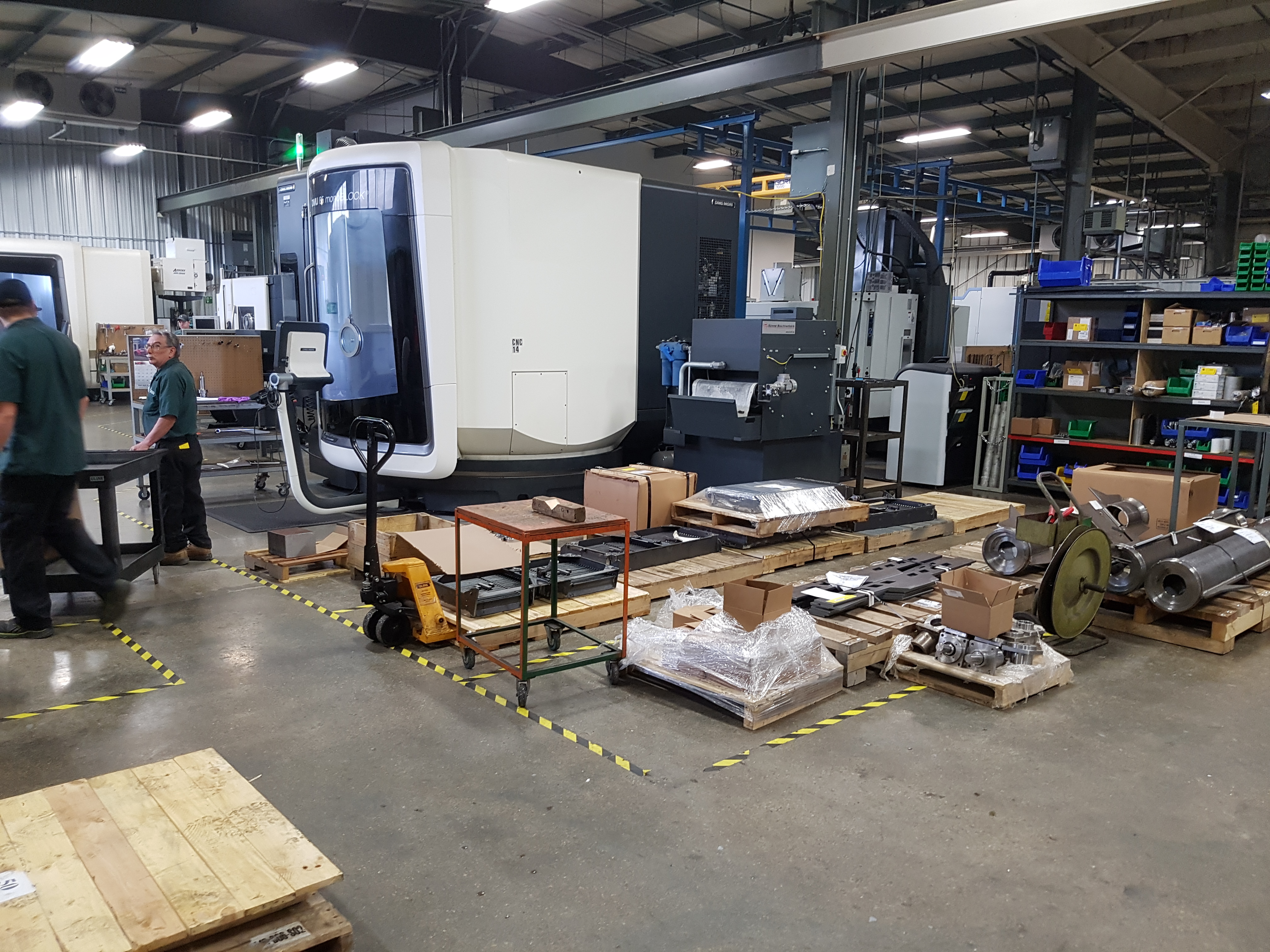
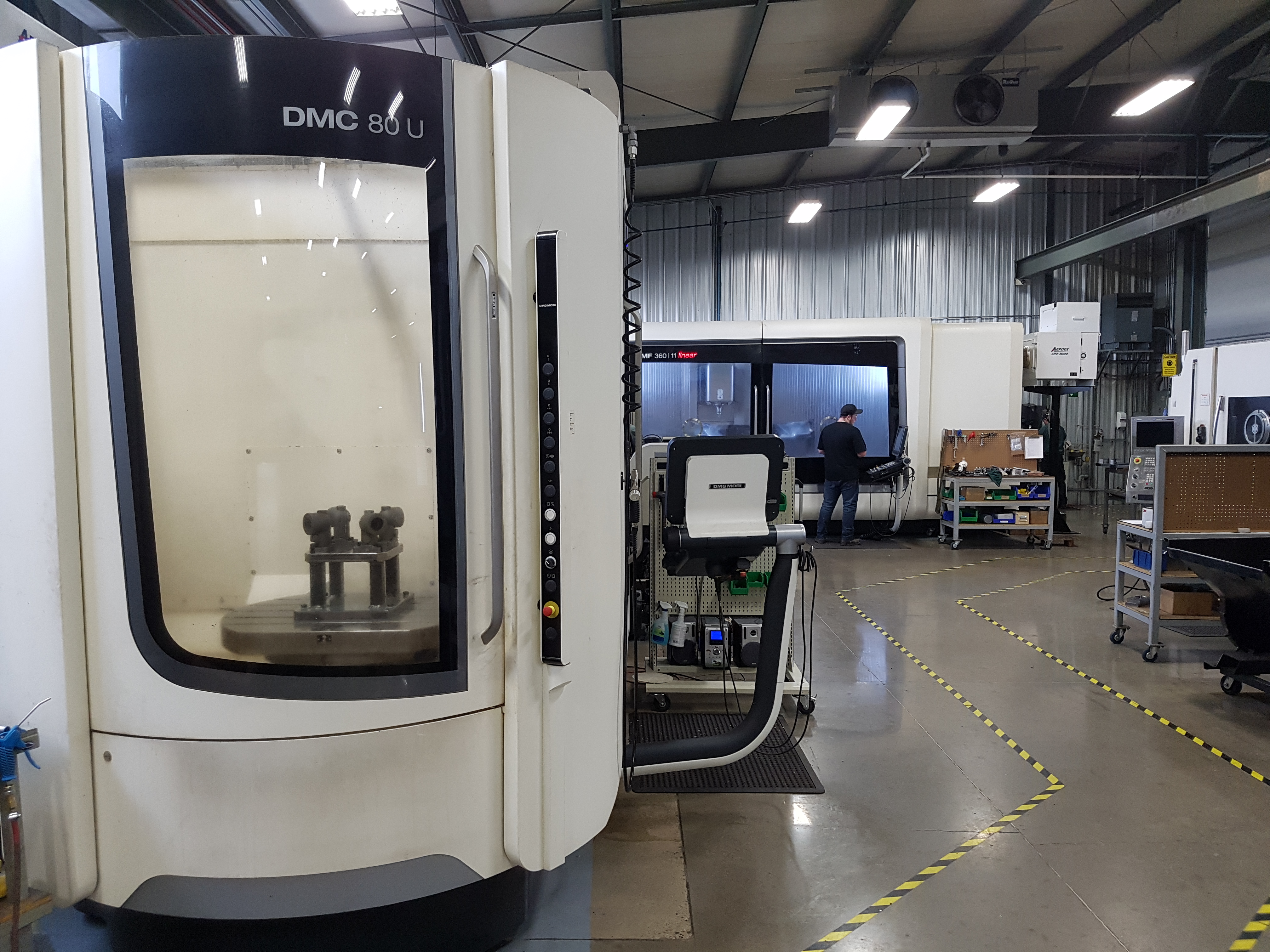
Amirthamanoharan is the Eastern Operations leader of Dellcom Aerospace and J/E Bearing & Machine Ltd., a precision machining company based in Tillsonburg where some employees have been doing things the same way for 30 years. When he and his Director of Sales sat down to review the company's capital expenditure budget, they noticed a gap. They were investing in equipment. They were not investing in next-generation technologies like AI — and they weren't even sure they should be.
"There's a lot of buzzwords out there," Amirthamanoharan says. "A lot of people — especially in a 20 or 30-year-old business — can look at AI and say, this doesn't involve us. That's not for us."
That mindset is exactly what brought him to the Growth Development Program, offered by the World Trade Centre Toronto.

J/E Bearing runs what's known in manufacturing as a job shop — low volume, high variability. Every order is different. Every part has its own requirements. Scheduling that kind of work is less like running a train on a fixed track and more like solving a puzzle that changes shape every morning.
Their ERP system — the software that manages operations, scheduling, and inventory — was doing its job technically. It looked at due dates and material timelines and produced a schedule that would meet build requirements. What it wasn't doing was thinking about efficiency. It didn't know that grouping similar parts together could reduce machine setup time. It didn't know that a smarter sequence could mean the difference between a machine running or sitting idle.
The people on the floor knew. Schedulers, programmers, senior technical staff — they had spent years developing an instinct for what an ideal schedule looked like. The problem was that instinct lived in their heads, not in any system.
Before the program, J/E Bearing's plan was to tackle the problem manually — essentially to formalize that expertise on their own, through conversations and documentation. It would have worked, eventually. It would have taken a long time.
The GDP program changed everything.
What is the Growth Development Program?
What is the Growth Development Program? GDP is a six-month leadership program offered by the World Trade Centre Toronto (WTC-T), part of the Toronto Regional Board of Trade. It runs three full-day in-person workshops and six virtual mentoring sessions, with a cohort of 12–15 peers. Participants work with Rotman MBA students to prototype real AI use cases, and leave with an implementation-ready roadmap built around their actual business.
The next cohort begins June 11.
Members: $1,000 | Non-members: $1,200.
Working with a team of Rotman MBA students through the program's prototyping partnership, Amirthamanoharan and his team did something they hadn't been able to do on their own: they structured that institutional knowledge — captured it from the people who held it, mapped it into logic, and fed it into an AI-driven scheduling algorithm. The system could now group similar parts, assign jobs to the right machines, and optimize the sequence the way an experienced scheduler would, only faster and at scale.
The Rotman Partnership
Every GDP participant can opt in to be paired with a team of Rotman School of Management MBA students to develop and pressure-test real AI prototypes. It's a level of external expertise most small and mid-sized businesses don't have access to on their own — and for J/E Bearing, it's what turned a theoretical idea into a working algorithm.
Then the Rotman team introduced something nobody at J/E Bearing had thought of.
"They called it a geometry layer," Amirthamanoharan says. "The AI looks at the actual dimensions, the patterns — and uses that as an additional input. It matches the geometry of a part to the machine best suited to produce it. That's something we never would have done without this course or without those external resources."
The result: a 37% improvement in on-time delivery. For a job shop where meeting customer deadlines is the difference between a loyal account and a lost one, that number matters.
Amirthamanoharan is direct about what it means.
"Cost down, top line up," he says. "That's the idea."
Getting there wasn't without doubt. Amirthamanoharan describes a sustained period of theoretical belief and practical skepticism — he understood why the algorithm should work, but couldn't quite see it until he did.
"The hardest part was making the connection between theory and practicality," he says. "I knew what problem we wanted to solve. I just couldn't see that this tool could actually do what our in-house people could do on their own."
The eureka moment came during one of the program's prototype review sessions, when the Rotman team walked him through the simulation results. The algorithm had grouped the parts the way an experienced scheduler would have grouped them. It had assigned them to the right machines. It had done, systematically, what years of floor experience had taught people to do by feel.
"I thought: this is exactly what we wanted to see," he says. "That's when I said — I don't want this to be a one-off project. This is just the start."
What happened next wasn't planned. After taking AI tools back to the shop and letting the scheduling project build momentum, Amirthamanoharan's quality department approached him with a problem of their own. Inspectors were manually entering data into a tracking system — a task that was taking around two hours per session. Could the same kind of thinking apply here?
It could. Using a scanner integrated with their system, the same data entry now takes under a minute.
Amirthamanoharan hadn't assigned that project. He hadn't even suggested it. The quality team saw what was happening elsewhere in the building and figured out how to apply the logic themselves to solve their own friction point.
"That's what I really want," Amirthamanoharan says. "Not one project. A culture where people are thinking about how they can use data and innovation to improve their own operations. That's the real change."
It's the kind of shift that's hard to manufacture directly. You can mandate tools. You can't mandate curiosity. But Amirthamanoharan believes you can create the conditions for it — and that visible, tangible wins are how you get there.
"When I first mentioned AI to the team, I didn't get the buy-in," Amirthamanoharan says. "Only when I made it applicable to what they were doing day to day — when I showed them it would actually improve their work — that's when they engaged. You have to make it relevant to them, not relevant to you."
Amirthamanoharan is direct about what the program is and isn't. It's not a shortcut. The work that happens between sessions — bringing findings back to the team, building internal buy-in, keeping projects moving — is at least as demanding as the coursework itself.
Is GDP right for you?
The program is designed for Ontario-based executives leading businesses with annual revenues above $5M and between 15–200 employees. A technical background isn't required — a commitment to leading change is. Not sure if it's the right fit? The program team offers a free 20-minute call to help you figure that out before you commit.
"If you just show up to class and don't apply it, you're not going to get the value," Amirthamanoharan says. "It's like reading a book and not doing anything with what you read. The course is still ongoing for me, even though I've finished it. There are still items on my list."
What the program provided, in his view, was three things most small and mid-sized manufacturers can't easily access on their own: structure, external expertise, and connections.
The structure gave him a framework for identifying which problems were worth attacking with AI and which weren't — a way to cut through the noise and focus on what would actually move the business.
The external expertise — through the Rotman collaboration and the program's mentors — gave his team the credibility and capability to move faster than they could have internally. "If it wasn't for the Rotman collaboration, we wouldn't have gotten to that point," he says. "That was a big hurdle to overcome — to actually see that this could be put into practice."
And the connections opened doors to public funding that Amirthamanoharan hadn't known were available. J/E Bearing currently has active applications with Mitacs and the Ontario Centre of Innovation — initiatives he says are directly traceable to conversations in the program.
"I didn't know those resources existed," Amirthamanoharan says. "Now we're actively pursuing two of them."
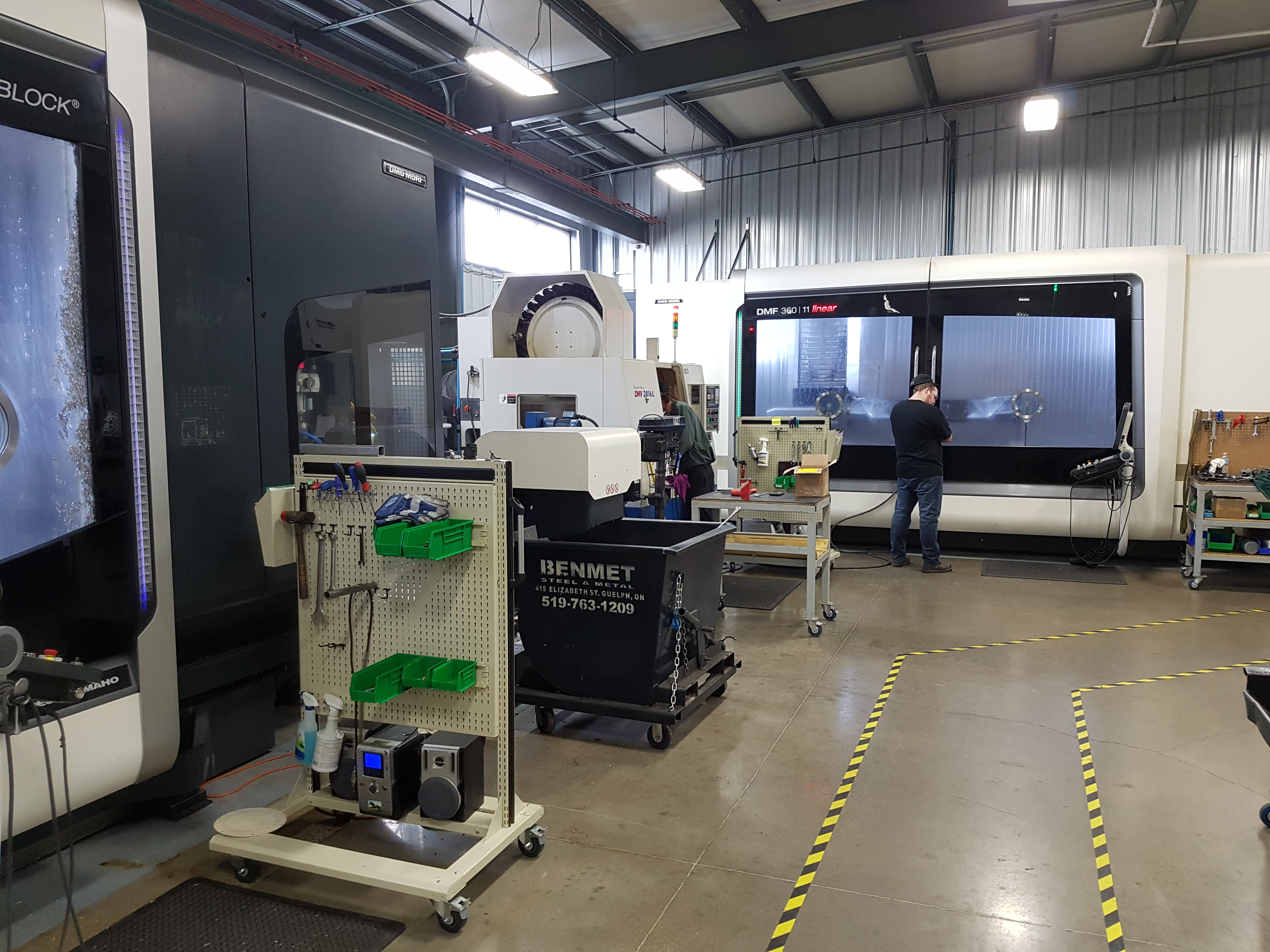
Amirthamanoharan describes what he's building toward as a full transition to Industry 4.0 — a term for manufacturing operations that are fully data-driven and interconnected. Predictive maintenance that signals a machine is likely to fail before it does. Real-time visibility into operations across both companies he oversees. Every department running on data rather than instinct.
"Scheduling was the start," Amirthamanoharan says. "Quality is next. But if I can touch every single part of the business with this methodology, we become a fully transitioned Industry 4.0 company. That's where we're going."
He's aware that sounds ambitious for a company whose competitive advantage has historically been the knowledge and experience of its people. He doesn't see a contradiction.
"AI isn't taking over," Amirthamanoharan says. "It's helping us. It's addressing the pain points. The people who have been here 30 years — their knowledge is still in there. We're just finally able to use it at scale."
What J/E Bearing achieved with the Growth Development Program:
• 37% improvement in on-time delivery after implementing an AI-driven scheduling system
• Reduced a two-hour quality data entry task to under a minute — driven by the team, unprompted
• Active funding applications with Mitacs and the Ontario Centre of Innovation, connected through the program
• A culture shift from instinct-based decisions to data-driven operations across the business
J/E Bearing & Machine Ltd. participated in Cohort 1 of the Growth Development Program, offered through the World Trade Centre Toronto in partnership with the Toronto Region Board of Trade. The next cohort begins in September. To learn more or register, visit bot.com/Programs-Networks/Growth-Development-Program.


Growth Development Program (GDP)
The Growth Development Program (GDP) is a 6-month, cohort-based program designed for C-suite executives from small and medium-sized businesses.

WTC AI Business Catalyst
Practical AI support to help you assess readiness, prioritize opportunities, and move from experimentation to implementation.