
Ask Fadwa Mohanna what's working for her in a hard year for Canadian exporters, and she doesn't point to a tariff exemption or a trade deal. The Founder and CEO of Toronto-based One37 points to being Canadian.
"We have an amazing brand," she said. "The doors have never been so open."
It might seem counterintuitive given the headlines. But the companies honoured at this year's Leaders in Export Excellence showed what a strong export plan, paired with a global desire to work with Canadians, can still do.
On July 16, the World Trade Centre Toronto gathered 175 business leaders, exporters, and government partners at The Quay for its third annual Leaders in Export Excellence celebration — an opportunity to honour Trade Accelerator Program alumni exporting Canadian products and services to new markets despite a genuinely challenging environment.
Two companies stood out enough to take home this year's top honours.
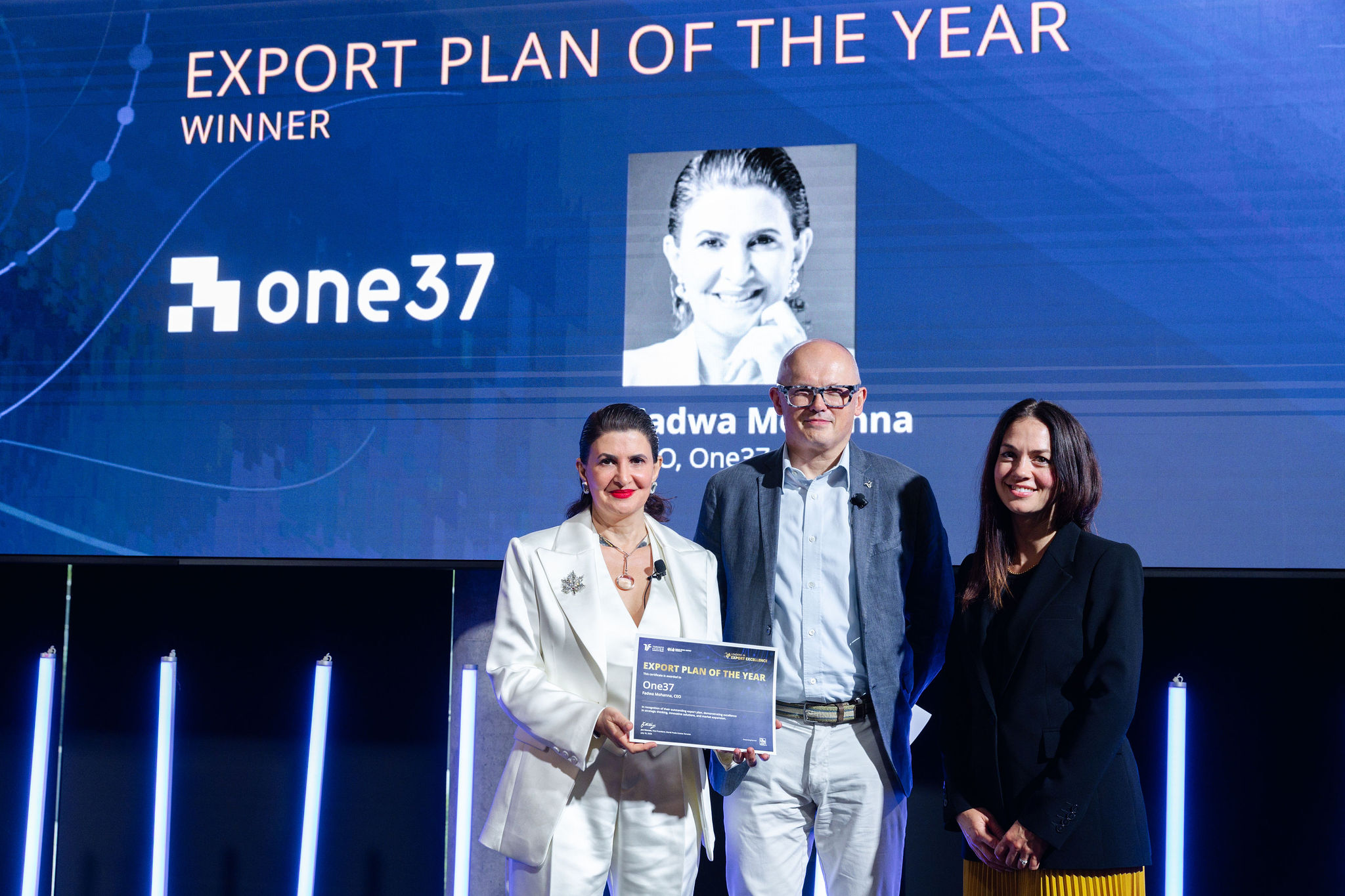
The award for Best Export Plan went to Mohanna and One37, which grew export revenue by 40% over the past year using Singapore as a springboard into Thailand and the Philippines.
Mohanna built One37 to solve a problem most people don't think about until it goes wrong: knowing whether the person on the other end of a transaction is who they say they are. Her company's carrier-bound digital identity wallet platform sold well in the U.S. But when she looked at where else the business could go, she resisted the urge to chase every market at once.
"Being everywhere means being nowhere," Mohanna said. "At a certain point we needed to put all our strength — team strength, focus, sales, marketing — into one region."
The TAP process pushed her to build a plan around Southeast Asia instead of spreading resources thin, and the results followed the plan closely. One37 is now preparing to open a regional headquarters in Singapore, with ten more Asia-Pacific markets in its sights.
One37 was joined in the category by fellow finalists G2V Optics (Edmonton), Les Invisibles (Montreal), Sheringham Distillery (Vancouver), and Wouessi Inc. (Toronto).
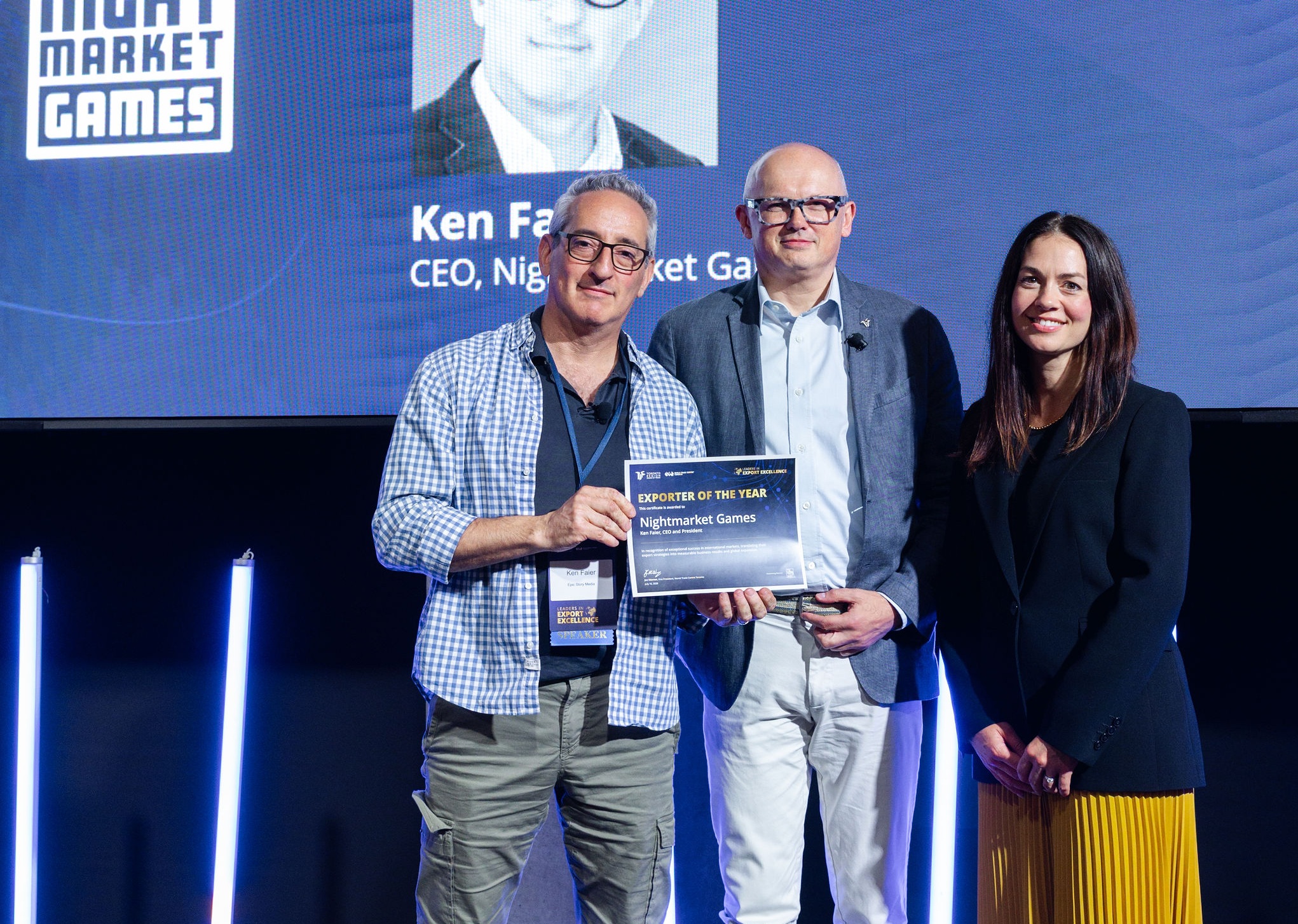
The award for Exporter of the Year went to Ken Faier and Nightmarket Games, the Vancouver mobile game studio he co-founded and now leads as President and CEO. Together they drove a 43% jump in export revenue over the past year across Latin America, Western Europe, and the Middle East.
Faier didn't need convincing that his business was global. Nightmarket takes recognizable kids' entertainment IP — Slugterra, Beyblade Burst — and turns it into mobile games for players who, in Faier's experience, aren't all that different from one another regardless of where they live.
"Kids around the world are actually extremely similar from a child-development point of view," Faier said. "I've always thought globally."
Faier also credits Canada's reputation for opening doors — especially with the fans and IP partners who put their trust in Nightmarket's games.
"I think being Canadian, people look at us with trust," he said.
Nightmarket was joined in the category by fellow finalists Layer 7 Innovations (Toronto), NuMove Robotique & Vision (Montreal), and Primus Workforce (Edmonton).
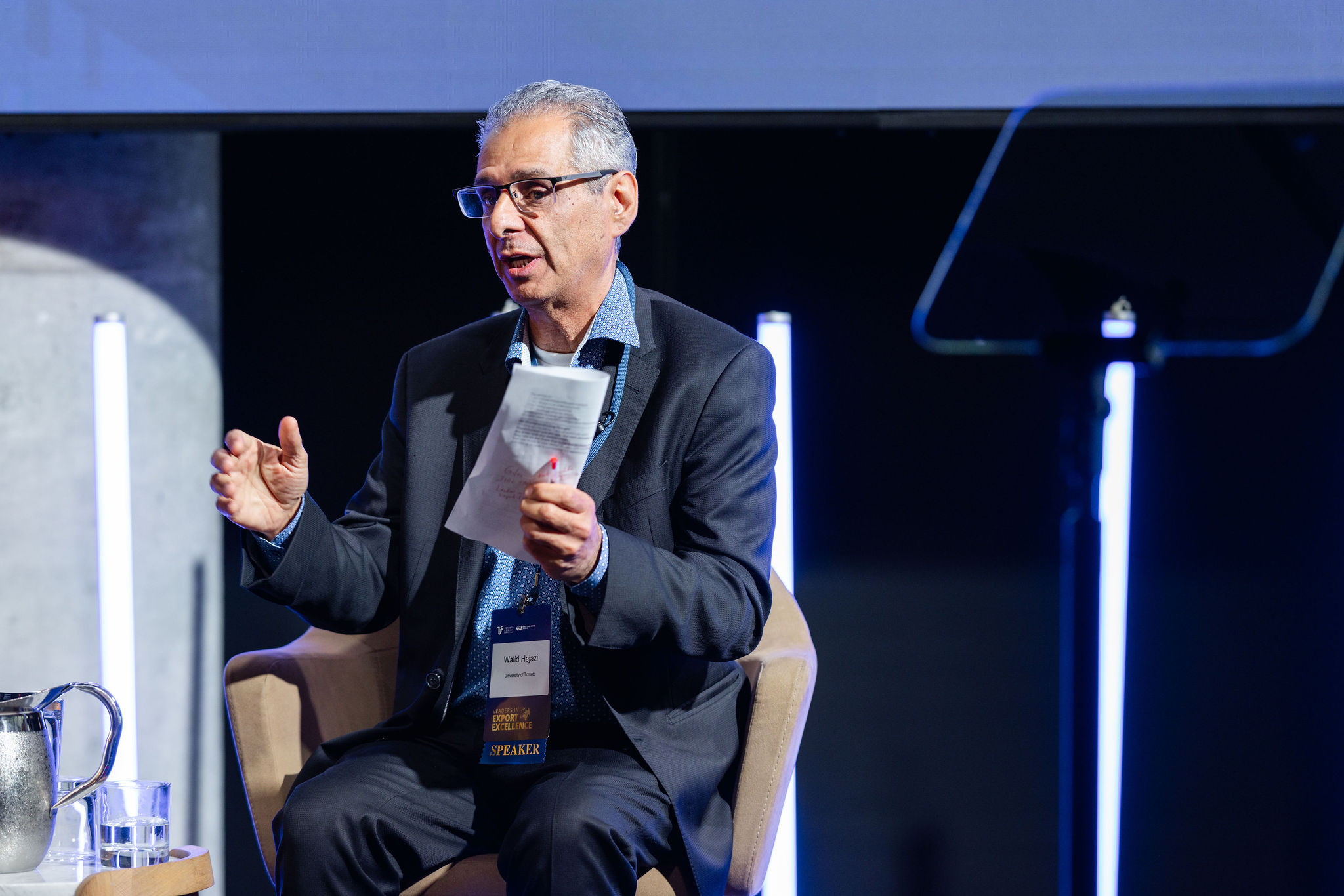
Walid Hejazi, a Professor of Economic Analysis and Policy at the Rotman School of Management, has spent years advising Canadian companies on the strategy shifts needed to compete internationally. He sat on a panel about the new era of Canadian trade and put a number on why growing into new markets matters so much right now.
"What's happening to global trade? It is not retreating, it is changing," Hejazi said.
"Any business that had 75% of their business with one client would get their credit rating downgraded," he said, pointing to the roughly three-quarters of Canadian exports that still go to the United States.
Hejazi's advice to companies eyeing new markets is blunt: results won't come fast.
"Don't think you're going to go to a trade mission in Barcelona and come home with a $5 million deal. It takes time, persistence, commitment," he said.
Getting those meetings might be getting easier, at least. Morgan Sadler, Global Director of Business Development at Pliteq — itself a TAP alum — sat on the same panel and has felt that shift firsthand while opening new regions for the building products manufacturer over the past several years. Right now, she said, being Canadian is opening doors faster than ever, especially in markets like the Middle East and Australia.
"Doors aren't shut. People are thrilled to give me a chance," Sadler said. "A lot of regions are very open to giving Canadian businesses a chance where it hasn't always felt this easy."

The Trade Accelerator Program is the reason most of the night's honourees were in the room at all. Since its founding in 2015, TAP has grown into a national program, delivered through hubs including World Trade Centre Vancouver (via the Greater Vancouver Board of Trade), Calgary Economic Development, the Saskatchewan Trade and Export Partnership, the Chambre de commerce du Montréal Métropolitain, and the Halifax Chamber of Commerce. Along the way, it's helped more than 3,100 participants build export strategies and make the connections needed to act on them.
As Jon Worren, Vice President of the World Trade Centre Toronto, put it, the success on display isn't just good news for the companies involved — it's what drives the country's success as a whole.
"Every export plan, every new market cracked open is part of what keeps Canada's economy growing and competitive on the world stage," he said.
RBC has backed TAP since the beginning, and Fahed Jaradat, RBC's National Director of Commercial Banking Strategy for Supply Chain and Financial Services, sees the program's return on investment play out in real time.
"Taking a business global is no accident," Jaradat said. "It requires moving from raw passion to disciplined execution."
Leaders in Export Excellence 2026 was presented by RBC.
Thank you to our Premium Exhibitors, CzechInvest and Reliable Logistics, as well as our exhibitors, Binclaw, Chambers Insurance, Nimbus Publishing, and Prime Target.