A new CEO inherits an executive team built on fear. Command-and-control leadership has run the organization for years, and the damage runs deeper than one bad habit. Even after replacing much of the team with people they trust, the CEO can't get the team itself to trust each other. Old guard and new guard don't mix. Functions operate in silos. The broader industry culture, shaped by decades of hierarchy and self-protection, works against any change from within.
It doesn't stay contained at the top. The executive team's behaviour cascades down through senior leaders, who mirror it, and then to the frontline. Safety becomes a concern. Innovation stalls. Ownership and accountability erode. Semi-annual survey results show trust declining across the organization. Performance stagnates. The board of directors takes notice, and the pressure to fix it lands on the executive team.
This is a true story, and Ignite Management was the firm brought in to help.

Mike Watson, founder and Executive Chair of Ignite Management, has seen this pattern before, and it's why when he started the firm in 2017, he did it with two core areas of focus: strategy formulation and leadership development.
“Far too often, strategic execution falters because leaders are not creating enterprise-wide ownership of what needs to take place,” he says.
“In these instances, strategies become documents that sit on a shelf. Strategies cannot be fully executed until leaders convert them into living, breathing roadmaps that guide actions throughout the company.”
Consultants are often brought into situations like this, and they tend to arrive with a plan first. They come with a strategy, a model, and projections. But according to Watson, the plans rarely fail on paper. Instead, they fail when it comes time to execute.
The core issue Watson believes isn’t that leaders can’t hold together under pressure, but that the people responsible for delivering strategy don’t feel a sense of ownership over it or have the leadership dynamic or capabilities to bring it to life.

Ignite sees it differently, and it's what helped the executive team above. Ali Grovue, President of Ignite Management, sums up the distinction.
"Most firms treat strategy and leadership as two problems. We treat them as one."
Their work began with unearthing the cultural legacies driving the dysfunction, then helping the executive team see the direct line between strategy, their behaviour, and the culture forming underneath them. Once they had clarity and a shared sense of ownership of the strategy, they built a leadership code they agreed to hold each other to.
The shift showed up fast. Within six to eight weeks, the new behaviours were landing with the rest of the organization, trust across the executive team was climbing, and projects that had stalled for lack of information-sharing started moving again.
Watson is careful not to declare victory, however.
“Leaders want a quick fix. What this actually takes is consistent attention over time,” he says.
“Trust is like a muscle; it grows if you keep working it.”
He adds that this is the beginning of the client's journey, not the end of it.
Executive teams aren't just contending with old cultural legacies. A generational shift is reshaping what people expect from work altogether, and it shows up as real disagreement inside leadership teams.
Flexibility and return-to-office expectations are the most visible flashpoint, but similar divides run underneath: how personal values line up with company values, and where the line sits between work and everything else.
"Return-to-office is the fight everyone can see,” Grovue says. “But it's rarely about the office. Underneath it are harder questions, like how much autonomy people get, whether they're trusted, and how their work is actually measured. Settle the surface argument and you've settled nothing."
Watson believes none of this gets settled by policy alone. He stresses it's a leadership challenge, and it lands on the executive team's ability to lead through disagreement rather than legislate around it.
“The test of the senior team isn’t whether they agree. It’s whether they can disagree well, out in the open, without fracturing, and still commit to one path.”
Technical competence and a sound strategy are table stakes. What matters more, Watson says, is whether the team is bought into what they're executing.
"People don't want to be told what to do," he says. "People want to be part of something they understand and believe in."
As Ignite puts it, there's no greater determinant of enterprise success than the functioning of its senior team, because that team is what creates the culture underneath the strategy.
All of it rests on trust. Watson has watched this pressure build across the workforce generally, not just inside troubled teams.
"We are seeing higher levels of anxiety in the workforce than ever before. This is impacting individual well-being and corporate performance."
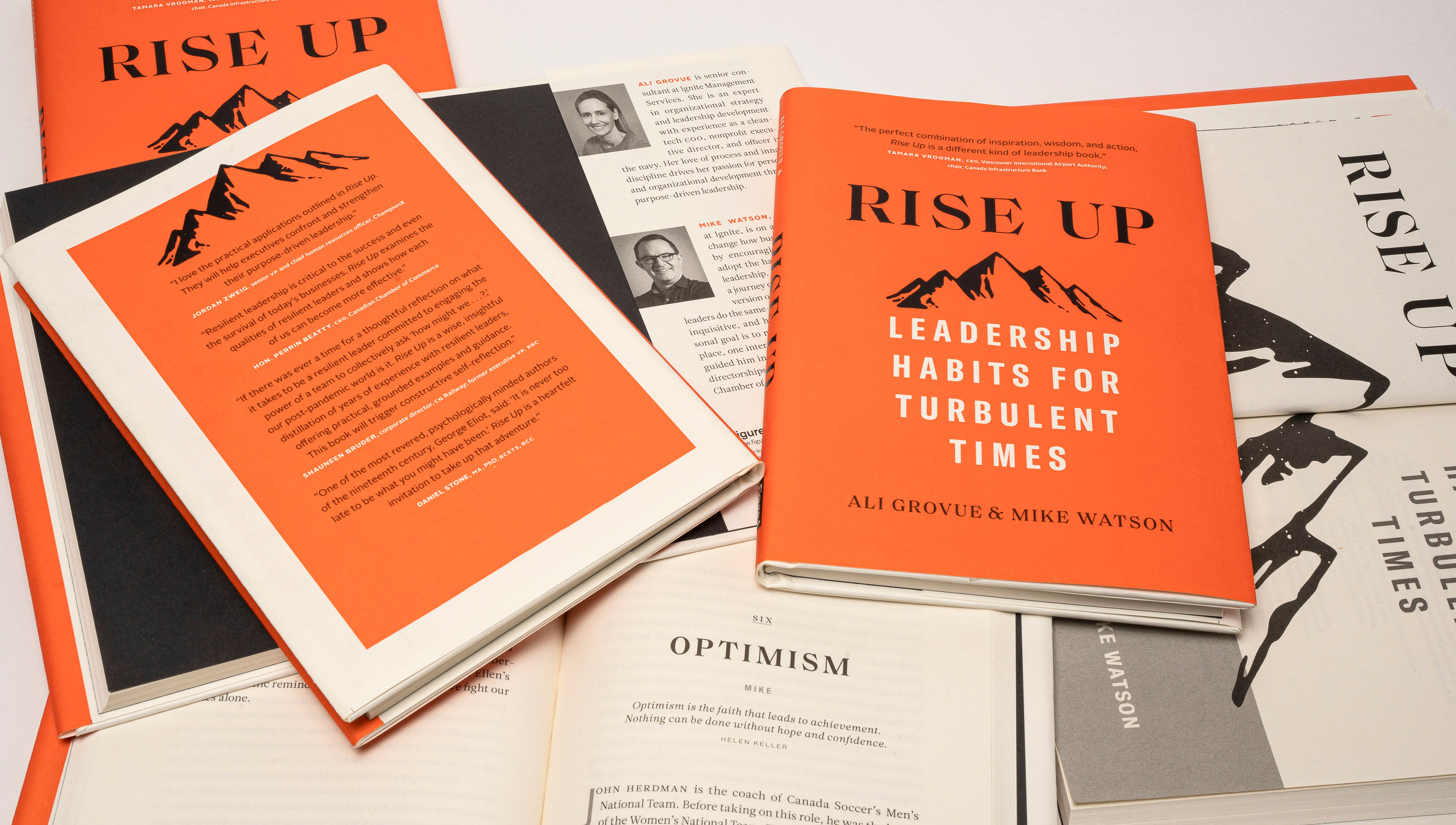
Trust doesn't happen by declaration. In their 2022 book Rise Up: Leadership Habits for Turbulent Times, Watson and Grovue break it into five behaviours.
- Care means acting visibly in people's interest, not only the organization's.
- Communication means clarity and candour, especially when the message is hard or the team is split.
- Character means doing what's right when it's costly.
- Consistency means behaving predictably, so a leader's word matches their actions over time.
- Competence is the credibility earned through capability and sound judgment.
Grovue connects all five back to what good leadership does.
"A leader's role is not to create certainty. It's to build an organization that navigates uncertainty well, through dynamic strategy practices, shared ownership of where the company is going, and a resilient culture built on trust."
As Watson sees it, sustaining trust takes the same ongoing attention as building it. It isn't something a leadership team fixes once and moves past. It's the discipline behind every plan that holds.
“In the end, no plan holds an organization together. The senior team does. That’s the work, and it never stops.”