Skip to content

Event Recap

Event Recap: Ontario’s Mining Economy: Financing Ontario’s Resource Revival

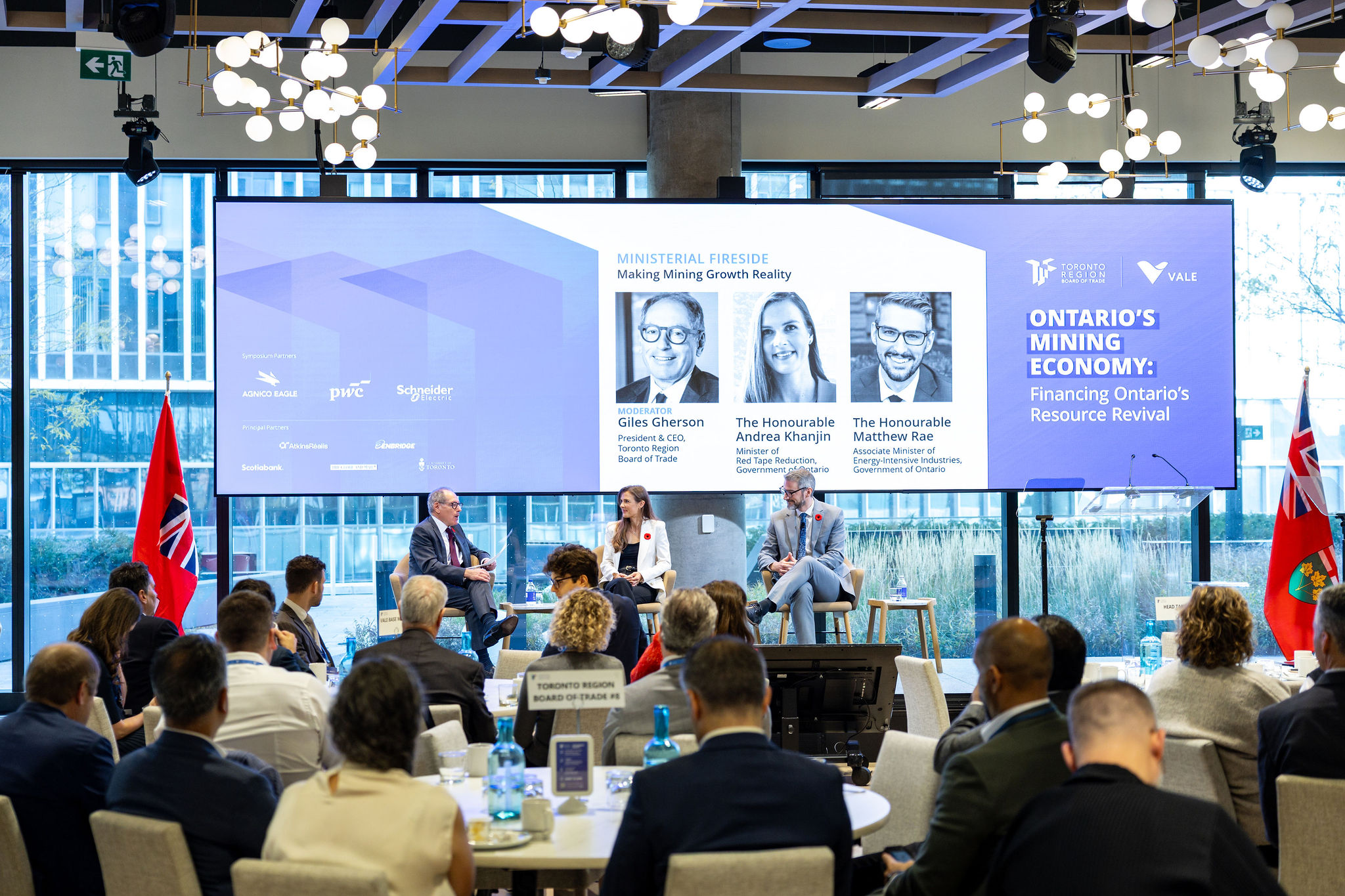
speakers on panel

Mining is no longer just having a moment. It's a movement. With global demand for critical minerals rising and countries looking to secure their supply chains, Ontario's mining industry is gaining a level of attention and support not seen in decades. However, turning that momentum into lasting economic growth will require more than political ambition. It will take investment, faster approvals, modern infrastructure and a new generation of skilled workers.

That was the central message from government and industry leaders at the Board’s event, Ontario's Mining Economy: Financing Ontario's Resource Revival. The province already has 37 active mines, established mineral processing facilities and a pipeline of potential new projects. Yet bringing a mine into production can take 15 years or more, while competition for capital and talent is intensifying around the world. The question is whether Ontario can move quickly enough to capitalize on its advantages.

For our President & CEO, Giles Gherson, the opportunity also represents a return to an industry that helped build Ontario's economy. “It's a bit of a back to the future when you think about the importance of mining and the resources sector to Ontario. It's what made Ontario great, in the last century.” With Toronto home to one of the world's leading mining finance markets, Gherson emphasized access to the capital needed to support the industry's revival is an important part of the province's competitive advantage.

KEY TAKEAWAYS

Critical minerals are a matter of economic and national security

The global race for critical minerals is being driven by far more than demand for electric vehicles and clean technology. Minerals are essential to national defence, artificial intelligence, advanced manufacturing and the energy infrastructure needed to power modern economies. As countries reassess their supply chains amid trade tensions and geopolitical uncertainty, access to reliable and responsibly produced minerals is becoming a strategic priority. Northern Ontario's vast resources offer Canada an important advantage; mining and processing capacity are strategic assets in the national interest. However, other countries are competing aggressively for the same investment, creating pressure to move quickly and strengthen Canada's domestic processing capabilities.

Federal and Provincial Governments Praised for Push to Unlock Mining's Next Chapter

Bringing a new mine into production can take 15 years or more, making regulatory certainty and faster approvals essential to attracting investment. Federal and provincial governments are pursuing new approaches to major-project development, including Ontario's One Project, One Process framework and a broader review of 375 business-facing permits. Canada Nickel's Crawford project near Timmins offers an early example of how greater coordination can help simplify permitting and reduce uncertainty for investors, although the full impact remains to be seen. Success will also require meaningful partnerships with First Nations, whose participation is essential to responsible resource development.

Ontario's existing mining industry is as important as its next generation

While the Ring of Fire and other proposed developments have captured considerable attention, Ontario's competitive advantage also rests on the mining operations and processing facilities already in place. The province has 37 active mines and 14 processing facilities, including smelters, refineries and recycling operations. These assets support domestic manufacturing, create high-value jobs and allow Ontario to capture more of the economic benefits of its mineral resources. Maintaining them will require a competitive operating environment including regulatory and energy costs, reliable supplies of minerals and continued investment in modernization and expansion. Electricity is a particular concern, with Ontario's industrial electricity rates higher than those of competing provinces. Expanded transmission infrastructure, coordinated energy planning and the potential use of small modular and micro reactors, and micro grids on mine sites, could help meet growing demand.

speaker

AI and Skilled Workers Will Drive Mining's Next Chapter

Artificial intelligence, autonomous equipment and digital technologies are transforming how mines operate, creating opportunities to improve safety, productivity and competitiveness. Physical AI can carry out inspections in hazardous environments, while digital twins can help anticipate construction delays, inform predictive maintenance, and optimize operations. These technologies could also make mining careers more attractive by allowing more work to be performed remotely and reducing repetitive tasks. Yet the sector faces a significant workforce challenge, with more than 20 per cent of workers over age 55 or approaching retirement. Upskilling current employees, reskilling workers for evolving roles, attracting new talent and updating education programs will be critical. Industry leaders emphasized that changing perceptions of modern mining must begin early, including in elementary schools, so young people understand the technology, career opportunities and earning potential available in the sector.

Toronto Is at the Heart of Ontario's Mining Revival

Developing new mines, modernizing existing operations and building the infrastructure to support them will require substantial capital and support from a broad range of professional services. Toronto offers a significant advantage through the TSX and TSX Venture Exchange, which together list approximately 1,100 mining companies and account for roughly one-third of global mining-sector financings. The city is also home to legal, accounting, engineering and advisory firms that support mining companies acros the project lifecycle. The venture market is especially important for smaller exploration and development companies, providing access to investors before projects reach commercial production. But access to financing does not guarantee investment. Companies must demonstrate that their projects can deliver competitive returns, supported by predictable regulations, skilled labour and manageable operating costs. Connecting Toronto's capital markets and broader professional-services expertise with Northern Ontario's mineral resources will be central to converting the sector's momentum into long-term prosperity.

KEY NUMBERS

82%

Of Ontarians have a favourable opinion of mining companies in Ontario, according to polling cited by the Ontario Mining Association.

375

Business-facing permits under review by the Ontario government as part of efforts to reduce red tape and accelerate development.

14

Mineral processing facilities in Ontario, including smelters, refineries and recycling operations, helping capture more economic value from the province's resources.

Over 20%

Of Ontario's mining workforce is over age 55 or approaching retirement, according to the Ontario Mining Association.

20,000

Additional workers potentially needed in Northern Ontario, accounting for mining growth and retirements.

1,100

Mining companies listed on the Toronto Stock Exchange and TSX Venture Exchange.

One-third

Of global mining-sector financings take place through the TSX and TSX Venture Exchange, according to TMX Group.

IN THEIR OWN WORDS

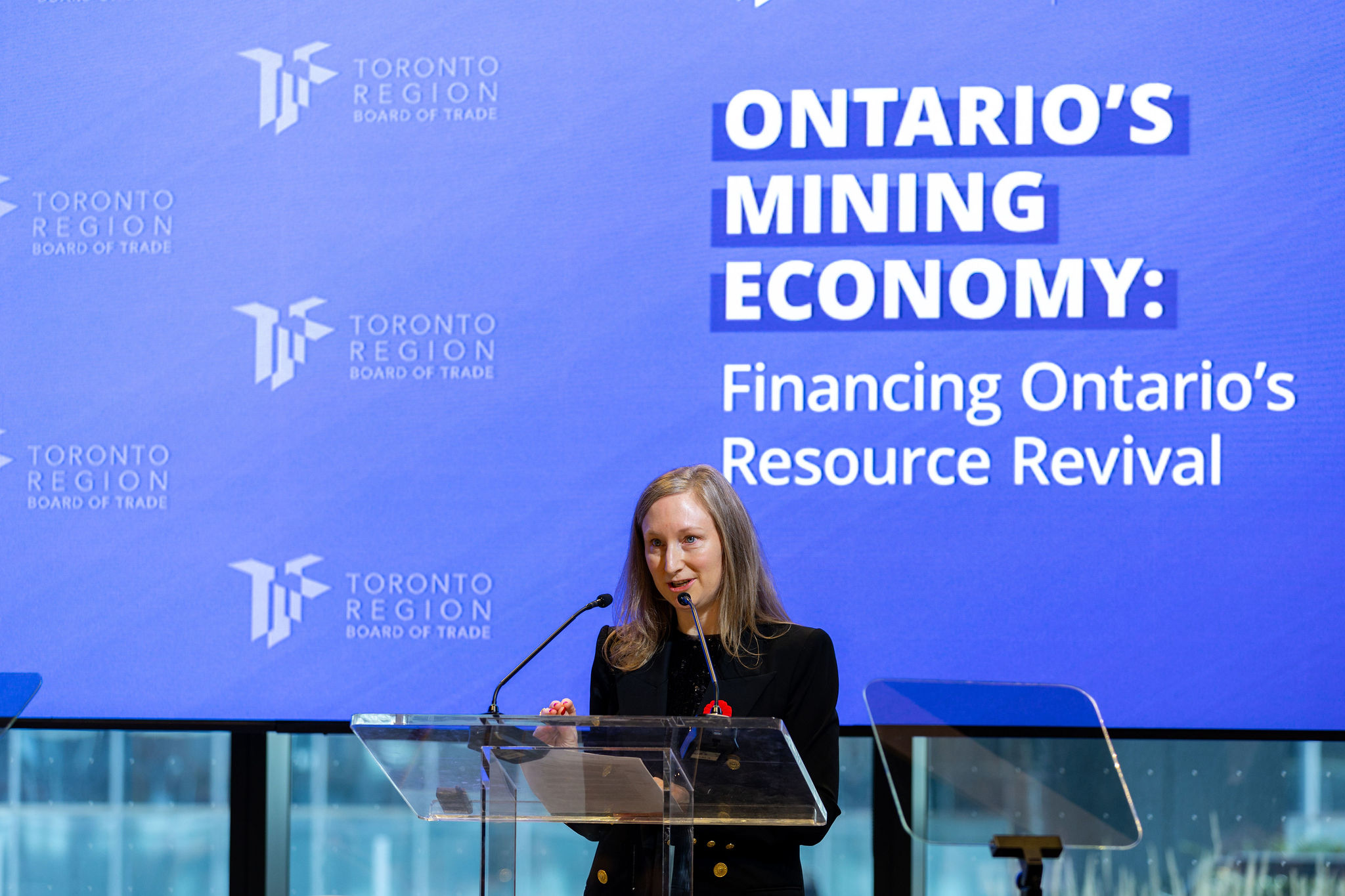
“To deliver competitively on the global stage, we need to step up our game. There are so many things we need to get right. We need to develop infrastructure. We need to solve for the tremendous talent demand, for skilled talent. We need to ensure the right projects get prioritized, that they get the funding at the right time. We need to recognize and embrace Indigenous leadership. And we need both the private and public sectors to do more and to do it faster. It's complicated. We like to say that mining is having its moment. And lately I've started to think that we need to shift that phrase. I think we need to say that mining is a movement. Because the long-term demand for our natural resources is a reality. It's not a moment. It's not going anywhere.”
— Monica Banting, National Mining & Metals Leader, PwC Canada
261104_Indigo_Events_0216

“The world is searching for secure supplies of resources required to run a first-rate economy. Few places are better positioned to meet that demand than Northern Ontario. The resources are there. The workers are there. The communities that want to grow and prosper are there. And our government is working every day to ensure that conditions for investment are there as well. The question is not whether Northern Ontario has the potential, the question is whether we will embrace the opportunity before us. I believe we will. This is our time.”
— The Honourable George Pirie, Minister of Northern Economic Development and Growth
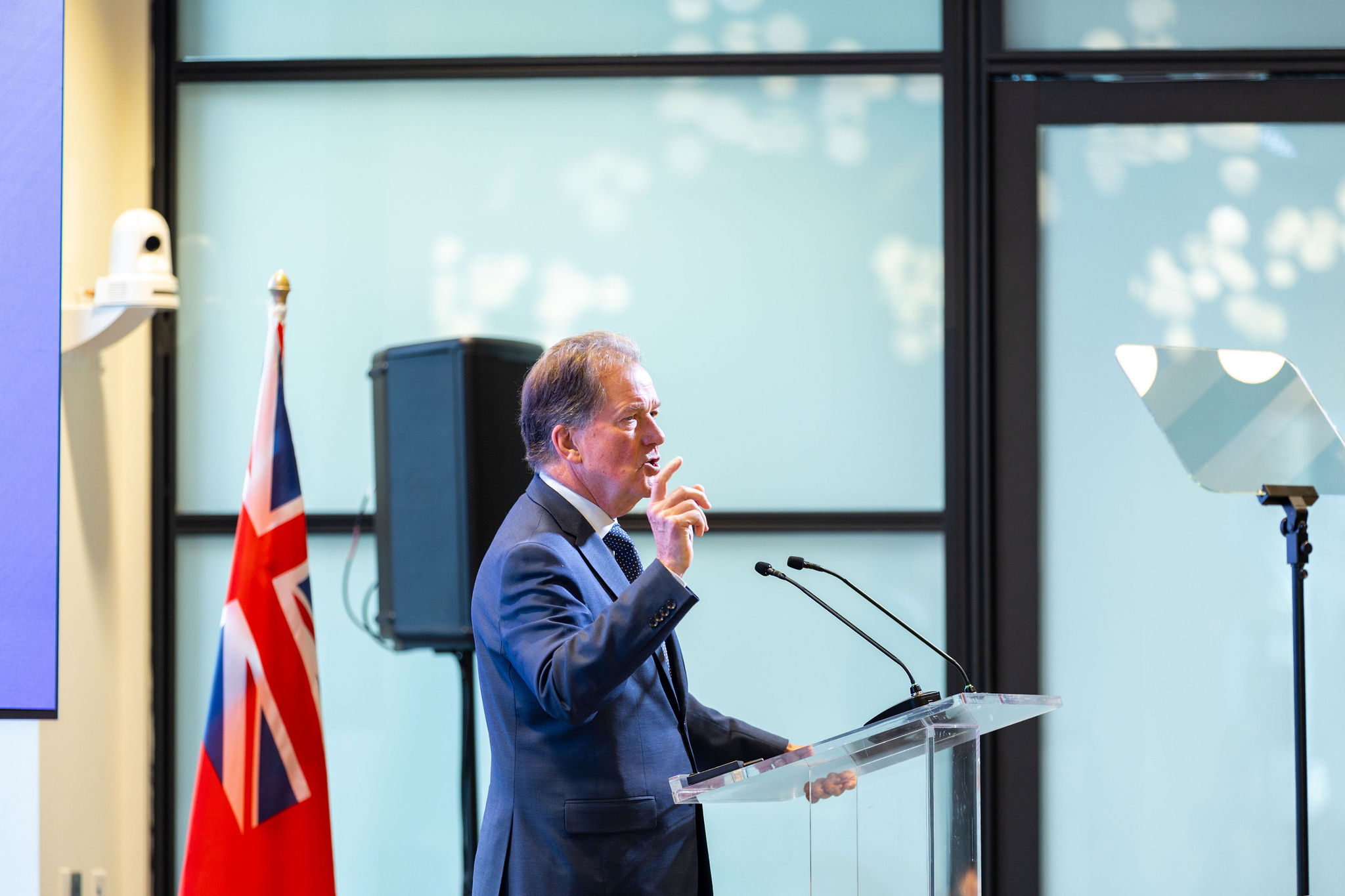
261104_Indigo_Events_0186

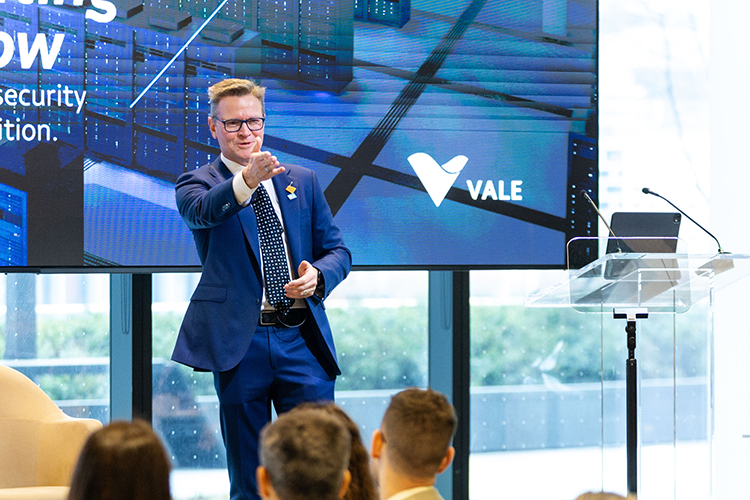
“It might sound boring, but stability and reliability is a unique and incredibly valuable value proposition for Canada, for Ontario, and for the mining sector. Because I think what the world is waking up to is a very simple proposition. You cannot defend your country without critical minerals. We saw the Prime Minister announce that last week in Canada's new national security strategy. But whether it's your borders, your environment, or your economy, access to critical minerals, knowing that you can get them, they will be there for the technologies of the future, and to defend your country is absolutely critical.”
— Jeff Gaulin, Vice President, Corporate Affairs, Vale Base Metals
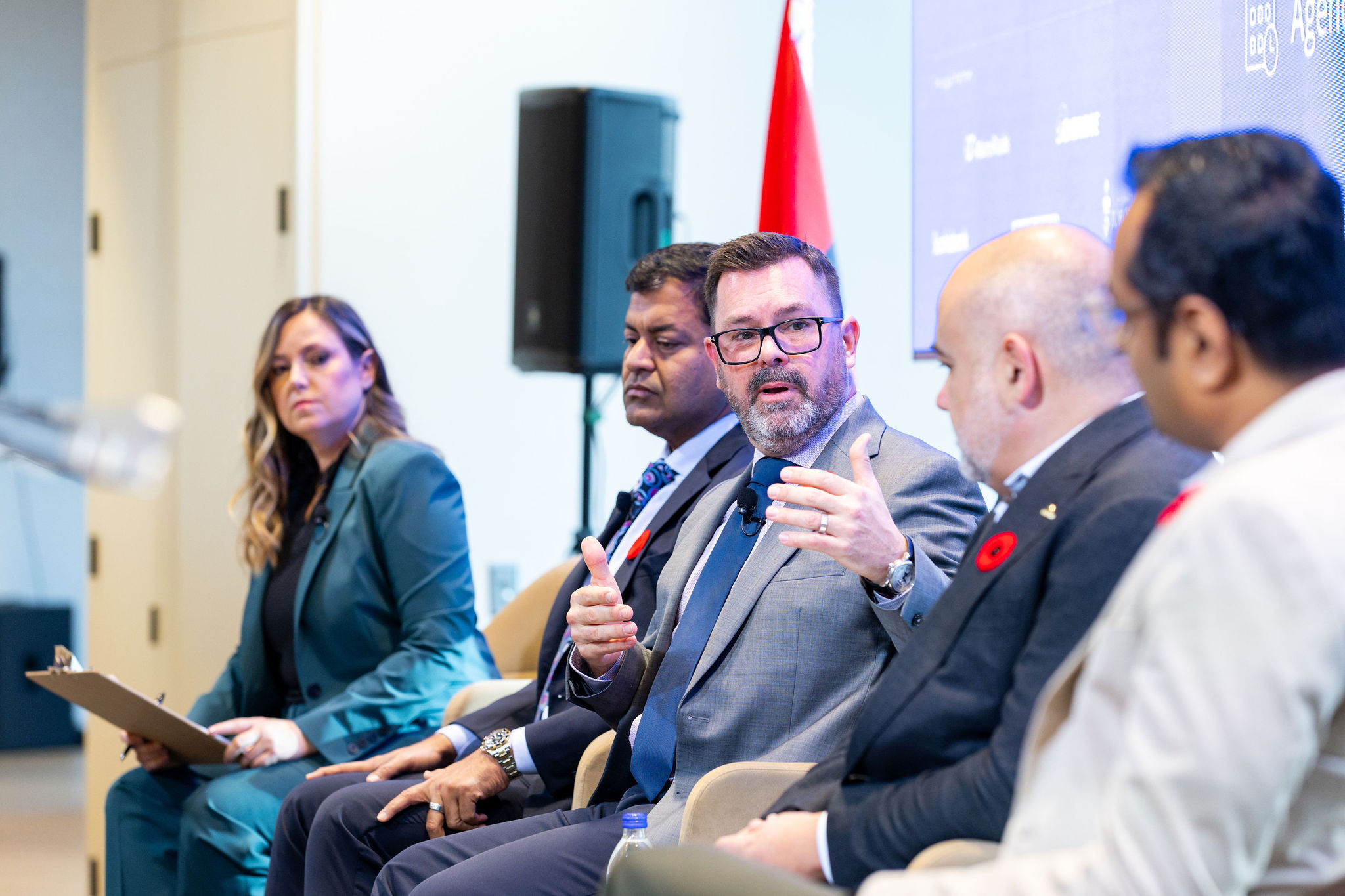
261104_Indigo_Events_0288

“We're rewarding ambition, not punishing it. […] We're taking a system that said no [and turning it into a] system that says go, and that's what the permit review is all about. […] Government should be responding to industry, not the other way around because ultimately you're paying your taxes and government should serve the people.”
— The Honourable Andrea Khanjin, Minister of Red Tape Reduction
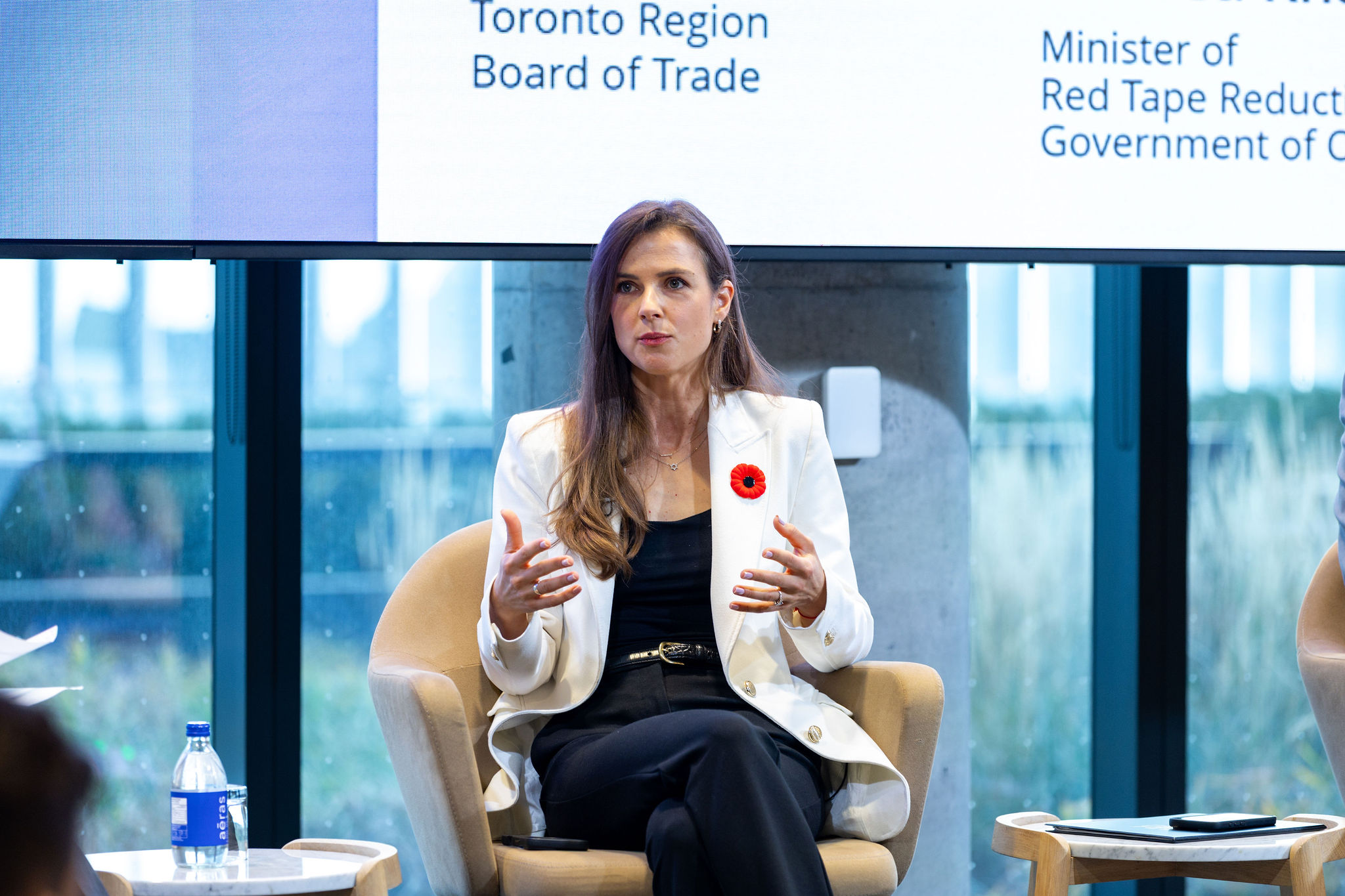
261104_Indigo_Events_0327

“I've been involved in the sector for the last 20 years, and [support for mining] has never been so high. […] 82% of Ontarians have a favorable opinion of mining companies in Ontario, and 88% think that Canadian mining should have and deserves to have a great reputation. We have never seen public sentiment so high, government sentiment so high.”
— Priya Tandon, President, Ontario Mining Association
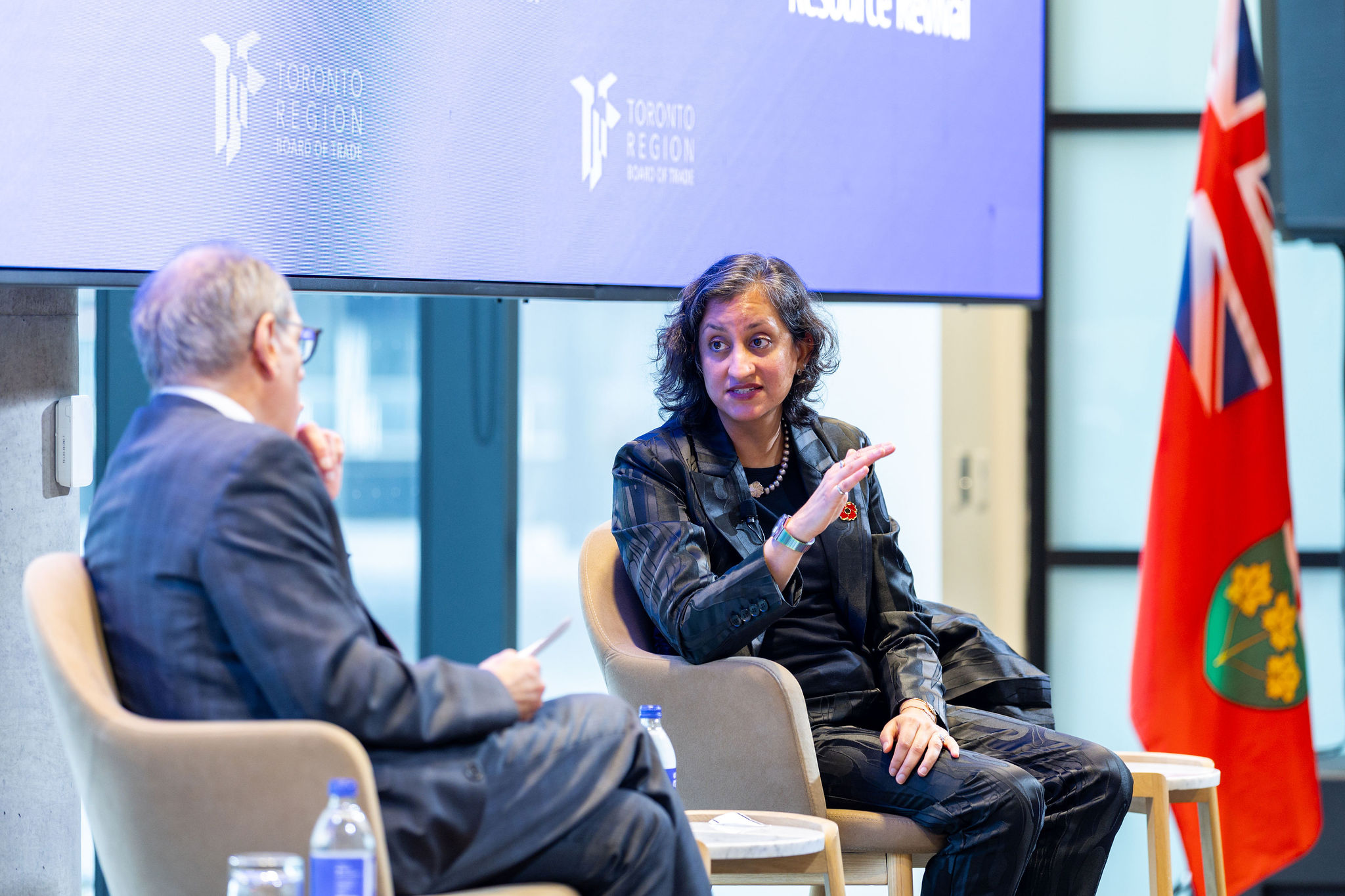
261104_Indigo_Events_0397

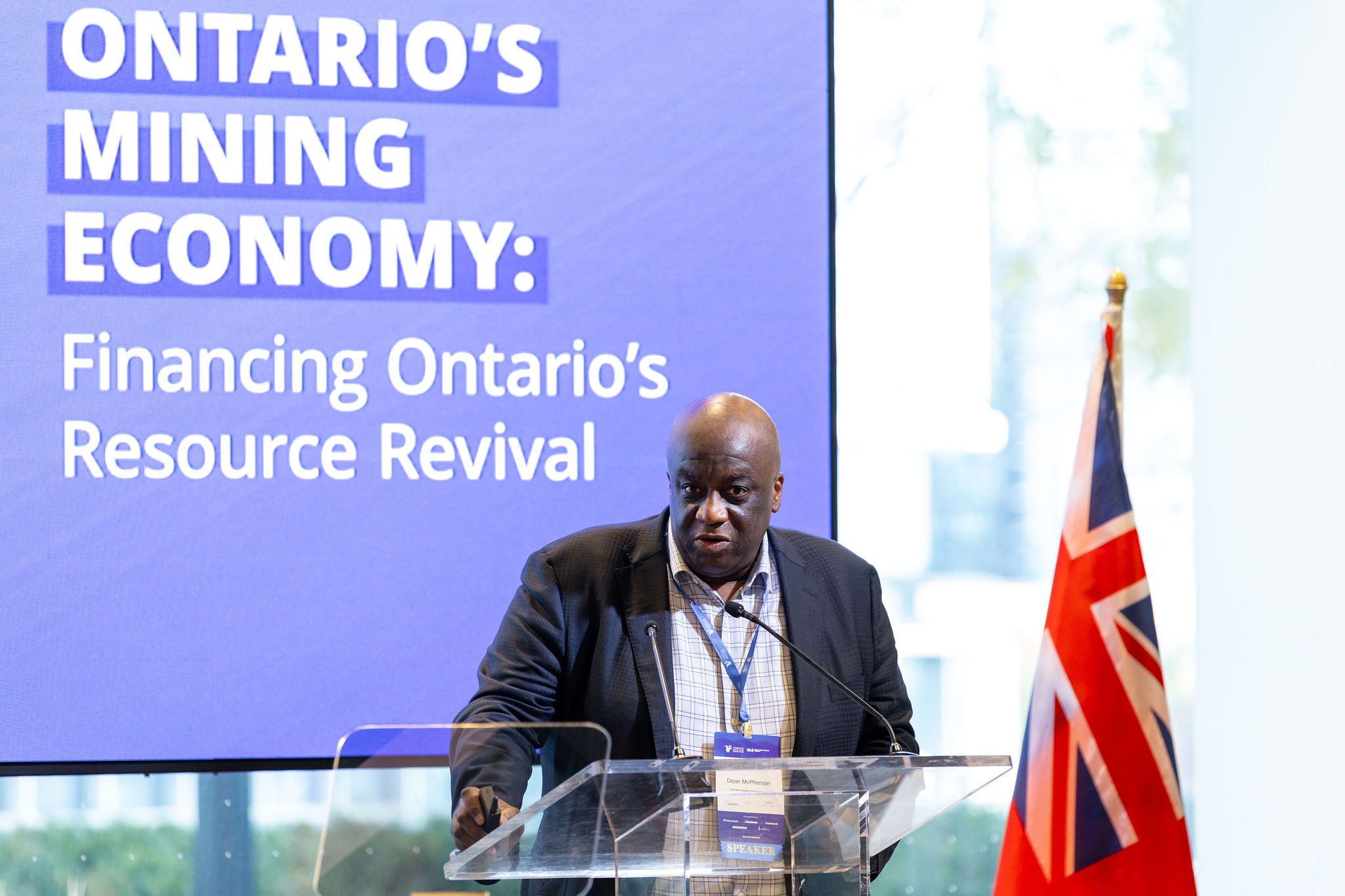
“We are by far the leading stock market for mining companies globally. And as a result, about a third of all financings that are done in the mining sector are through our markets. And most of the capital that's raised tend to be through our markets.”
— Dean McPherson, Head of Global Mining, Toronto Stock Exchange & TSX Venture Exchange
261104_Indigo_Events_0436


Presenting Partner

RELATED CONTENT

News

Speaker takes questions from the audience
Vale Base Metals - Providing Mineral Security to a World in Transition

Vale Base Metals is at the centre of Ontario's mining comeback story.

MAY 2026

News

Canadian flag in front of office building
'If Canada Plays Its Cards Right': Why We Might Be on the Edge of an Economic Supercycle

TD Economics says Canada has $1 trillion in major projects on the table, and the right policy could turn it into a decade-long investment boom. Part one of two.

SEP 2026