For many people, leadership succession is something they have only watched play out on screen, where power shifts and high-stakes decisions make for great entertainment. The reality is less dramatic and far more consequential.
Because Phelps is a family-owned business, succession was top of mind for founder Valerie Phelps from the start. When she established the firm in 1986, she built it on adaptability, professionalism, and exceptional client service. Four decades on, Phelps is a national executive search and leadership advisory practice, headquartered in Toronto for over 25 years, with offices in Montreal, Calgary, and Thunder Bay. Valerie's legacy continues through her children, Heather and Jayson, who lead the firm as Managing Partner and Senior Partner.
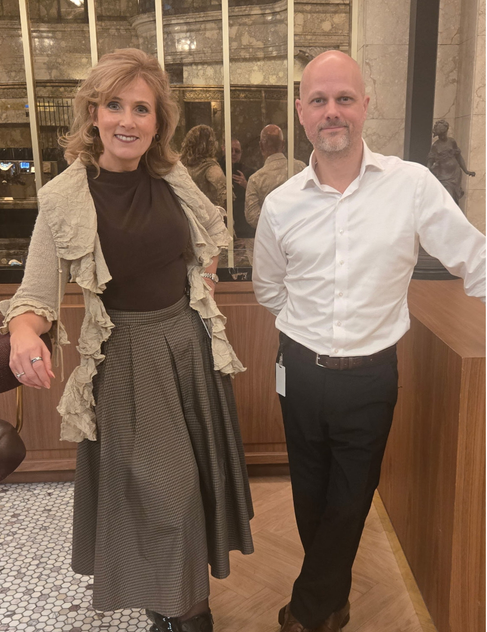
Heather and Jayson Phelps
Succession planning is not only a family-business concern. It is a strategic priority for organizations of every size. Retirement waves are accelerating at the executive and director levels, increasing risks of knowledge loss, leadership continuity, and service disruption. The stakes are measurable: Harvard Business Review reports that within the first 18 months, there is a 50% chance a new executive will leave the organization.
In a recent search, a routine conversation about replacing a retiring C-suite executive shifted once the committee began mapping the leadership bench. The question was no longer who could step in right away, but who could carry the organization's strategy forward in a very different operating environment.
“Succession planning needs to be treated as an enterprise risk initiative, not simply an HR function,” says Jayson Phelps, Senior Partner at Phelps. “Conversations have shifted from ‘Who can do this job?’ to ‘How can we strengthen our leadership bench over the next five years?’”
“Hiring for future potential is an investment that extends well beyond a signed offer letter,” says Heather Phelps, Managing Partner at Phelps. “Executive coaching, leadership assessments, mentoring, and targeted development programs all help new leaders succeed while preparing the next generation to step forward with confidence.”
Bruce McCuaig, Senior Consultant at Phelps and former President & CEO of Metrolinx, sees it as something built into how an organization operates.
“Every executive search is an opportunity to strengthen the organization for the future. For boards and CEOs, succession planning should be embedded into performance expectations. When leaders are accountable for identifying and developing future talent, succession becomes part of the culture rather than a reaction to a vacancy.”
That approach has been tested in some of the hardest markets in which to retain leadership talent. In Northern Ontario and the territories, Phelps has helped extend average retention in certain roles from roughly 18 months to more than seven years.
Succession can be modelled, mapped, and built into a scorecard, and Phelps does all of that. But the firm's own experience suggests the harder-to-measure, more human part, the listening and making space for other voices, matters just as much.
At Phelps, the focus is on helping organizations identify not only the leaders they need today, but the leadership capacity they will need tomorrow.