It’s been billed as Union Station’s little sibling. But when complete, the East Harbour Transit Hub will be anything but little. Built in a remarkably small space, it’ll have an outsized impact on mobility in the Toronto region.
The station is expected to become Toronto’s second-busiest, serving an estimated 100,000 riders a day and reducing crowding at Union Station by up to 14 per cent during peak travel times. It will link the Lakeshore East and Stouffville GO lines with the future Ontario Line subway, opening new routes for riders from downtown’s east end and beyond.
Right now, it’s a construction site in the hands of the East Harbour Transit Hub Alliance, composed of AtkinsRéalis, Bird Construction, and Hatch. It’s an all-Canadian, collaborative project delivery team formed to design and construct the project with Metrolinx.
Every day, GO Transit and VIA Rail trains roll past the site mere feet away. Most passengers have no idea what kind of landmark is rising beside them.

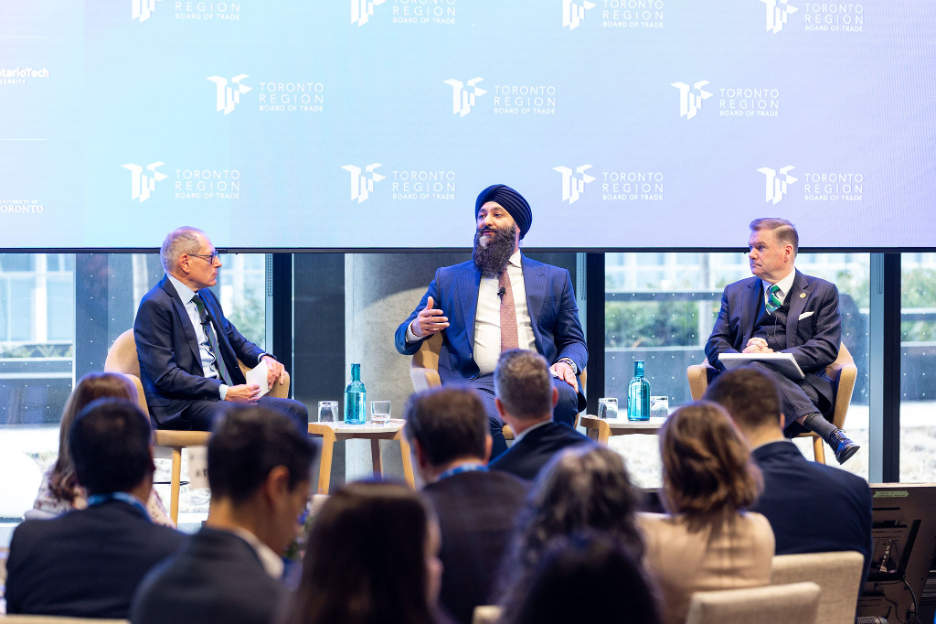
Bill Gifford, Executive Vice-President and Market Lead, Rail Transit Delivery Systems and Construction Management, AtkinsRéalis
As Executive Vice-President, Bill Gifford leads Rail Transit Delivery Systems in Canada for engineering services and nuclear firm AtkinsRéalis. A Welsh-born engineer who’s now a Canadian citizen, he has spent nearly four decades on infrastructure projects around the world. He describes Union Station as the fulcrum of Toronto’s transit network. East Harbour, a short distance to the east, is designed to take on some of that weight.
“It’ll be the smaller sibling to Union Station,” Gifford says, “as part of a wider program of investment that Ontario has been making as it seeks to transform transit.”
What sets it apart from most transit projects, according to Gifford, is its shape and size.
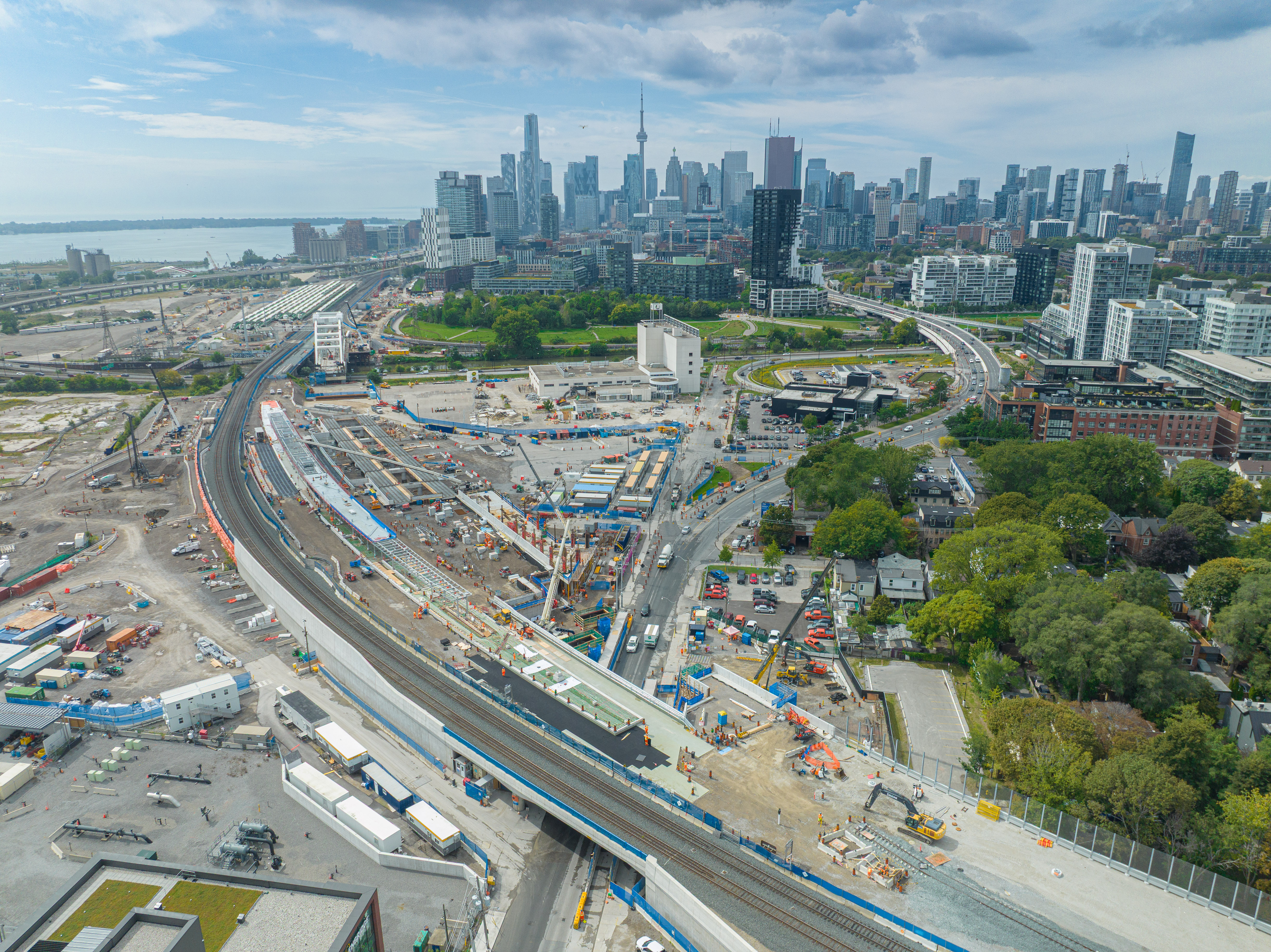
“Transit projects by their very nature tend to be long and linear: above ground, below ground, traversing all sorts of geographical challenges,” he says. “What we have here, of course, is a transit hub within a postage stamp. So that is unique.”
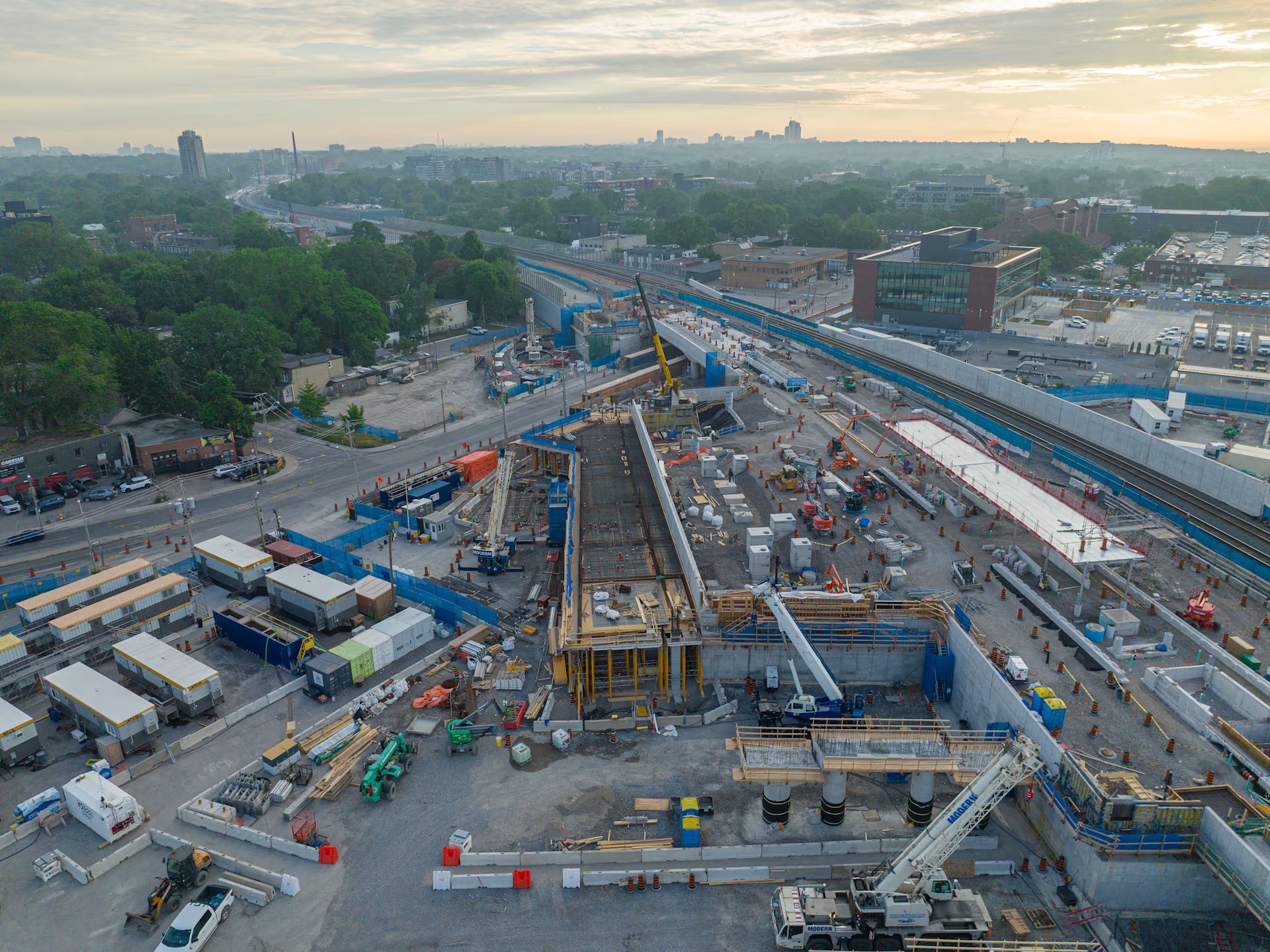
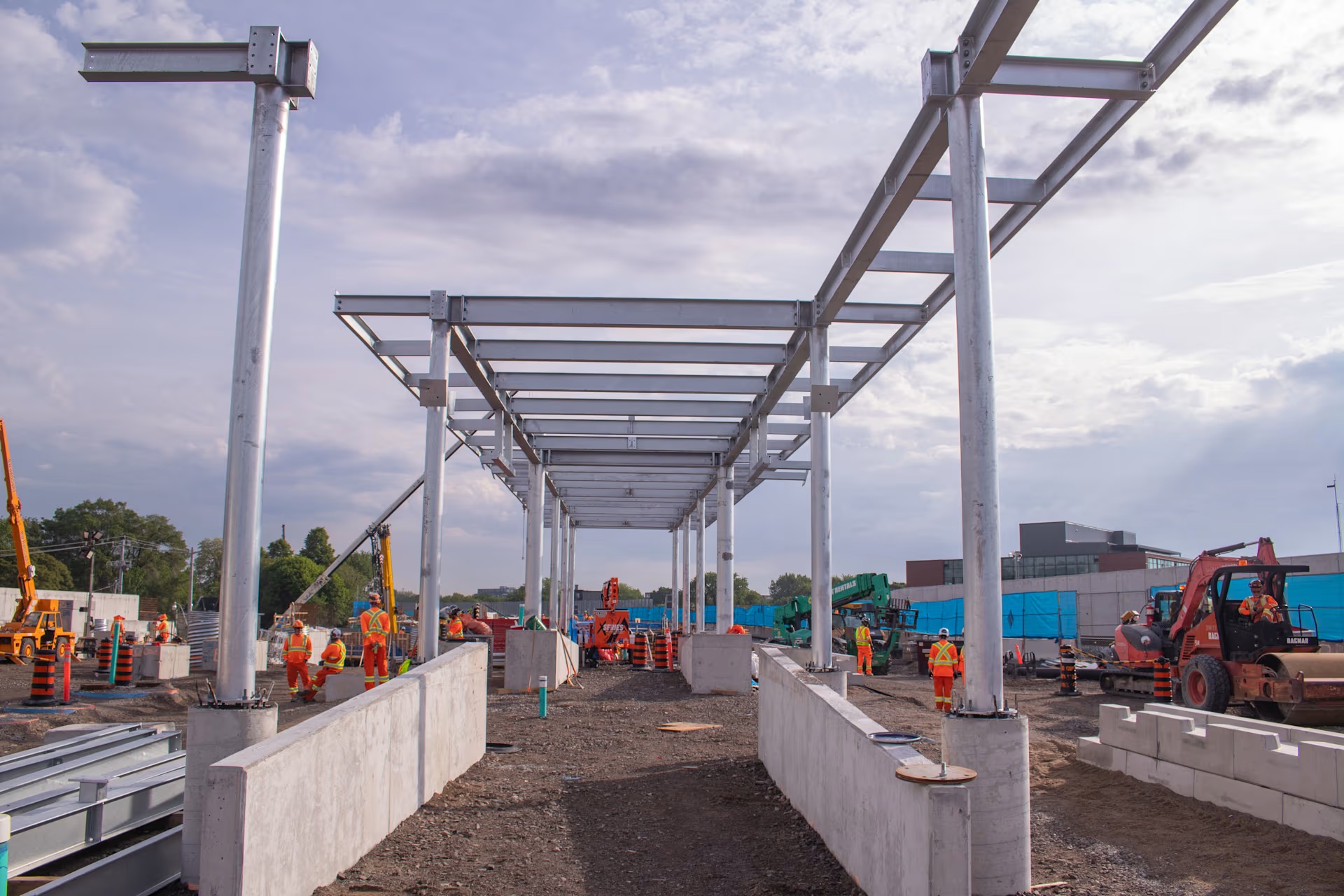
Into that footprint go six tracks, four for GO Transit and two for the Ontario Line. They’re served by three island platforms, along with passenger facilities and bicycle parking. All of it is being built next to a live rail corridor. That makes logistics the central challenge.
“The day-to-day management of resources, equipment, materials — what comes in, what comes out — is critical,” Gifford says.
The site sits in the Riverdale neighbourhood, just east of the Don Valley Parkway, south of Eastern Avenue, and next to other projects like the Ontario Line. From an engineering standpoint, it’s hemmed in. An established community and land for new developments sit next door, and both busy downtown roads and the GO train corridor run right through it. That means every move has to be sequenced carefully.
“Work underway in one part of the site can have immediate consequences elsewhere. It can also create impacts that emerge six or 12 months later,” Gifford says. “Every company in the alliance has to understand the linkage between all site activities and phase that into a structured plan.”
Courtesy of Metrolinx
Delivery of East Harbour is taking place under an alliance contract model. It’s one of the first major transit projects in Canada to use this framework. AtkinsRéalis and Bird Construction, in a joint venture, manage construction and delivery, with Hatch as design lead and Metrolinx as the project owner. Rather than working as a separate contractor, designer and client, all four sit inside one integrated team, sharing risk and making decisions on a “best for project” basis instead of in the interest of any single organization. The team works from a common project office with its own brand identity, with organizational key cards left at the door.
Work on the project began in 2022, with a development phase in which AtkinsRéalis and its partners refined the station’s design, schedule, and overall price, reaching a final agreement in March 2025.
Earlier this year, the team finished the second deck pour on the Eastern Avenue Bridge, two weeks ahead of schedule. It was completed over a single weekend of round-the-clock work. The next major milestone, targeted for the end of November, is shifting two tracks from their current alignment onto a new alignment through the station.
Making the alliance work took deliberate effort.
“Literally for the first 90 days, the focus was on how do we bring everybody together? What are our mission statements? What are our values? What are our ways of working?” Gifford says. Getting the building blocks right, he adds, “needs help, it needs structure, it needs focus.”
He points to one concrete example of the model paying off. During the development phase, early cost estimates showed the project heading outside its budget envelope. Rather than each party defending its own position, the open-book transparency of the alliance let the team rethink parts of the station’s structure. Elevated sections shifted from cast-in-place to precast concrete elements, cutting both cost and schedule.
“The issues are identified earlier,” Gifford says, “and then you can dedicate the brainpower and effort to resolving them to the benefit of all.”
Gifford says Canada has traditionally been slower than other markets to adopt the model. For large and complex projects though, he argues it’s simply a better fit for the risk involved.
“It works best when you have a level of complexity and uncertainty that is difficult to potentially manage by an individual party... what better approach than putting everybody’s collective minds from all the different organizations together.”
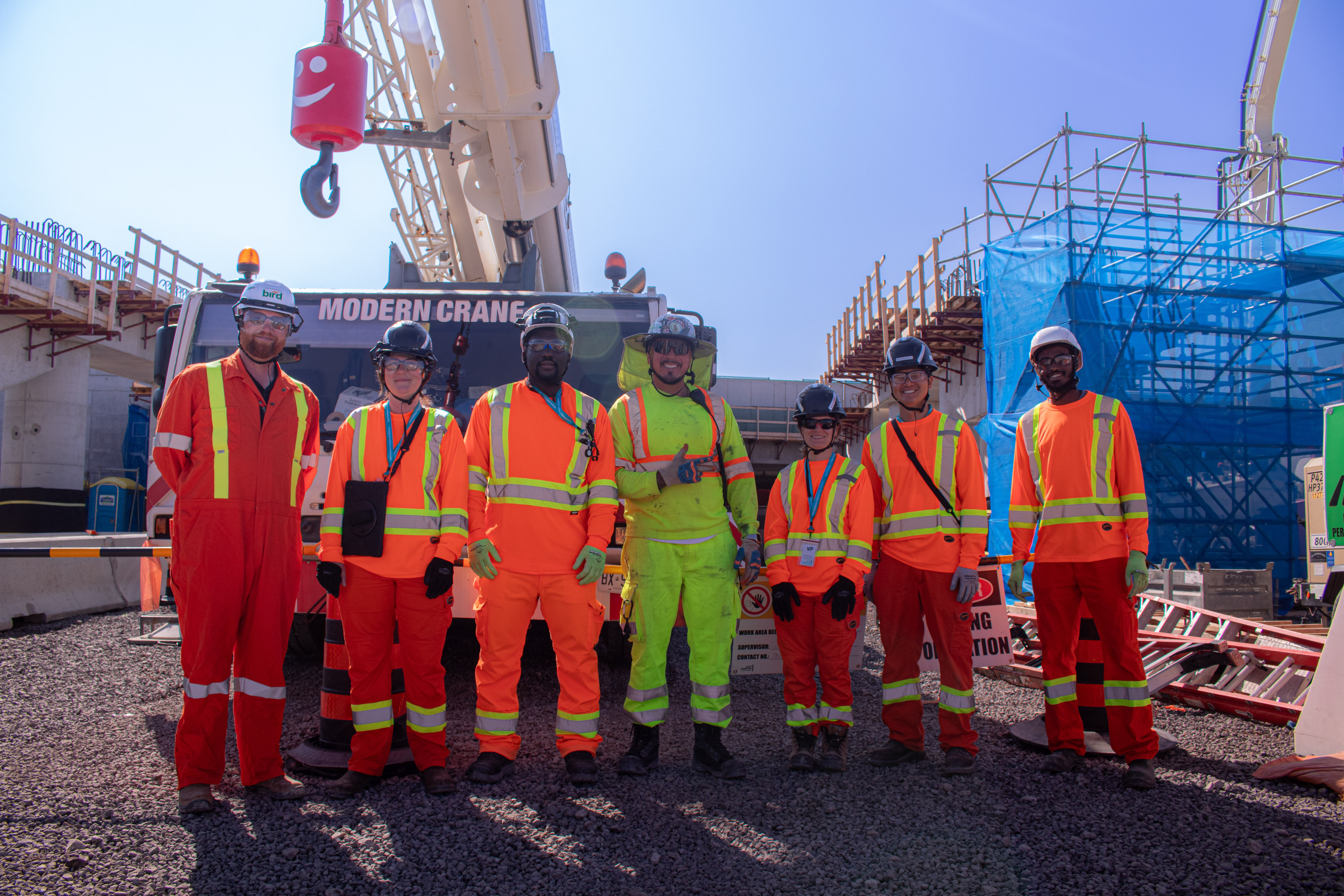
The project’s Canadian character extends to its supply chain. Local employment and procurement is one of the performance indicators built into the alliance’s shared risk-and-reward framework. The team tracks spending with suppliers across the GTA and within a “hyper-local” radius of 10 kilometres from the site. It also tracks business going to small and medium-sized enterprises, social enterprises, and companies led by equity-deserving groups. The same indicator measures employment opportunities for women and other underrepresented groups in engineering and construction. Women specifically make up 30 per cent of the team.
“We track that closely to make sure that level of local procurement and local spend is appropriate,” Gifford says. “This is a Canadian team delivering a major project for Toronto. We monitor our procurement to make sure the investment supports local suppliers, workers and communities.”
Some of that spending is very close to home. Gifford says the project’s ready-mix concrete and reinforcing steel are both sourced nearby. The benefits reach beyond the supply chain, too.
“It’s the cafés, the shops, the accommodation, the hotels — how can we support those local communities?” he says. “And it’s fair to say, I think we’re doing our bit.”
The project is also preserving a piece of local history. During demolition work over Eastern Avenue, the team salvaged a girder from the original 1926 rail bridge, still bearing historic CN Rail branding. Rather than scrap it, they carefully removed and preserved it, and the City of Toronto plans to incorporate it into the Gardiner Expressway rehabilitation.
Courtesy of Metrolinx
As Canada’s trade relationships face new pressures and “buy local” conversations gain urgency, East Harbour offers a tangible example of what that looks like on the ground: a generational transit project, largely built by Canadian hands, for Canadian riders.
It’s also being built for the long haul. The station has a 100-year design life, and GO trains are expected to arrive as often as every five minutes at rush hour. Around it, a 38-acre transit-oriented community is planned to bring thousands of new homes and jobs to the area.
For Gifford, delivering something built to last comes down to the partnership behind it.
“Working in an alliance environment isn’t always easy. It takes work, it takes effort, you have to be intentional. But when we get it right, such as we are on East Harbour, with all of the partners working collaboratively together, it’s a fantastic place to work.”