Green Standards makes its living helping other businesses let go of what they no longer need. The company's own moment of clarity on AI came when it had to take that advice itself.
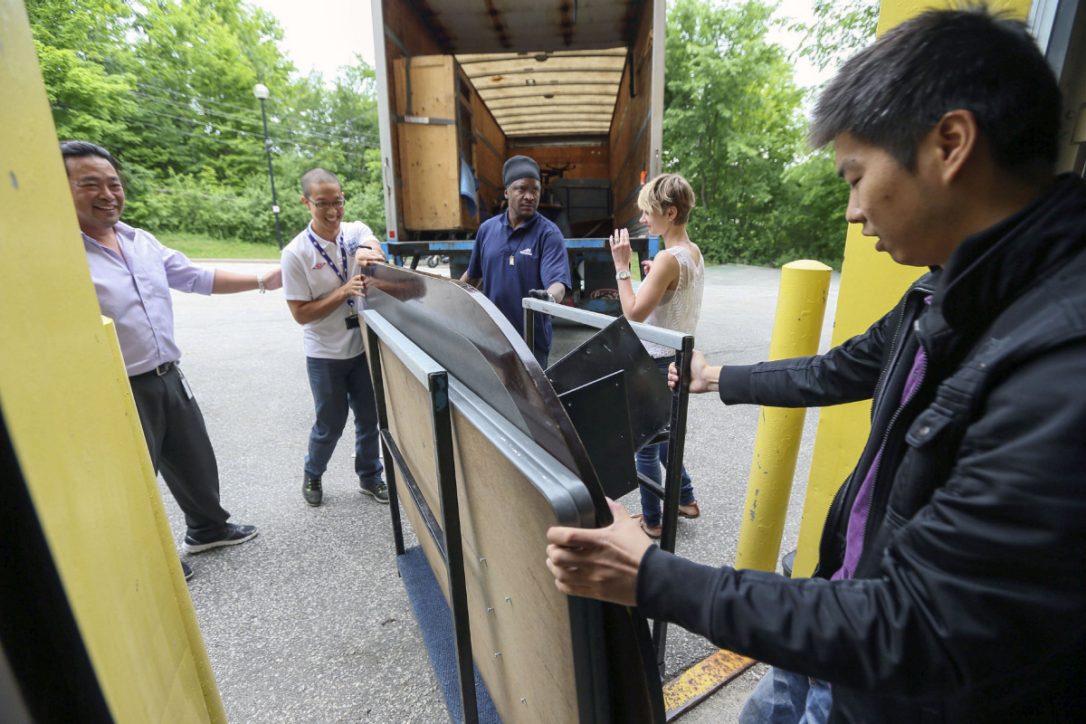
When a company wants to responsibly clear out office space, whether it's downsizing or moving locations, Green Standards is the one they call. Fortune 1000 clients like RBC, JPMorgan Chase, and Amazon rely on the company to divert furniture and equipment to donation, resale, and recycling instead of landfill.
The company spent two years and six figures moving onto a new enterprise resource planning (ERP) platform. The implementation partner didn't work out. A second attempt didn't work out either, delivering less than the promised feature set because of platform constraints. So by the time CEO Trevor Langdon and COO Rick Satenstein sat down to plan the next rollout, they were staring down a familiar kind of dread.
"What if, instead of enduring that 60 days of hell that inevitably comes with moving onto a new system, we spend the next 60 days just trying to build better tools ourselves?" Langdon said.
They did. Eighteen months since initiating the original ERP migration, while still paying licensing fees for a platform it has effectively walked away from, Green Standards is now running its business on six proprietary applications Satenstein built in-house.
"We're still amortizing two years' worth of prepaid licenses for these guys," Langdon said. "We've spent a lot of money for an off the shelf software platform that we won’t end up using."
He pauses briefly before adding, "But that's in the past now."
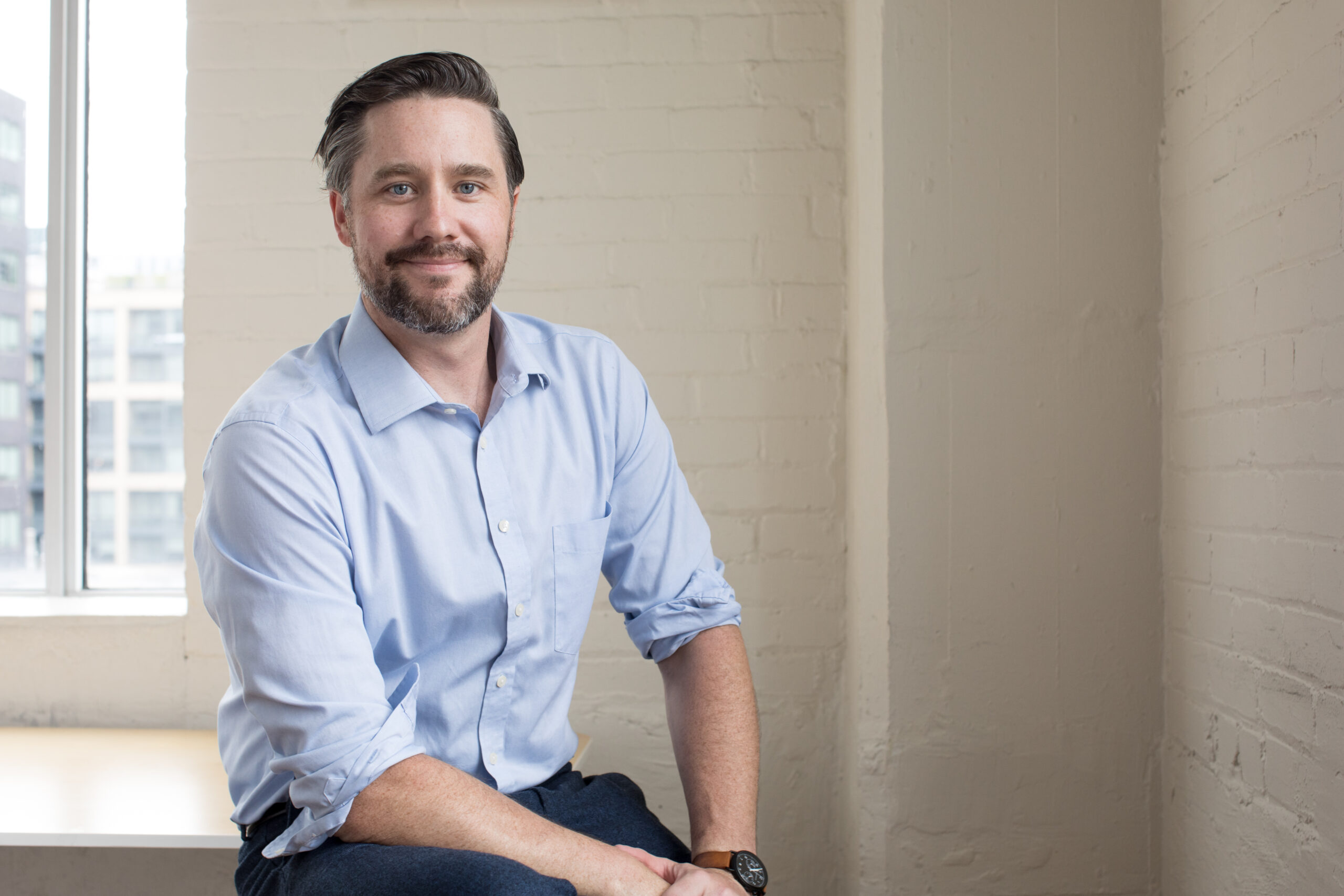
Trevor Langdon, CEO of Green Standards
Satenstein is not a professional software developer, but he has scoped builds and managed development contracts and served as a system administrator, giving him a grounding in data modeling and a range of use cases. His early exposure to machine learning and AI coding agents helped him identify the optimal development stack and begin assembling a custom system while the ERP rollout stalled.
“What makes Rick so special is not just what he can do with Claude,” Langdon said. “It's that he can do that while also being armed with eight and a half years of deep, deep, intimate experience in our business.”
The new stack runs on a shared backend, and includes a CRM (Horizon), a proposal-generation platform (Forge), an inventory and ESG-reporting tool, and several smaller internal tools built to fix everyday friction points.
The benefits for staff across the organization have been significant. Teams tracking the same inventory once relayed information to each other by email, Satenstein said. That data now moves through a shared backend automatically, freeing staff from the manual handoffs between teams. The new tools also scan emails and document stores, ingesting and processing a wide range of data and delivering it to internal or external stakeholders in whatever format suits them best.
“We've decided that AI is important not just to embed, but to use in the building of much more customized tools for everyone across the company to use,” Satenstein said. “Tools that are better than all the out-of-the-box software companies typically use, without all the resourcing that you need for customization and development in the old world.”
The shared backend also speeds up reporting clients rely on, like the tons of furniture diverted or kilograms of carbon avoided that clients track through their ESG programs, now delivered through a self-serve portal instead of one-off reports. It also draws on best-in-class middleware, with endpoints that bring together functions once spread across several platforms, so users now work from a single CRM.
They even built an app for employees to request specific snacks from their Costco order.
"None of these six things existed in any way, shape or form more than say four months ago," Langdon said. "And now they're all launched."

Rick Satenstein, COO of Green Standards
Neither Langdon nor Satenstein credits this shift entirely to internal ambition. Both pointed to their participation in the World Trade Centre Toronto's Growth Development Program (GDP) as a turning point. Not just for expertise on AI, but for the confidence and outside perspective to pursue it seriously.
"We were kind of going down a road [on AI] on our own before we joined the program," Langdon said. "And when you're doing that on your own, you don't know if you're doing the right things or not. You don't know if you're going down rabbit holes that are going to prove fruitless."
One moment stuck with him as proof they were on the right track. While describing a tool the company had built for onboarding and training, a GDP mentor stopped him mid-sentence.
"Three years ago, I would have told you guys that you had just built a standalone product that you should take to market and turn into a spin-off company," the advisor told him. "And now, with the ability to build software and tools so quickly using AI, you wouldn't say that anymore."
That reaction became a kind of validation Langdon couldn't have gotten internally.
"This is a professional-grade tool that solves a business challenge," he said. "Hearing that from somebody who had that perspective was super valuable."
Satenstein also pointed to the peer network GDP provided as value from the program.
"One of the companies in the peer group had done a lot to restructure their proposal process, to use AI in essentially modifying the proposal production process," he said. "That was something that we grabbed onto and have subsequently started building our own proposal generation platform. And it's worked, and it's working very well."
Ask Satenstein for a hard ROI number and he'll tell you the question is framed wrong.
"Traditionally people look at [Profit and Loss] and they say, these are my employee costs, and so if I do the same work with fewer employees, I'd therefore save money," he said. "I don't think that's the right lens for this."
Instead, he measures return in time reclaimed and in the quality of the work left behind once the administrative burden is gone.
"You're not just freeing up people's bandwidth. You take away the worst part of their work," he said.
There's a competitive dimension too, one that doesn't show up directly on a balance sheet.
"Every other company that we are competing with are also doing a lot of the same things," Satenstein said. "If we don't do it, we'll become less competitive against them."
Langdon echoed the sentiment, adding that not implementing AI could show up as a quiet decline in revenue as competitors move faster.
For leaders weighing whether a program like GDP is worth the time, Langdon's answer is unambiguous.
"The ROI is undeniable," he said. "It's existential, and it's not optional."
Satenstein summarizes the benefits in three words.
"Better, faster, cheaper."
What Changed
Before
After
Software stack
Six-figure investment in a third-party ERP; two failed implementation partners over two years. Separate tools meant separate costs and systems that did not talk to each other.
Six proprietary apps built in-house on a shared backend in under four months — at a fraction of the cost of continued third-party licensing.
CRM (Horizon)
Leads sourced from Google Alerts and manually copy-pasted by a marketing coordinator. No visibility once leads passed from marketing to sales. Strategic account plans lived in Word docs on SharePoint — never tracked or actioned.
Leads auto-routed through Signals. Strategic accounts module tracks health scores and action items — plans that were once static documents are now live and visible across the team. A robust, end-to-end operational and project accounting workflow, tailored to each internal team.
Inventory tracking
Teams tracking the same inventory handed off information by email — manually relayed between departments.
Runs through a shared backend automatically. Manual handoffs eliminated; staff time redirected to higher-value work.
ESG reporting
One-off reports produced on request; clients had to wait and staff had to produce them manually.
Clients access their own ESG reports on-demand through a self-serve portal. Easier access to accurate sustainability data strengthens the client relationship and reinforces Green Standards’ value as a partner.
Proposal generation (Forge)
Manual, time-intensive process.
AI-assisted proposal production built in-house. Faster turnaround; consistent quality across the sales team.
Sales onboarding
Built internally to manage onboarding and training workflows.
Milestones tracked, colleagues matched automatically, call shadowing coordinated, calendars reshuffled as needed. Fully trained salespeople performing faster — and more reliably.
Green Standards participated in Cohort 2 of the Growth Development Program, offered through the World Trade Centre Toronto in partnership with the Toronto Region Board of Trade. To learn more or register, visit bot.com/Programs-Networks/Growth-Development-Program.