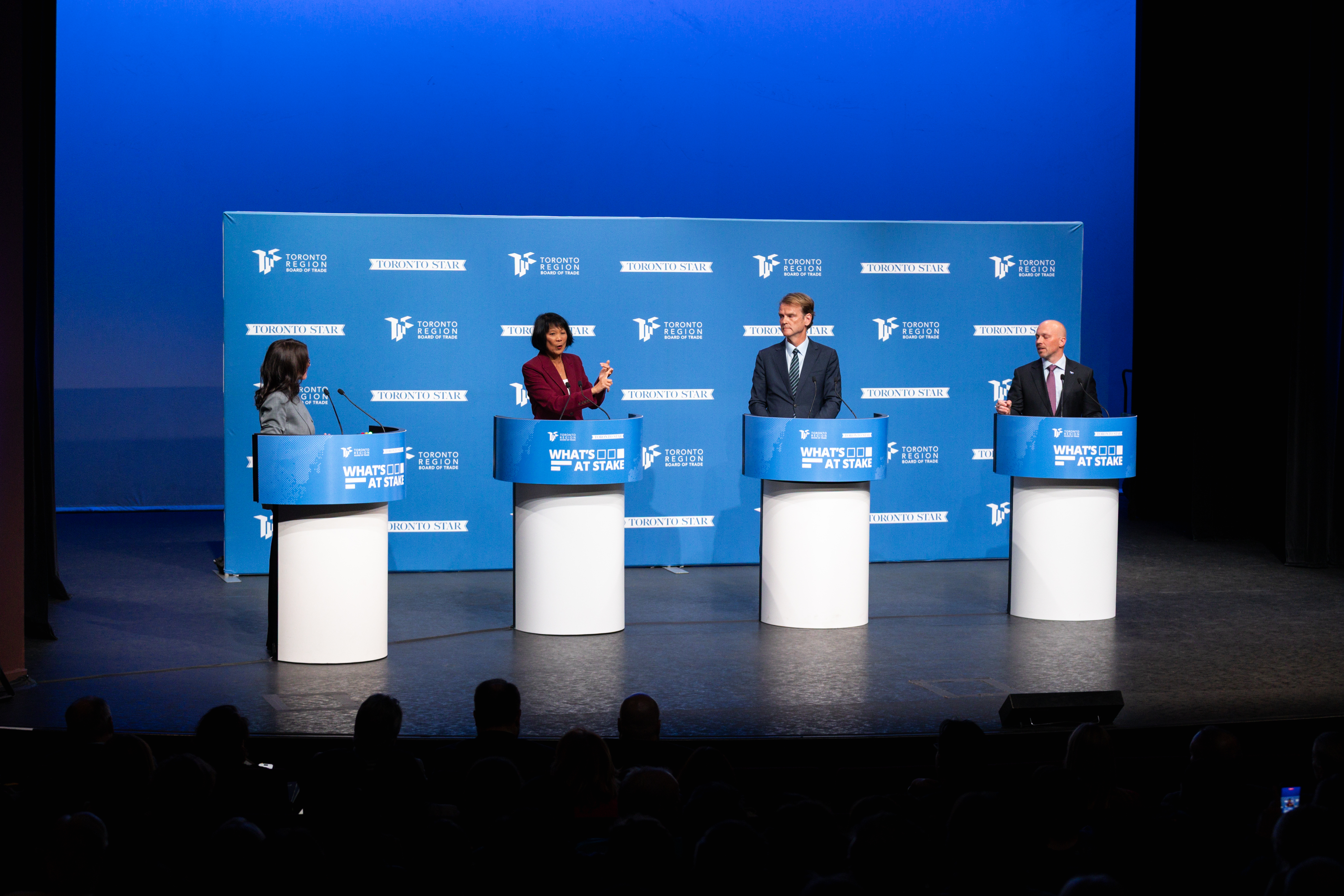
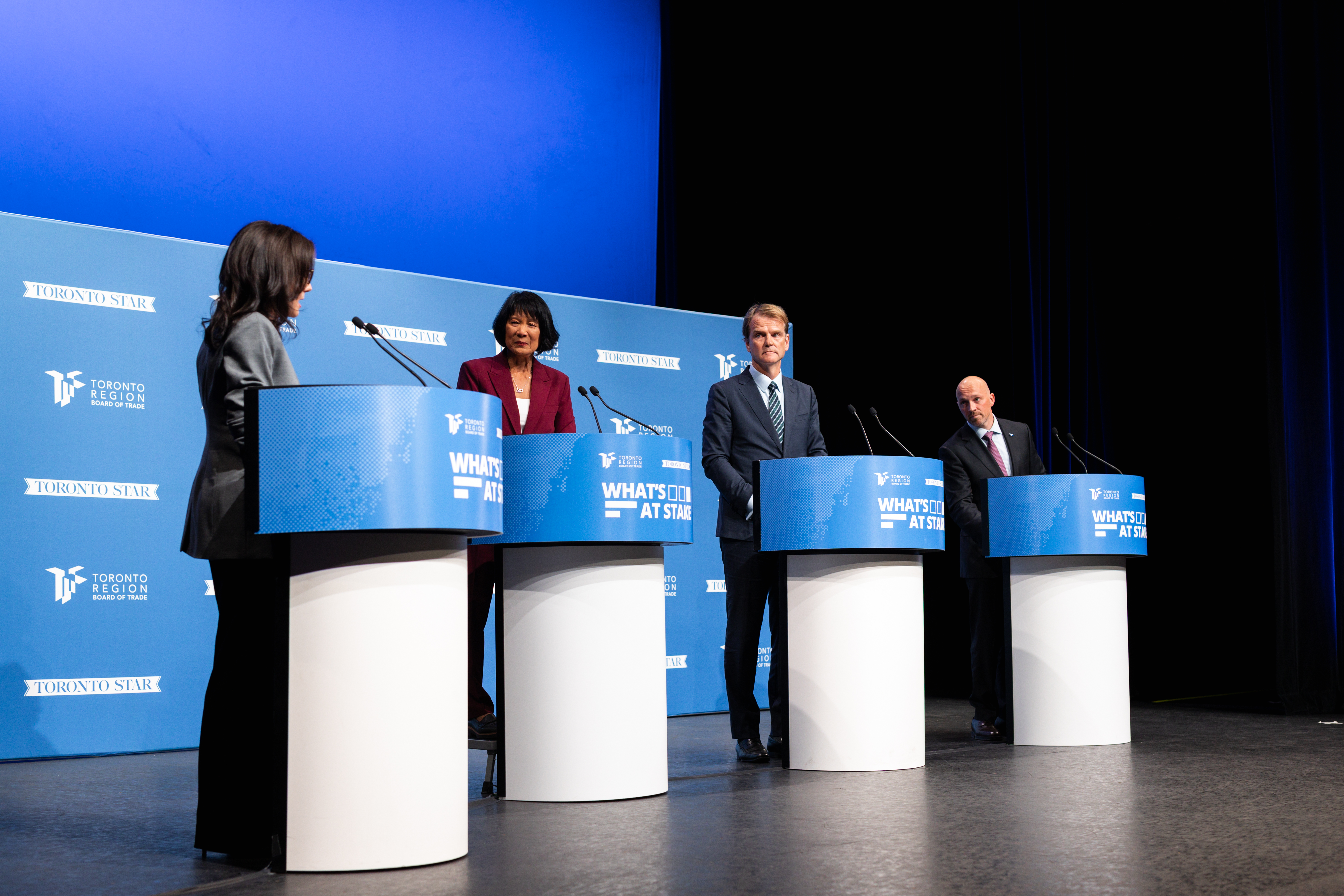
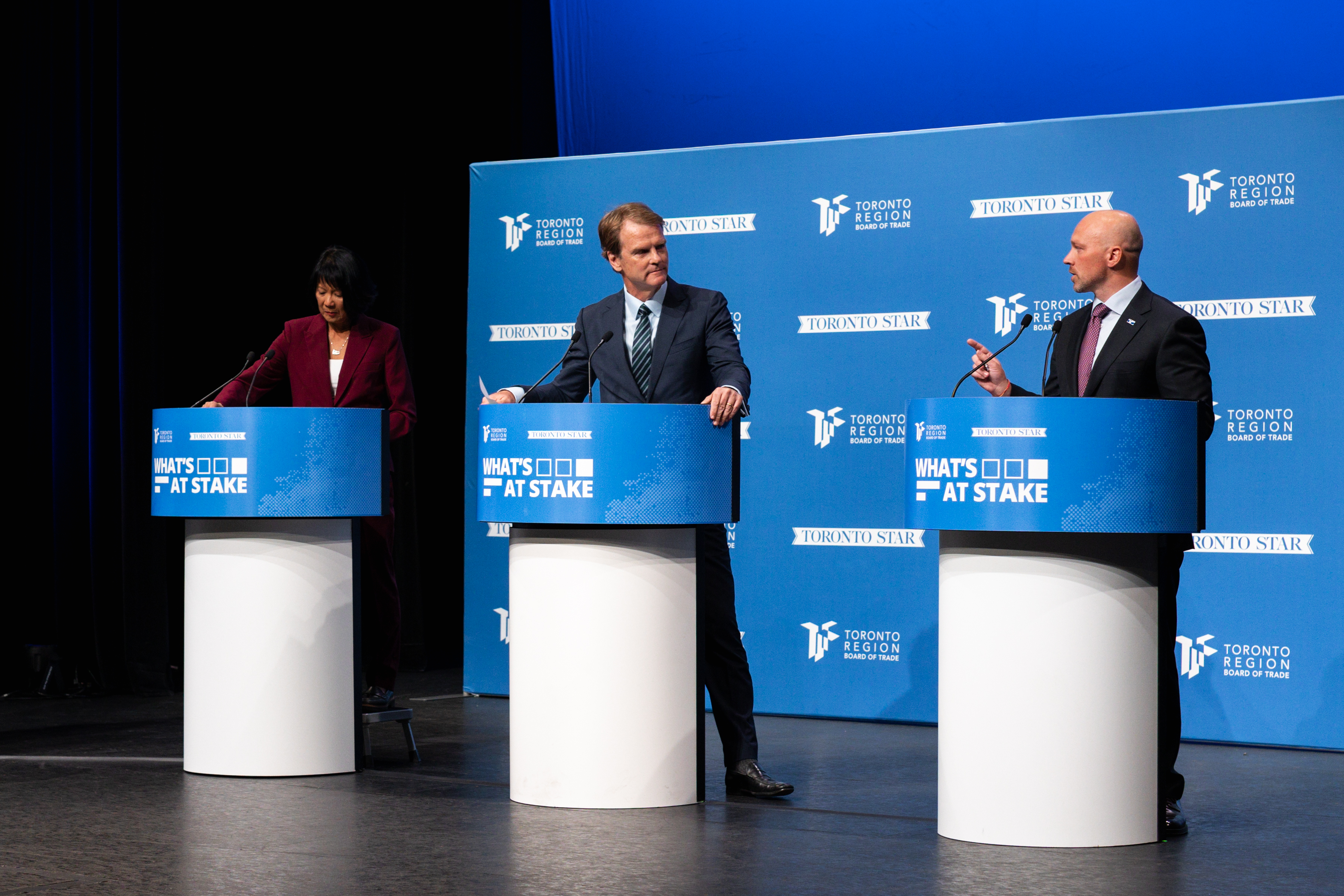
Gridlock that costs the city $44.7 billion a year. An unresolved $1.3 billion budget shortfall. A housing market where three in four renters don't expect to ever own. These are the problems Toronto's next council will have to solve, and last week on our stage, the three candidates vying to lead that city through these issues laid out how they'd do it.
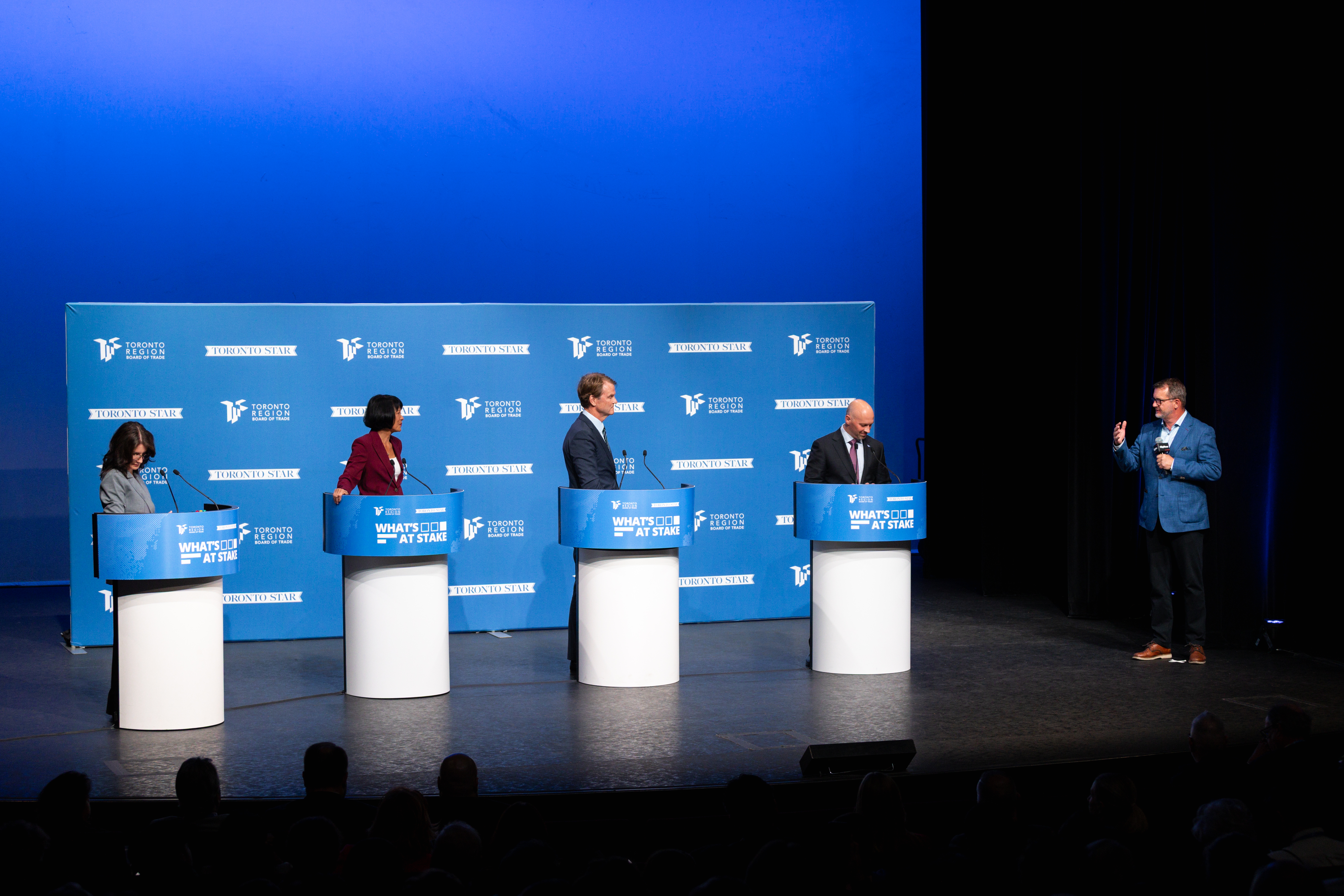
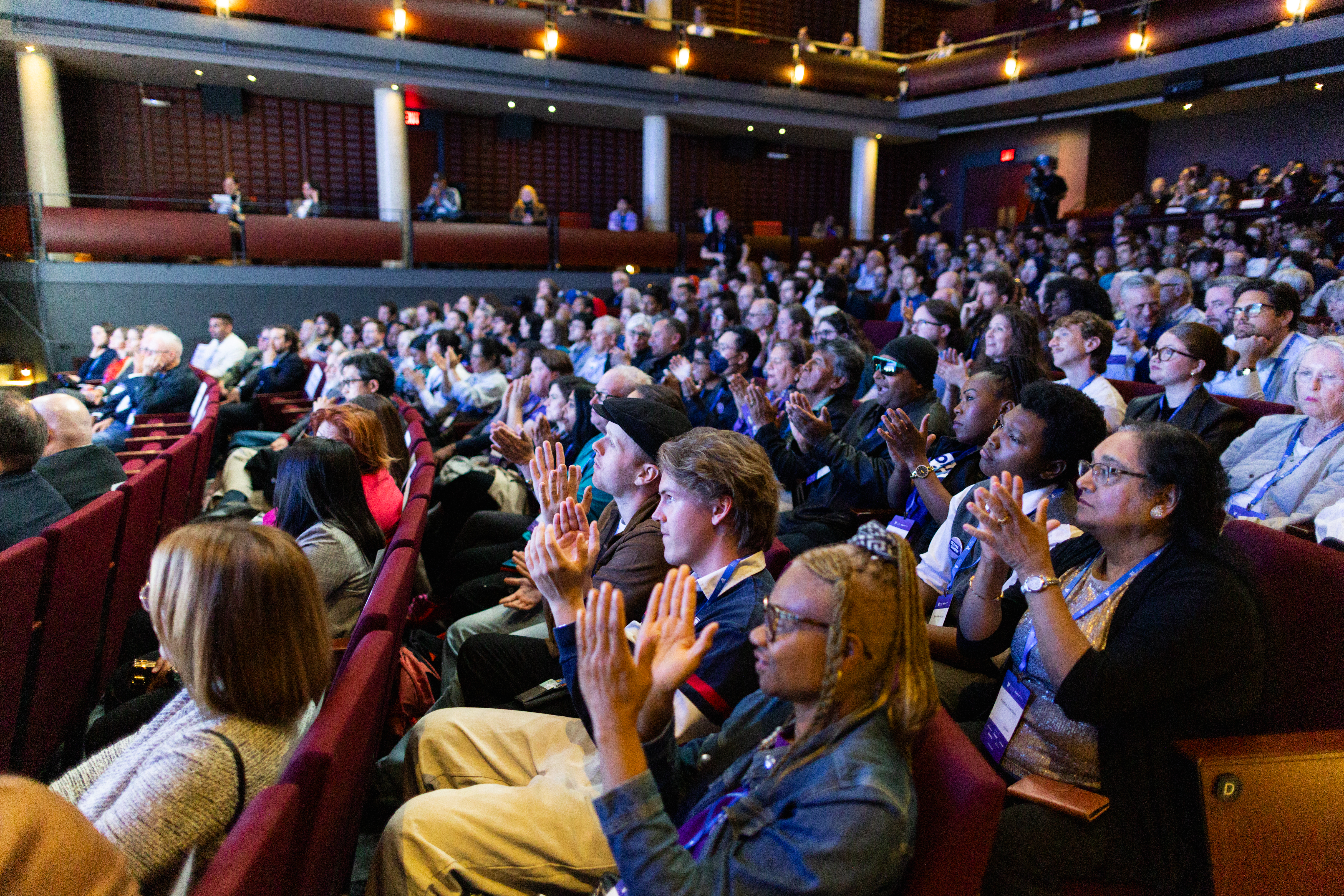
Incumbent Mayor Olivia Chow, Toronto City Councillor Brad Bradford, and former federal Minister Chris Alexander spent the hour focused on the core themes of the Board’s What’s at Stake municipal campaign: land use, getting around the city, and how we'll pay for it all. Toronto Star Editor-in-Chief Nicole MacIntyre moderated to a packed house, with Alan Carter of CityNews providing questions along the way.
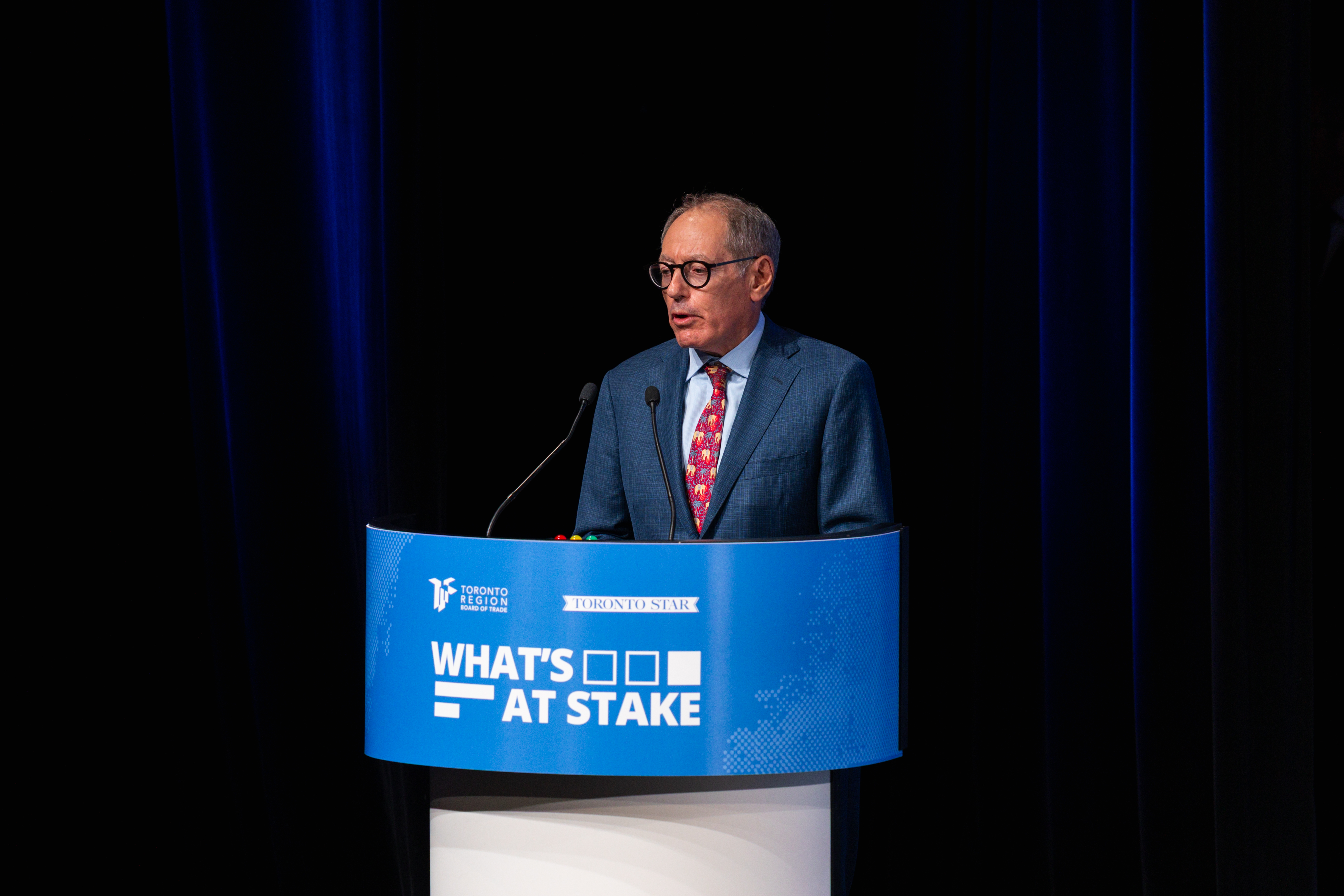
The Board's President & CEO Giles Gherson opened the debate saying, "This moment could be a generational inflection point for an economic growth-oriented vision for a future-facing city. We need that faster growth to protect the tax base that pays for the services that will keep Toronto strong and resilient."
Here's some of what they had to say on each of the three themes.
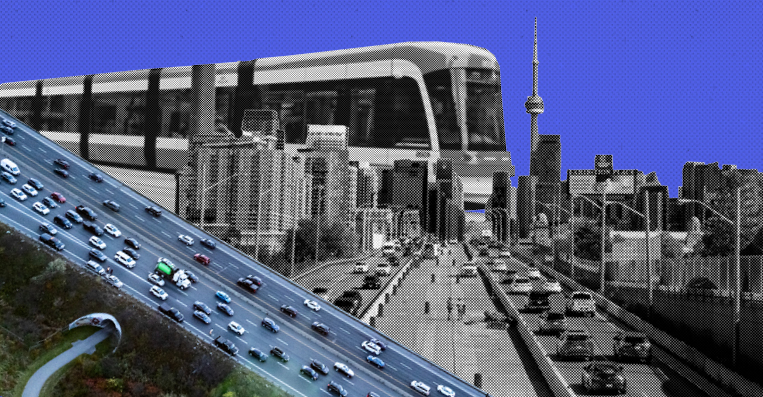
Gridlock has become one of the most significant threats to Toronto's economic competitiveness and quality of life. Commuting to work, moving goods, attending events, or accessing essential services all mean navigating a transportation system under strain. Our congestion, transit, and infrastructure issue guide breaks down what's driving the crisis and what the next mayor needs to do about it.
Brad Bradford: "Transit ridership has declined by 20% nearly since 2019. Transit reliability is down 12%. You've got an on-time performance of 65% on the streetcar. That is not good enough to get to work, to get to the job site, to get home to your family."
Chris Alexander: "I would start with implementing many of the ideas in the Toronto Region Board of Trade's excellent report Breaking Gridlock. It says there is inadequate planning that is at the root of most of our problems. We need to reduce lane closures — that's still not happening. We need to enforce the rules of the road, stand behind all of those, including the police that are responsible for doing that, unclog arteries, and there needs to be focus on this."
Olivia Chow: "I understand how frustrating it is to get stuck in a bottleneck and not going anywhere. This is where the traffic agents come from. When I first became the mayor, there were two. We now have 130. Have you seen them? They are so effective — they clear the intersection, they get rid of people that block the box right in the intersection."
More than one in five Torontonians worry about making rent or a mortgage payment each month. The anxiety isn't just whether they can afford housing, but whether they can find homes that fit their needs near work, schools, transit, and public services. Our housing and land use issue guide looks at what's behind the affordability squeeze and why protecting employment lands matters too.
Olivia Chow: "I wake up every day thinking about how we tackle the need to build more affordable housing, which is why it's my top priority. And under my watch, 15,000 units of housing are being constructed right now — seven out of ten cranes in the sky is because of city program."
Brad Bradford: "The Toronto Star's poll today from Ipsos released the fact that three in four renters here in Toronto don't think that they will ever own a home. And that's not a very good feeling for a lot of our young people. And every year on our softball team we get a message in the WhatsApp group about someone who's having a kid and they're leaving Toronto because they can't afford to stay here."
Chris Alexander: "I think [data centres are] infrastructure that's important for the city's future. But they do need to be regulated properly. There does need to be neighbourhood consultation and buy-in. We need to consult deeply with the provincial government and the federal government as that regulatory framework is extended for data centres. But it's part of our sovereignty — it's part of this response to tariffs and a changing geopolitical landscape."
The city's obligations to deliver federal and provincial objectives leave limited room for the investments that make Toronto liveable. Parks, libraries, community centres, cultural infrastructure, and road safety are deferred, scaled back, or never advanced. Our funding public services issue guide unpacks the gap and what genuine reform could look like.
Chris Alexander: "We're in an operational budget crisis. We're in a capital budget crisis. We don't have more money to pay for things, to subsidize things. We need a city that is prosperous, that is attracting investment, that is creating wealth, that is attractive for small businesses."
Olivia Chow: "Nine cents out of every dollar that we give to other levels of government comes back to the City of Toronto — only through property taxes. That's why, going forward, we need to work with the federal and provincial governments, so that we could have some kind of funding sources that could grow with the economy."
Brad Bradford: "We've had 77,000 families and individuals leave the City of Toronto in a flight for affordability. I'm going to freeze your taxes for the first year, provide immediate affordability relief, and then go through — diligently, thoroughly — that line-by-line review I've been calling for, because I know in a budget that will soon eclipse $20 billion, there are savings to be found."
The debate is over, but the questions raised aren't going anywhere. Explore our full What's at Stake campaign for a deeper look at where the candidates and the city go from here.